

AU-IBAR Joins ILRI and Continental Partners in Launch of Landmark Book on Africa’s Livestock Genetic Resources and Sustainable Breeding
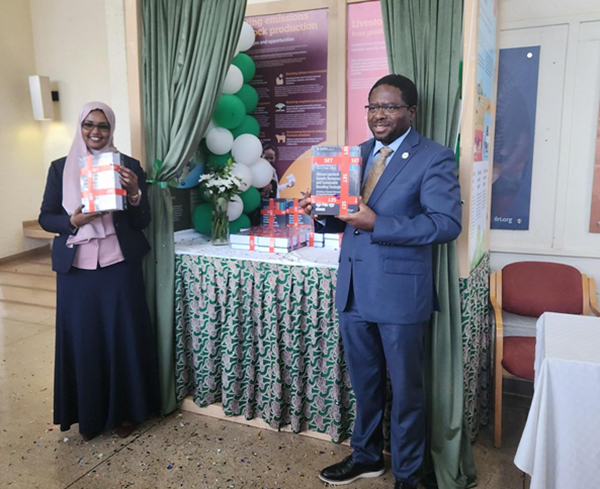
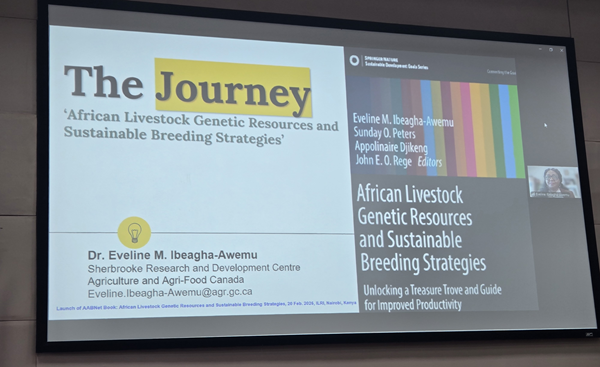
Africa’s commitment to securing the future of its livestock sector through science, innovation, and collaboration was reaffirmed with the official launch of the landmark book African Livestock Genetic Resources and Sustainable Breeding Strategies: Unlocking a Treasure Trove and Guide for Improved Productivity. The event convened leading institutions including the African Union Inter-African Bureau for Animal Resources (AU-IBAR), the International Livestock Research Institute (ILRI), the African Animal Breeding Network (AABNet), and prominent scientists and policymakers working at the forefront of livestock development.
The publication, edited by Dr. Eveline M. Ibeagha-Awemu, Dr. Sunday O. Peters, Dr. Appolinaire Djikeng, and Dr. John E. O. Rege, represents one of the most comprehensive scientific references ever developed on Africa’s livestock genetic diversity, conservation, and breeding strategies. Produced by 83 contributing authors from 24 countries, the book provides a strategic roadmap to strengthen livestock productivity, resilience, and sustainability across the continent.
AU-IBAR Affirms Continental Leadership in Livestock Genetic Resource Management
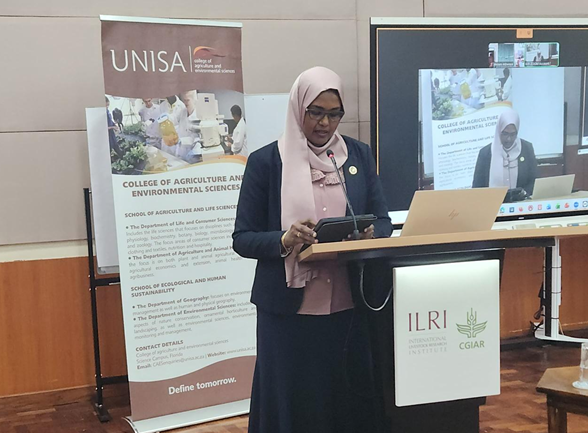
Delivering remarks on behalf of the African Union Commission, Dr Huyam Salih, Director of AU-IBAR, emphasised that Africa’s livestock genetic resources are fundamental to achieving the continent’s food security, climate resilience, and economic development goals.
“Africa is home to some of the world’s most diverse and resilient livestock genetic resources. These are not relics of the past, but strategic assets for the future. This publication strengthens our continental capacity to conserve, improve, and sustainably utilise these resources to support food security, livelihoods, and climate resilience,” said Dr. Salih.
She further underscored that livestock contributes significantly to agricultural GDP and supports the livelihoods of over 600 million Africans, while indigenous breeds provide irreplaceable traits such as disease resistance, heat tolerance, and adaptability to harsh production environments.
Dr. Salih emphasised that AU-IBAR remains committed to translating scientific knowledge into practical action through continental programmes that support genetic improvement, strengthen breeding systems, and enhance livestock value chains.
“Through our continental livestock transformation programmes, AU-IBAR is working with Member States and partners to ensure that scientific knowledge translates into real solutions—strengthening breeding programmes, improving productivity, and unlocking economic opportunities for farmers, youth, and livestock enterprises across Africa.”
ILRI Leadership Highlights Africa’s Scientific Opportunity
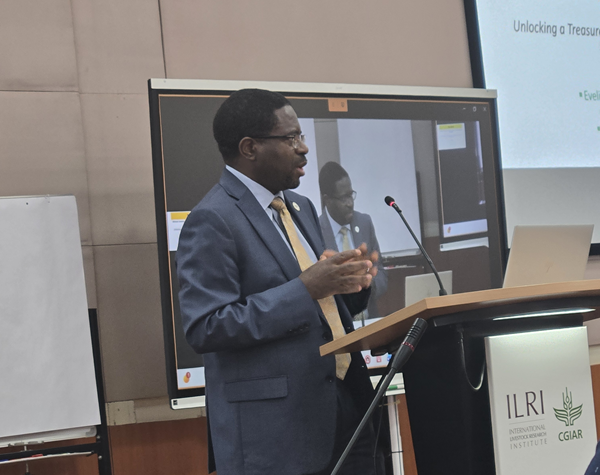
Opening the launch, Dr. Appolinaire Djikeng, Director General of ILRI and co-editor of the book, highlighted Africa’s unique opportunity to harness its genetic diversity and scientific capacity to drive sustainable livestock transformation.
He emphasised that Africa’s genetic resources provide a foundation for building climate-resilient livestock systems and that collaboration among scientists, policymakers, and institutions is essential to ensure that research translates into practical impact.
Editors Emphasise Book’s Role in Closing Knowledge Gaps
Lead editor Dr. Eveline M. Ibeagha-Awemu highlighted that the publication addresses longstanding gaps in knowledge regarding Africa’s livestock genetic diversity and provides a comprehensive scientific resource to guide breeding, conservation, and policy development.
“Africa’s livestock genetic resources are a treasure trove of resilience and opportunity. This book provides the scientific evidence and strategic direction needed to ensure these resources are conserved and utilised to support sustainable livestock production and food security.”
Co-editor Dr. John E. O. Rege, a globally respected animal geneticist, emphasised the importance of strengthening institutional frameworks and breeding systems to ensure long-term livestock improvement across Africa.
Recognition of Dr. David A. Mbah’s Distinguished Contribution
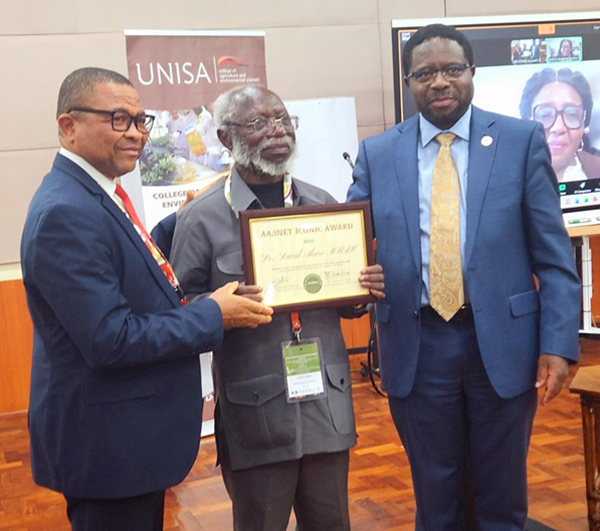
A key highlight of the launch was the recognition of Dr. David A. Mbah, whose contributions to livestock breeding and genetic improvement have played a significant role in advancing Africa’s scientific capacity in animal genetics.
Dr. Mbah has been instrumental in defining breeding goals and strengthening genetic improvement strategies, helping to ensure that livestock breeding programmes are aligned with Africa’s production systems and development needs.
Reflecting on the importance of the publication, Dr. Mbah emphasised the need to translate science into tangible impact:
“Africa possesses extraordinary livestock genetic diversity, but its true value lies in how effectively we utilise it. This book provides the scientific foundation needed to guide breeding programmes, inform policy, and ensure that genetic improvement contributes directly to improved productivity, resilience, and livelihoods.”
His recognition during the launch highlighted the importance of sustained scientific leadership and the role of African scientists in shaping the future of livestock development.
Scientific Sessions Highlight Urgency of Conservation and Innovation
Technical presentations during the launch featured contributions from leading experts, including Dr. Olivier Hanotte and other livestock geneticists, who emphasised the importance of preserving Africa’s genetic diversity as a foundation for future livestock improvement.
Speakers highlighted that Africa’s indigenous breeds are uniquely adapted to diverse environments and play a critical role in supporting livestock production under climate stress and changing production conditions.
Participants emphasised the need to:
- Strengthen conservation of indigenous genetic resources
- Invest in structured breeding programmes
- Leverage genomics and modern technologies
- Strengthen regional collaboration and policy frameworks
- Empower farmers as custodians of genetic resources
Strengthening Africa’s Livestock Future Through Science and Partnership
The launch of African Livestock Genetic Resources and Sustainable Breeding Strategies represents a major milestone in Africa’s livestock development journey. By providing a comprehensive scientific foundation and strategic direction, the publication strengthens Africa’s capacity to harness its genetic resources to support food security, economic development, and climate resilience.
With leadership from AU-IBAR, ILRI, and distinguished scientists including Dr. Eveline M. Ibeagha-Awemu, Dr. Appolinaire Djikeng, Dr. John E. O. Rege, and Dr. David A. Mbah, Africa is positioning itself to unlock the full potential of its livestock genetic resources.
As Dr. Huyam Salih emphasised during the launch:
“Africa has the genetic resources, the scientific expertise, and the institutional leadership required to transform its livestock sector. Our responsibility now is to ensure that this knowledge translates into sustainable systems that benefit farmers, communities, and future generations.”