

Ghana Advances Its Blue Economy with AU-Kingdom of Norway Support
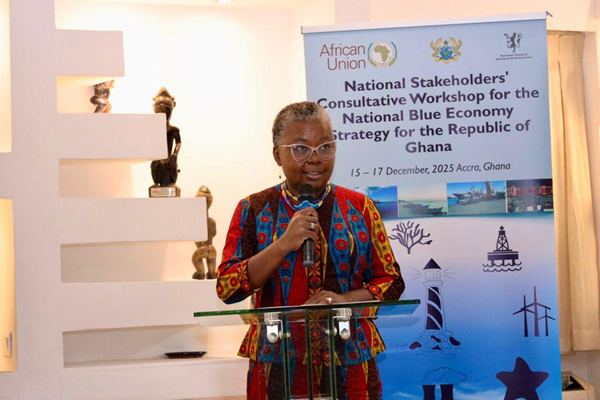
Ghana has crossed a decisive threshold in its Blue Economy journey, moving from vision and planning to coordinated national action. The National Stakeholders’ Consultative Workshop on the Prioritisation and Costing of Ghana’s Blue Economy Strategy, held in Accra from 15–17 December 2025, delivered concrete outcomes that position the country to operationalise its strategy from 2026 and reinforce Ghana’s role as a regional leader in integrated ocean and inland water governance.
Key Outcomes of the Ghana Meeting
The three-day engagement concluded with clear, implementation-ready results:
- A prioritised and costed Implementation Plan aligned to the six pillars of Ghana’s Blue Economy Strategy—Blue Wealth, Blue Health, Blue Knowledge, Blue Finance, Blue Equity, and Blue Safety and Security—providing clarity on actions, timelines, and institutional responsibilities for 2026–2027.
- Strengthened inter-ministerial and inter-agency consensus, breaking long-standing sectoral silos across fisheries, environment, transport, energy, tourism, finance, and local government, and anchoring coordination under national leadership structures.
- Clear entry points for investment and partner support, ensuring that priority actions are bankable, sequenced, and aligned with national development frameworks and international commitments.
- A shared national roadmap for operationalisation, signalling Ghana’s transition from policy formulation to delivery, accountability, and measurable impact .
Collectively, these outcomes elevate the workshop from a consultative event to a turning point for national implementation.
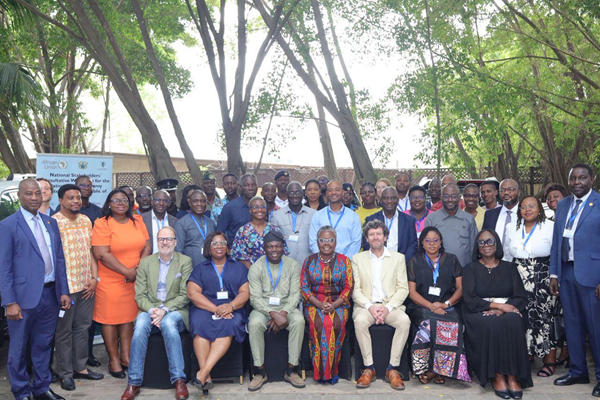
Importance of process
This meeting was significant not simply because it reviewed a strategy, but because it engineered the “how” of delivery. It provided the platform where ministries, regulators, academia, communities, and partners jointly translated ambition into action—answering the core questions of what must be done first, by whom, at what cost, and with which resources.
As Ghana prepares to operationalise its strategy from 2026, the workshop ensured national ownership, reduced coordination risks, and strengthened readiness to mobilise blue and climate finance at scale.
Ghana’s Blue Economy Strategy: An Integrated National Framework
Ghana’s Blue Economy Strategy articulates a transformative vision: to harness marine, coastal, inland water, and wetland resources as engines of inclusive growth, food security, job creation, and climate resilience. It directly addresses governance fragmentation, ecosystem degradation, and underinvestment, which have historically constrained the sector.
The strategy is structured around six mutually reinforcing pillars:
- Blue Wealth – sustainable fisheries and aquaculture, maritime transport, tourism, energy, and emerging blue industries;
- Blue Health – ecosystem restoration, pollution reduction, biodiversity protection, and climate resilience;
- Blue Knowledge – science, data systems, innovation, and blue literacy;
- Blue Finance – mobilisation of public, private, and blended finance instruments, including blue bonds;
- Blue Equity – inclusion of women, youth, and coastal and riparian communities in value chains and decision-making;
- Blue Safety and Security – strengthened surveillance, enforcement, and maritime safety.
Importantly, the strategy integrates marine and inland systems, recognising Lake Volta, rivers, wetlands, and coastal waters as one interconnected socio-economic and ecological continuum.
Government Leadership and Interventions
The Government of Ghana has demonstrated strong political commitment by approving the development of a unified Blue Economy Strategy, establishing institutional arrangements for coordination, and convening a rigorous, participatory process involving more than 260 stakeholders nationwide .
Key government interventions include:
- Anchoring Blue Economy governance at the highest political level, ensuring cross-sectoral alignment and accountability;
- Mandating ministries and agencies to integrate Blue Economy actions into national and sectoral development plans;
- Prioritising early-phase actions (2026–2027) that deliver visible results in livelihoods, food security, ecosystem protection, and investment readiness;
- Positioning Ghana to access regional and global blue and climate finance, aligned with continental and international frameworks.
AU-IBAR’s Continental Contribution and Support to Countries
The workshop also highlighted the broader impact of AU-IBAR support across Africa. As the African Union’s technical arm for the Blue Economy, AU-IBAR has supported Member States to move from policy aspiration to implementation through:
- Technical assistance for developing and operationalising national blue economy strategies;
- Policy coherence and alignment with the Africa Blue Economy Strategy and Agenda 2063;
- Capacity building in governance, data systems, fisheries and aquaculture management, and monitoring;
- Flagship initiatives such as the Women in the Blue Economy Programme and support to vulnerable coastal and island contexts through the Africa SIDS initiative;
- Facilitating regional cooperation on shared challenges including illegal fishing, marine pollution, coastal erosion, and transboundary resource management.
Ghana’s progress reflects how continental frameworks can be effectively localised when national leadership and inclusive processes converge.
 |
 |
Voices from the Meeting
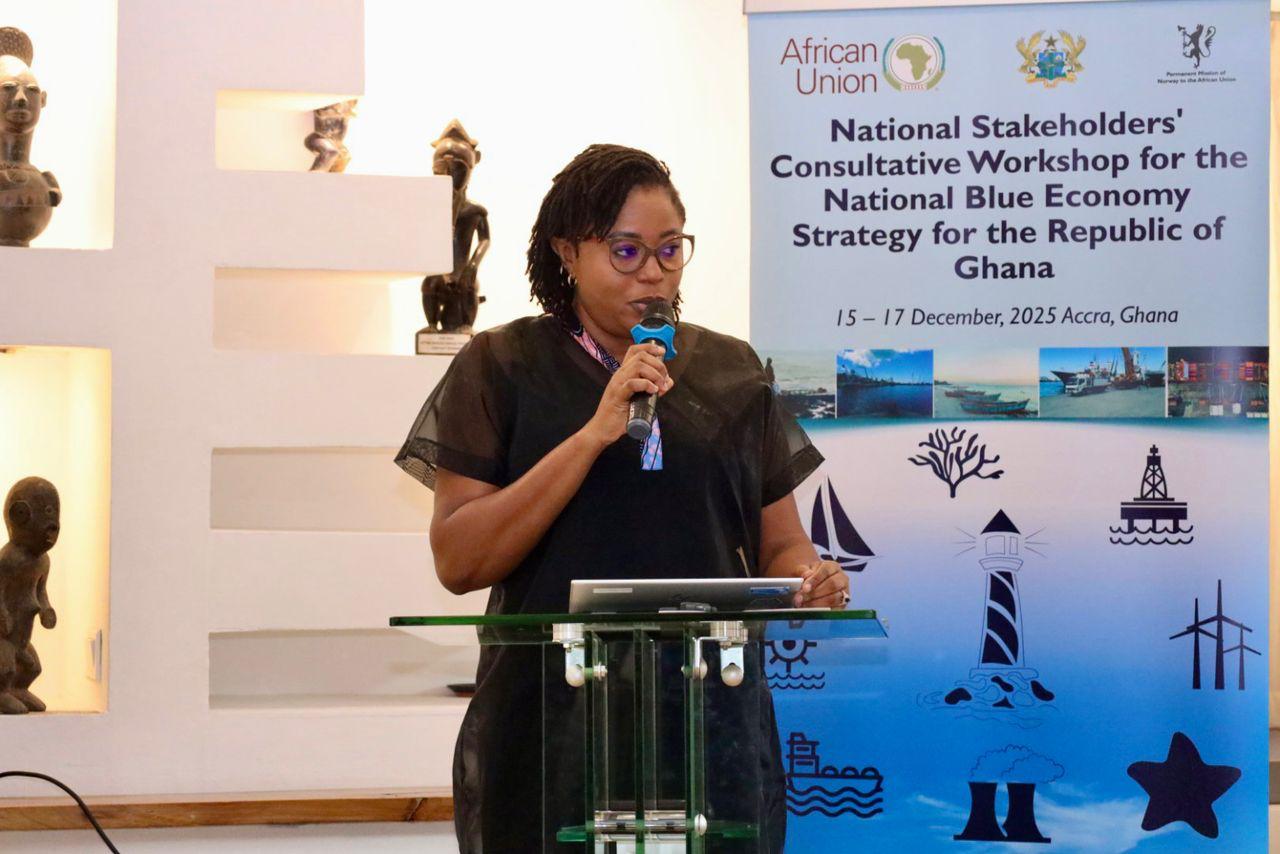
Speaking on behalf of the African Union Commission, Linda Amornghor-Oje Etta (Above left picture) underscored the strategic importance of the moment:
“The blue economy is no longer only an opportunity—it is a governance imperative. Turning national strategies into action requires strong institutions, coordinated governance, and meaningful participation. Ghana’s process shows how inclusive, evidence-based and implementation-ready planning can translate continental ambition into national results.”
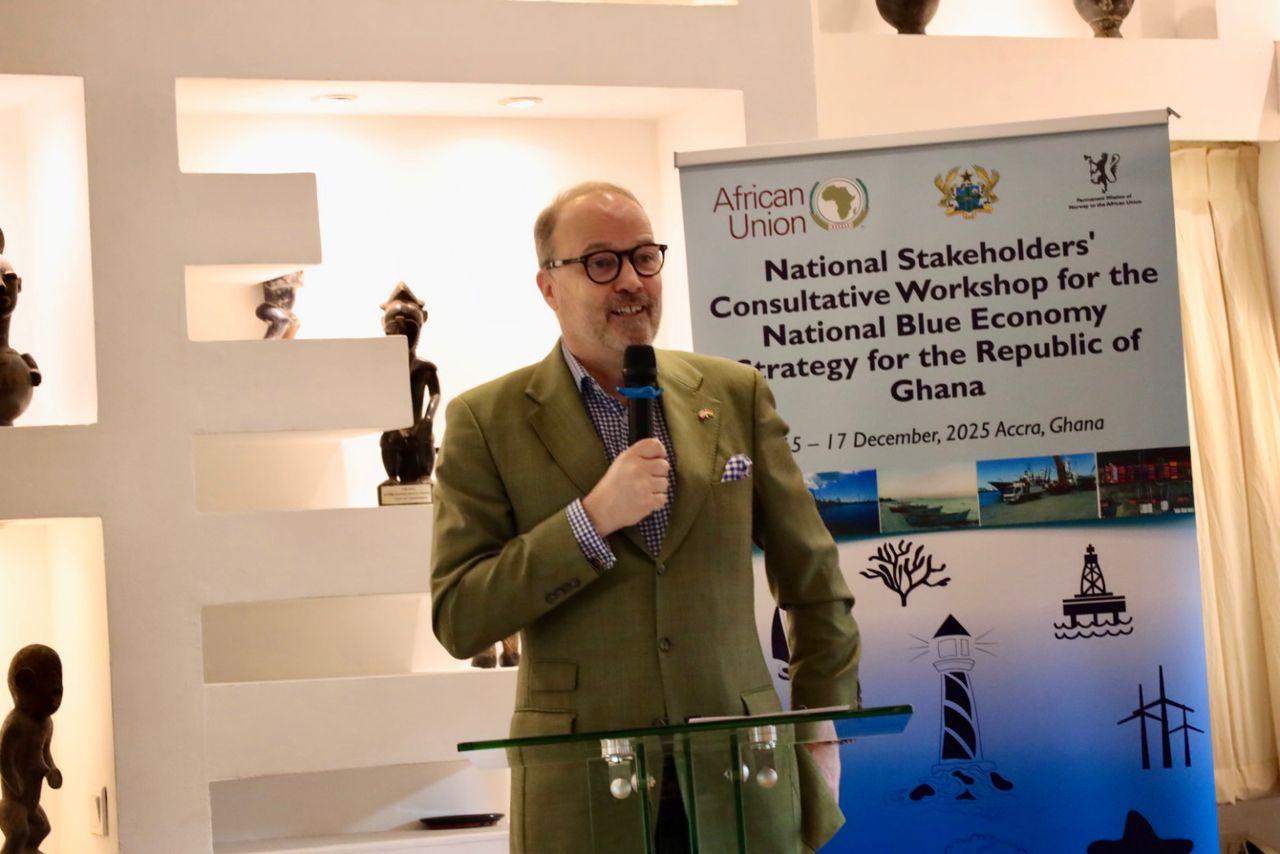
The Norwegian Ambassador, H.E. Dr. John Mikal Kvistad (Above right picture), stressed the global relevance of Ghana’s leadership:
“No country can secure a sustainable blue economy on its own. Translating global ocean commitments into national action—through strong institutions and coordinated governance—is where progress is won or lost.”
Opening the workshop, H.E. Dr Emelia Arthur, Minister for Fisheries and Aquaculture Development (Top picture), framed the meeting as the start of delivery:
“This strategy marks Ghana’s move from planning to implementation. The task before us is to build the engine that will power Ghana’s Blue Century, by translating our six pillars into practical, costed actions that create jobs, secure food, strengthen resilience, and restore our ecosystems.”
Looking Ahead
With a prioritised and costed implementation roadmap now in place, Ghana is well-positioned to begin delivering tangible Blue Economy results from 2026. The Accra meeting demonstrated how national leadership, continental support, and inclusive partnership can converge to unlock Africa’s blue potential, turning water resources into sustainable prosperity for present and future generations.