

Statement of commitment by the Minister of Livestock and Animal Production of Chad at the first session of the Continental Advisory Committee of the Pan-African Program for the Eradication of PPR and Control of Other Priority Diseases of Small Ruminants
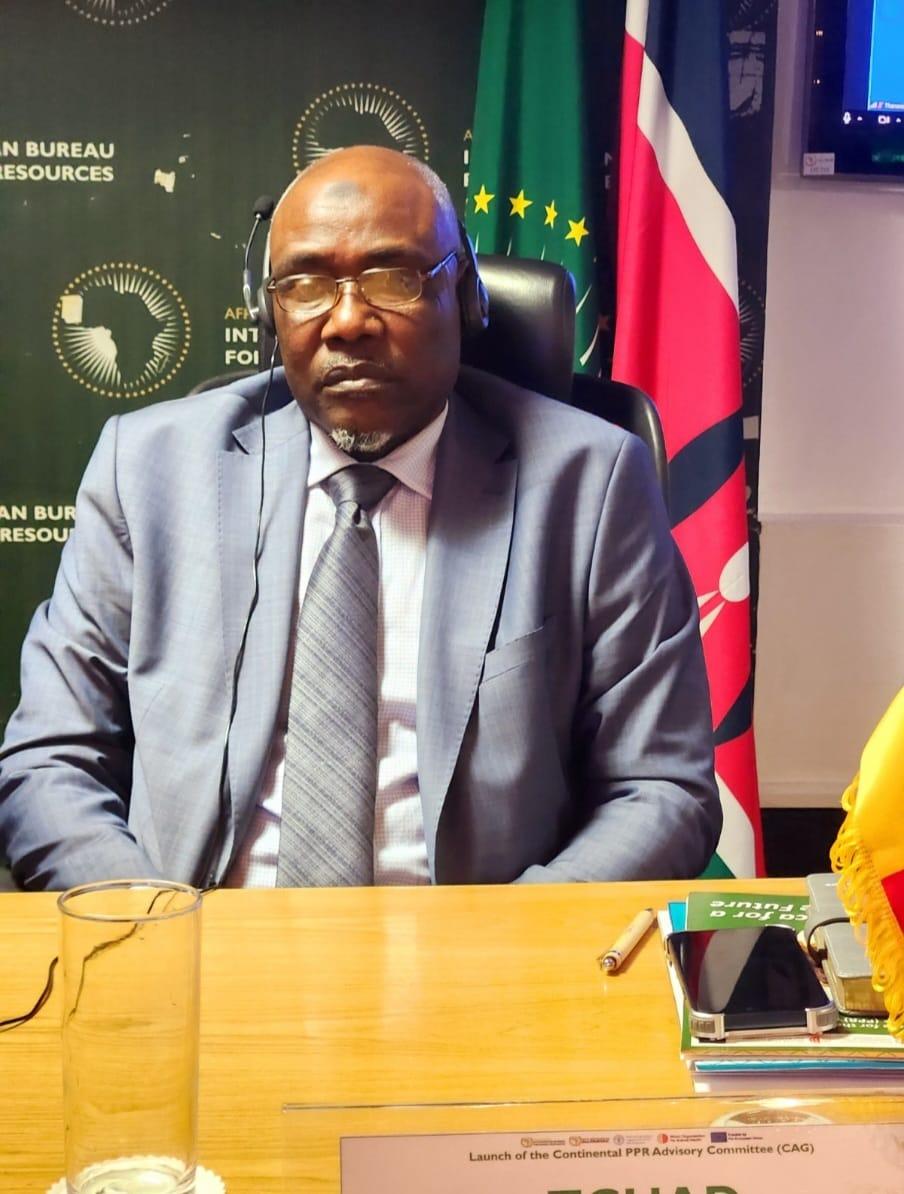
It is with a deep sense of honor, responsibility, and commitment that I take the floor today at this important meeting, which marks a major step forward in consolidating the continental governance of the Pan-African Program for the Eradication of Peste des Petits Ruminants (PPR) and the Control of Priority Diseases in Small Ruminants.
After several days of rich, frank, and constructive discussions, I would like, on behalf of the Government of the Republic of Chad, to express my sincere gratitude to all participants for the quality of their contributions, the scientific and strategic level of the debates, and the spirit of collective responsibility that has prevailed thus far.
Allow me, at this solemn moment, to convey and uphold the message of His Excellency the President of the Republic of Chad, appointed by the African Union as Champion for the Pan-African Program for the Eradication of PPR and other priority diseases of small ruminants.
Through this appointment, the African Union recognizes not only Chad's ongoing commitment to the development of livestock farming and animal health, but above all the importance of high-level political leadership as an essential lever for achieving the continental and global goal of eradicating PPR by 2030.
The Marshal of Chad, President of the Republic, has tasked me with reaffirming before you that the fight against PPR is not a sectoral issue, but a strategic challenge for food sovereignty, social stability, economic resilience, and dignity for our pastoral and agro-pastoral communities.
It cannot be said often enough that PPR remains one of the most devastating transboundary animal diseases on our continent. It undermines the livelihoods of millions of families, disproportionately affects women and young people, compromises small ruminant value chains, and is a major obstacle to food security and intra-African trade.
Faced with such a challenge, no state can succeed alone. The transboundary nature of PPR requires a collective, coordinated response based on regional solidarity, harmonized strategies, and the responsible sharing of data and resources.
This is precisely the purpose and added value of the Continental Consultative Committee on PPR, which was established this week here in Nairobi and which we have helped to make fully operational through our work.
In accepting the chairmanship of this body, which is so important for this delicate initiative, the Republic of Chad fully appreciates the scope of the mission entrusted to it.
For us, the Continental Advisory Committee must never be seen as just another structure. It is called upon to become:
• a bridge between political commitment and technical implementation;
• a space for continental accountability, where progress, delays, and challenges are examined with clarity;
• a strategic guidance tool, capable of translating the ambitions of the African Union, Agenda 2063, CAADP/Malabo, and LiDeSA into concrete actions on the ground.
As Chair, I am committed to working with the entire CAG Bureau to ensure that our recommendations are clear, operational, followed up on, and integrated into regional and national mechanisms for implementing the Pan-African Program.
Honorable Members, Ladies and Gentlemen,
On behalf of the Continental Champion for RMP and the Government of Chad, I make a solemn appeal to all Member States of the African Union:
• to sustainably strengthen their investments in veterinary services;
• ensure genuine national ownership of strategic plans for the eradication of RSP;
• place the fight against priority animal diseases at the heart of public policies, national development plans, and national budgets;
• actively promote cross-border cooperation, particularly in transhumance areas and trade corridors.
I would also like to express my sincere thanks to our technical and financial partners, in particular the European Union, FAO, and OMSA, for their continued support. Their assistance remains essential, but it must go hand in hand with increased domestic financial commitment, which is a guarantee of sustainability and sovereignty.
Dear colleagues and members of the continental, regional, and national operational teams
I would like to extend my warmest congratulations to the entire team implementing the Pan-African Program for the Eradication of Rift Valley Fever, in particular the Pan-African Rift Valley Fever Secretariat, the Regional Animal Health Centers, and the national animal health networks that have been set up and are now operational, including the various RESEPI, RESOLAB, and Committees of Directors of Veterinary Services, as well as the national teams, for the tangible results already achieved during this first phase.
The progress made in governance, coordination, strategic planning, surveillance, and risk-based preparedness demonstrates remarkable professional commitment and a shared continental vision. However, as we enter the final sequence of Phase 1 and Phase 2 of the Program looms, I call for greater efficiency, operational rigor, and measurable impact on the ground.
It is now imperative to consolidate achievements, accelerate implementation in priority areas, strengthen accountability, and prepare for a smooth, ambitious, and resolutely results-oriented transition so that Phase 2 of the Program marks a real step up in scale on the path to the definitive eradication of PPR in Africa.
Chad, as a pastoral country par excellence and a strategic area for animal mobility in Central and Sahelian Africa, fully assumes its role as a driving force and catalyst.
We are committed to:
• sharing our experience and lessons learned;
• supporting regional and continental initiatives;
• and promoting a coordinated, science-based African approach driven by strong political leadership.
Our ambition is clear: to make the eradication of PPR an African victory, symbolizing what our continent is capable of achieving when it acts with unity, responsibility, and long-term vision.
I am convinced that the decisions, recommendations, and commitments made here in Nairobi constitute a solid foundation for accelerating Africa's progress toward the definitive eradication of PPR.
Under the enlightened leadership of the African Union, with the support of its specialized institutions and the resolute commitment of its member states, the 2030 goal is within our reach, provided that all member states are fully committed to it.
It is together, in solidarity and determination, that we will write this page in the health and economic history of our continent.
I wish you a safe return to your respective homes and a happy end to 2025.
Thank you for your kind attention.