

Tanzania Validates Its National Strategy for the Eradication of PPR and Control of Priority Small Ruminant Diseases
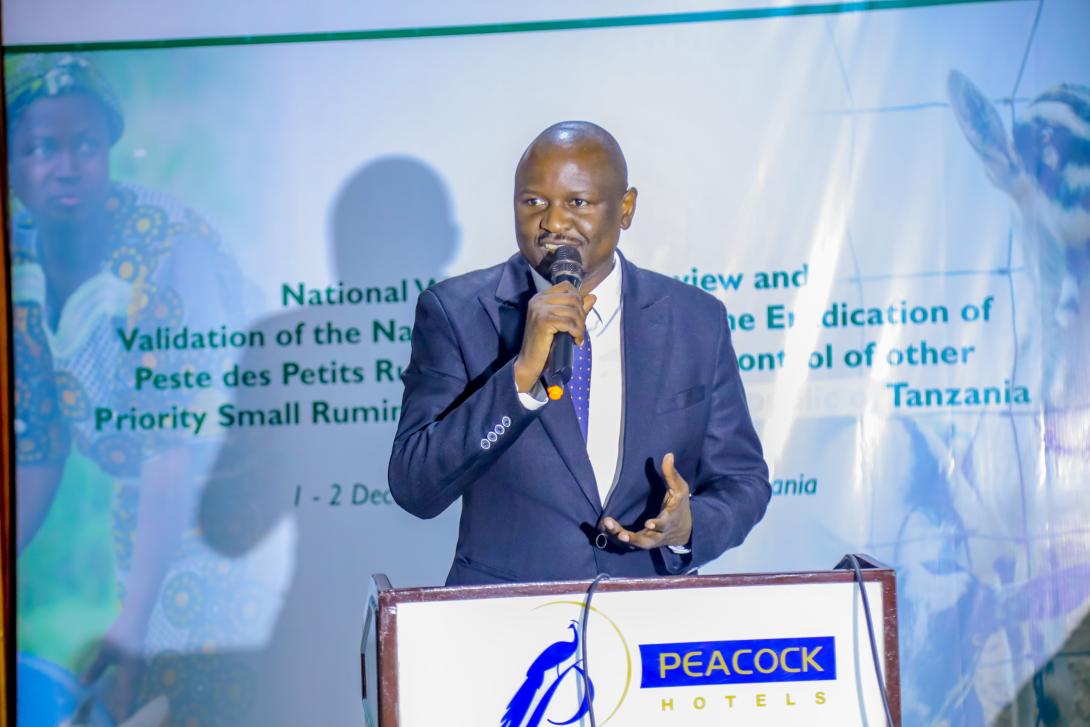
From 1–2 December 2025 Peacock Hotel, Dar es Salaam-The Ministry of Livestock and Fisheries, in collaboration with AU‑IBAR, and the Pan-African PPR Secretariat (PAPS) convened a national workshop to review and validate Tanzania’s updated PPR Eradication Strategy and the Control Plan for other Priority Small Ruminant Diseases. The workshop brought together a diverse group of stakeholders including farmers’ associations, academia, researchers, veterinary professional bodies, animal health experts from the national and local governments, media representatives, and policy‑makers.
The event was officially opened by the Permanent Secretary, the Ministry of Livestock and Fisheries, Tanzania, Honourable Agnes K. Meena. Goodwill messages and remarks were delivered by Folorunso Fasina, the PAPS at the AU‑IBAR, Justine Assenga (FAO, Tanzania), and the Director of Veterinary Services (Dr. Benezeth Lutege). The remarks underscored shared responsibility in disease control and the importance of producing a realistic, implementable strategy to support small ruminant keepers, particularly women and youth.

Participants were assigned into five working groups, each focusing on reviewing and updating a designated sections of the draft strategy. Each group reviewed content, identified gaps, and provided recommendations. Through the application of a Word Cafe method, groups were rotated round to make meaningful contributions or reshape other group’s efforts. The finalised draft strategy with updated data was presented section by section to the plenary, re-reviewed and approved. On the second day, the meeting integrated identified missing information and merged all supplementary comments into a single final consolidated draft. This was re-presented to ensure accurate capture and reflection of the experts contributions. This collaborative process strengthened ownership of the strategy and ensured technical soundness of the final document.
Tanzania has recently made significant investments in veterinary infrastructure and disease control systems by launching a five-year comprehensive vaccination and eradication campaign with a budget of 87 million USD. The efforts include extensive PPR vaccination campaigns aimed at reducing the risk of cross‑border disease spread, and animal identification. In the first year alone, the government disbursed approximately 27.7 million USD for the implementation of the program. The vaccination programmes strengthen has strenghtened herd immunity in high-risk areas and border regions, limiting virus transmission among susceptible sheep and goats. A total of 16 million doses of PPR has been used in year 2024/2025 alone to ensure sufficient vaccination coverage of approximately 80% of small ruminants in these regions. Tanzania aimed to reduce the risk and likelihood of infected animals moving across borders, particularly to the Southern African countries, and prevents outbreaks along major trade corridors and pastoral routes. An integrated effective surveillance and livestock movement control with vaccination efforts create a strong buffer zone that protects neighbouring countries and supports regional PPR eradication objectives.
Tanzania’s efforts and progress are being supported through inputs and technical assistance from AU‑IBAR, AU-Pan‑African Veterinary Vaccine Centre (PANVAC), FAO and WOAH, and with the financial backing from the European Union. These partners have contributed immensely to the development of the strategy as well as capacity building, vaccine quality assurance, and harmonization of regional disease control approaches. Their support in reviewing and strengthening the PPR eradication strategy has been essential in positioning Tanzania as a strong contributor to continental PPR eradication efforts.
The workshop successfully validated Tanzania’s national strategy for PPR eradication and the control of other priority small ruminant diseases. Through inclusive participation, rigorous technical review, and strong institutional support, the country is well‑placed to advance towards sustainable disease control and improved livelihoods for small ruminant keepers across the nation.
The workshop concluded with remarks from the Director of Veterinary Services, who commended participants for their dedication and emphasized that their contribution will be remembered as instrumental in shaping the future of small ruminant disease control in Tanzania. The co-created and co-owned document will be circulated among stakeholders following the final assent by the government of the United Republic of Tanzania, and its implementation demands continued collaboration of all stakeholders and continuous engagement in all future national initiatives.