

Day One of the First African Pastoral Markets Forum Calls for Investment, Inclusion and Action
Day One of the First African Pastoral Markets Forum Calls for Investment, Inclusion and Action
Day One of the First African Pastoral Markets Forum moved quickly from continental ambition to the practical realities shaping Africa’s pastoral livestock economy.
Following the opening session, discussions on livestock investment, pastoral market realities, and women- and youth-led enterprises brought out one central message: Africa does not lack livestock resources, entrepreneurs, or market opportunities. What remains weak is the enabling system connecting pastoral producers to finance, infrastructure, information, public services and profitable markets.
Convened by AU-IBAR, with support from the Gates Foundation, the Forum seeks to reposition pastoral livestock as a bankable and trade-driven sector. Its purpose is to move the conversation beyond policy statements towards market activation, investment partnerships and commercially viable enterprises.
Pastoral livestock is an economic system
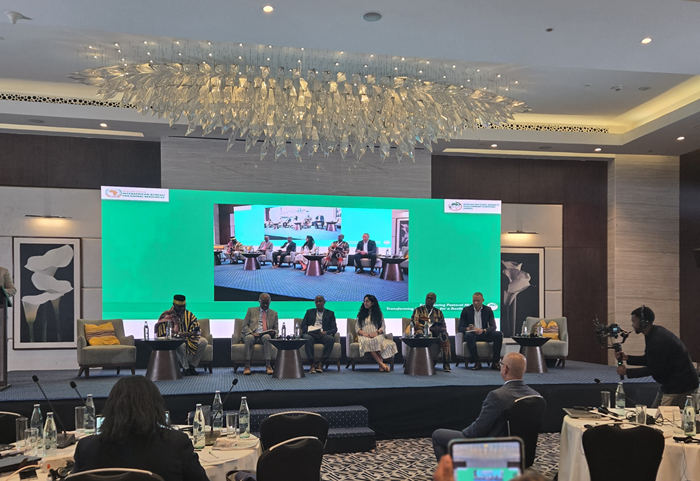
The panel on livestock as an economic asset class brought together representatives of the Gates Foundation, the International Finance Corporation, the World Bank, the Food and Agriculture Organisation of the United Nations, the African Development Bank and the International Fund for Agricultural Development. It was followed by a Pastoral Voices session in which community representatives shared the market realities, innovations and opportunities experienced by livestock producers.
The first panel challenged the tendency to view pastoralism mainly through the lenses of vulnerability, humanitarian assistance and subsistence. Participants argued that pastoral livestock is a complete economic system encompassing animal production, feed, animal health, aggregation, transport, processing, trade and financial services.
“We must transform pastoral livestock from an informal production system into a structured economic sector.”
This transformation does not mean replacing pastoral production systems or disregarding livestock mobility, communal resource management and indigenous knowledge. Rather, it means building institutions and markets that allow pastoral communities to capture more value from the livestock resources they already own and manage.
Despite Africa’s large livestock population, its participation in formal regional and international markets remains limited. Weak market organisation, inadequate infrastructure, fragmented trade systems, limited processing and poor access to market information continue to suppress value.
The Forum therefore placed emphasis not only on increasing production but also on developing complete value chains that connect pastoral producers to aggregation, standards, processing, transport, finance, and regional trade.
The Gates Foundation highlights AU-IBAR’s continental relevance
Speaking during the investment panel, the Gates Foundation representative, Dr Obai Khalifa emphasised the importance of AU-IBAR as a continental institution capable of connecting evidence, investment and policy across African Union Member States.
His intervention highlighted that the transformation of pastoral livestock markets cannot be achieved through finance alone. Investors require functioning institutions, predictable policies, reliable data and coordinated rules governing animal health, livestock movement, trade, standards, land, water and market access. He noted:
“AU-IBAR is important because it provides the continental platform through which evidence can inform policy and successful approaches can be taken to scale. It can bring governments, investors, development partners and pastoral communities together around policies that enable livestock markets to grow.”— Obai Khalifa, Gates Foundation
The Gates Foundation highlighted AU-IBAR’s central role in aligning policy, regional coordination and investment across borders. Through APMD, AU-IBAR can reduce policy barriers, strengthen market and data systems, and scale viable enterprise models, while philanthropic funding helps de-risk early investment and attract commercial finance rather than replace it.
AU-IBAR urged to sustain the momentum
Participants stressed that AU-IBAR and APMD have a responsibility extending beyond convening the Forum.
Their value lies in connecting policy, evidence, investment and pastoral voices across borders, while ensuring that the recommendations emerging from the Forum are translated into practical action.
One participant proposed:
“One priority action for APMD is to continue facilitating the organisation and representation of pastoralists in livestock markets and to strengthen producer organisations.”
Stronger producer organisations would improve bargaining power, increase access to financial services and strengthen the position of pastoralists when negotiating with traders, processors and governments.
Another participant warned against treating the Forum as an isolated event:
“At the end of this programme, we should not say that we are done. This should be the starting point for continued engagement with pastoral communities.”
The intervention reflected a wider concern that continental meetings often generate strong recommendations without an equally strong mechanism for implementation.
Participants therefore called for a clear follow-up framework to track commitments, keep producer organisations engaged and connect emerging enterprises with investors, financial institutions and public agencies.
Infrastructure must support livestock movement and value creation
Infrastructure was identified as one of the most important conditions for transforming pastoral livestock markets.
Participants highlighted the need for livestock corridors, aggregation centres, veterinary border facilities, slaughterhouses, processing plants, cold-storage facilities, transport systems and reliable water infrastructure.
However, the panel stressed that constructing individual facilities would not be sufficient. A slaughterhouse cannot operate sustainably without a reliable supply of livestock, water, energy, veterinary services, transport connections and access to buyers.
Infrastructure investments must therefore respond to real livestock movements and trading patterns rather than being designed as isolated national projects.
Cross-border infrastructure was considered especially important because many pastoral production and marketing systems operate across national boundaries. The panel called for investments that support livestock mobility, animal-health certification, aggregation, processing and regional trade.
Water and rangelands must also be treated as productive economic infrastructure. They underpin animal productivity, supply reliability and long-term investment sustainability.
Finance must reflect pastoral realities
Access to finance emerged as another major issue.
Participants argued that conventional lending models often exclude pastoral producers because they depend on fixed collateral, formal banking histories and predictable monthly income.
Pastoral enterprises operate within conditions shaped by seasonality, livestock mobility, drought, disease and fluctuating markets. Financial products must therefore reflect these realities.
The panel called for a combination of patient capital, blended finance, guarantees, livestock insurance, credit enhancement and investment-readiness support.
Public and philanthropic finance was viewed as particularly important during the early stages of enterprise development, when businesses may not yet have the systems or financial records required to attract commercial capital.
However, participants also cautioned that access to money alone cannot make an enterprise sustainable.
“Financial institutions cannot unlock resources for enterprises that are not viable and unable to generate returns.”
Livestock enterprises need credible business models, reliable supply systems, market linkages, financial records and effective management. Finance must therefore be accompanied by mentorship, incubation, technical assistance and access to market intelligence.
Knowledge must reach pastoral communities
A particularly strong intervention focused on communication and knowledge access.
Participants observed that many studies, policies and market-information systems are developed without ensuring that the findings reach pastoral communities in forms they can understand and apply.
One speaker warned:
“Unless you get the information directly to them, it will remain on the shelves.”
Pastoralists should not be treated only as sources of data. As owners and managers of livestock, they must participate in generating, interpreting and using information relating to production, markets and policy.
This has important implications for AU-IBAR’s knowledge-management role.
Market data and research findings should be translated into practical information on livestock prices, buyers, animal-health requirements, weather, standards, trade conditions and financing opportunities.
Information should also be delivered in local languages through trusted channels, including producer organisations, radio, extension services, mobile phones and community networks.
Knowledge systems must support two-way communication by allowing pastoral communities to contribute local experience and provide feedback on whether policies and interventions are working.
Women contribute to the value chain but remain excluded from market power
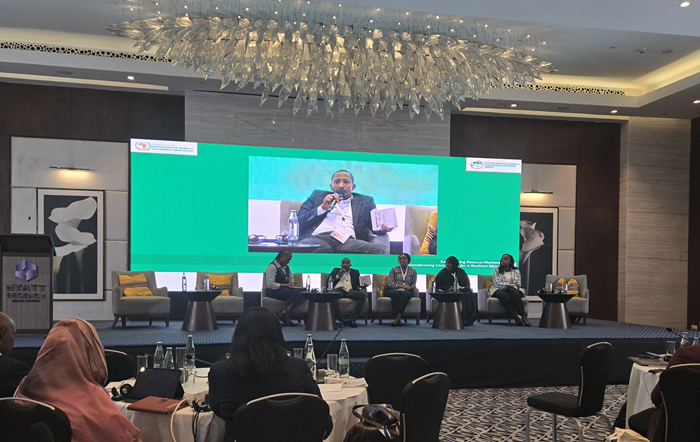
The second panel focused on unlocking women- and youth-led enterprises in pastoral livestock markets.
It featured entrepreneurs from SDK Farms, Livemo, Genco, ABF United and Siwole Trading Company, with technical facilitation by SNV.
The discussion challenged the assumption that participation automatically produces empowerment.
Women are active across livestock production, processing, aggregation and trade, but their roles are often concentrated in lower-value and less visible parts of the value chain.
Participants identified limited asset ownership, restricted mobility, inadequate access to finance, weak market information and exclusion from decision-making as major barriers.
One pastoral representative explained:
“Women may own livestock, but in the market they are often represented by men.”
Because market transactions are frequently not recorded in women’s names, they struggle to establish formal banking histories. This limits their ability to access loans, develop independent enterprises and retain control over business income.
Participants argued that women’s inclusion must be measured through ownership, leadership, control over income and participation in decision-making—not simply through attendance at meetings or project activities.
Youth want practical opportunities, not training alone
Young people raised concerns about programmes that provide training without connecting them to productive assets, markets, mentors and finance.
Skills development remains important, but training alone does not create a sustainable enterprise.
The youth message was direct:
“Young people do not only need to be invited into livestock discussions; they need practical opportunities to own businesses, access markets and participate in decisions.”
Effective youth support must combine skills development with enterprise incubation, digital technology, mentorship, finance, procurement opportunities and access to markets.
Young participants also called for greater involvement in the design of livestock programmes. Interventions created without youth participation may fail to reflect their aspirations, preferred technologies and business models.
The wider lesson was that young people should not be treated only as future beneficiaries. They are already innovators, service providers, traders and entrepreneurs capable of contributing to the transformation of livestock markets.
Distance, brokers and poor information reduce producer value
Market access remains difficult for many pastoral producers.
Participants described livestock markets that require producers to travel for many hours or even several days. Such distances particularly disadvantage women, who may face mobility limitations and competing household responsibilities.
Brokers also play a dominant role in livestock transactions, particularly where producers lack access to transparent market information.
One speaker stated:
“They do not have access to information on prices, demand, what is needed and how much is required.”
Without reliable information, producers cannot plan production according to market demand, select animals that meet buyer requirements or negotiate from an informed position.
Digital platforms were identified as a potential means of improving price discovery, linking producers with buyers and expanding access to veterinary and financial services.
However, digital inclusion will require attention to connectivity, affordability, literacy, language and women’s access to mobile devices. Digital tools should complement—not replace—physical infrastructure, producer organisations and human advisory services.
Climate resilience is business resilience
The panels also demonstrated that livestock enterprise development cannot be separated from climate and natural-resource conditions.
Drought, water scarcity, declining feed availability, livestock disease and rangeland degradation are not only environmental concerns. They are commercial risks that affect supply, productivity and investment returns.
For women and young people building new businesses, one severe drought can destroy livestock assets, interrupt market supply and eliminate working capital.
Secure water, reliable feed systems and healthy rangelands must therefore be recognised as economic investments that reduce risk and strengthen investor confidence.
Climate information, livestock insurance, improved feed technologies and water investments should become standard components of pastoral enterprise development.
From participation to ownership
The broader message from Day One was that pastoral market transformation cannot be achieved through isolated interventions.
Finance without infrastructure will not create competitive markets. Infrastructure without reliable livestock supply and producer organisation will remain underused. Data without effective communication will not improve decision-making. Training without access to finance and markets will not produce sustainable youth enterprises.
The inclusion of women and youth must similarly move beyond participation towards ownership, leadership, income control and institutional influence.
The moderator’s closing reflection captured the urgency:
“We need campaigns; we need to make the sector more visible. We need political commitment, functioning government systems and stronger skills. We are not short of ideas, we are short of time.”
Africa already possesses the livestock, knowledge, entrepreneurs and growing consumer demand required to develop a competitive pastoral livestock economy.
The next step is to build the connected market ecosystem that allows pastoral women, men and young people to transform those assets into viable enterprises, stronger livelihoods, expanded trade and regional economic growth.