

Livestock has allowed me to rebuild my life »The testimony of Jeanne Coevoli, breeder in Guinea
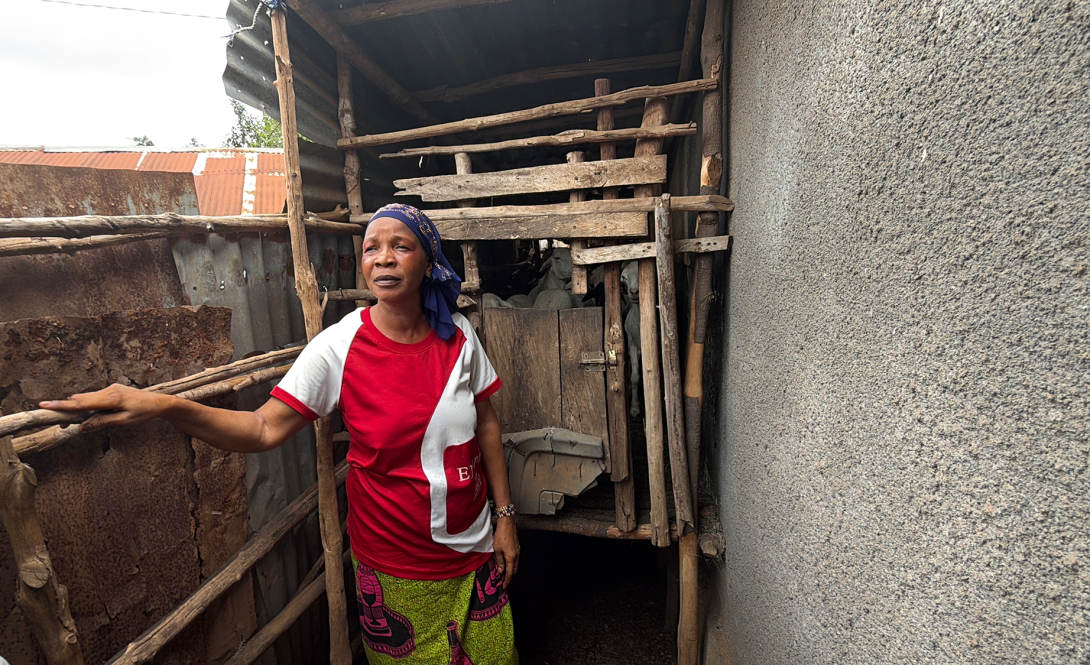
Pamelap, Guinea - 180 kilometers from Conakry, at the border village between Guinea and Sierra Leone, Jeanne Coevoli observes over her herd of sheep every morning. For her, these animals represent much more than a means of subsistence: they have become the symbol of her resilience and hope.
« My name is Jeanne Coevoli. I am a livestock keeper and I live in the village of Pamelap. My journey into livestock farming began with advice which changed my life. »Jeanne still remembers the words of an elderly man from her village.
« Your husband is a soldier. You should keep few animals. It is a sign of blessing and prosperity. So your compound will never be empty. » Following that advice, Jeanne purchased her first sheep, never imagining that this small investment would one day become the economic foundation of her entire family.
Few years later, a tragedy stuck when her husband passed away. « It was a very difficult time. Overnight, I found myself alone in supporting my children. Fortunately, I still had my animals. »
Since then, livestock farming has become its main source of income. By selling sheep, Jeanne has been able to feed her family, pay her children's school fees and covers everyday expenses.
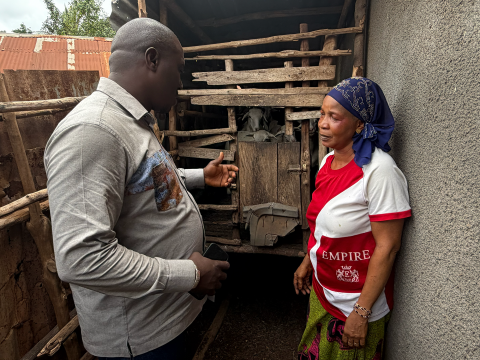
But one morning, several of the sheep fell ill. « They had diarrhea and I was terrified. I asked myself: If I lose my animals, how will I feed my children? ». Being aware of the danger, Jeanne sought advice from a neighbor who is a butcher. He immediately recommended to contact the village veterinarian, and explained the urgency of the situation. Within a few hours, a veterinarian arrives.
After assessing the animals, the veterinarian implemented the necessary sanitary measures and recommended that all the flock needs to be vaccinated against the Peste des Petits Ruminants. He also showed Jeanne how to recognize the first signs of the disease. This intervention marks a real turning point.
« I realized that vaccination was the best protection for my herd. Veterinarians not only come to vaccinate animals; they also teach us how to recognize diseases quickly and act before it’s too late. »
Today, Jeanne follows the advice she received. Her animals are healthy and continue to provide her with a stable income.
« For me, protecting my animals means protecting my family. Every healthy animal represents a meal on our table, my children’s school fees and hope for a better future. »
Her testimony illustrates the vital role of vaccination campaign are families awarness whose livelihoods depend directly on the health of their animals.
Jeanne's story illustrates the essential role of vaccination, raising awareness among farmers and strengthening Veterinary Services in the fight against the Peste des Petits Ruminants (PPR).
By improving access to veterinary services, building herder capacity, and promoting early detection of disease, these interventions help protect herds, preserve the livelihoods of rural communities, and accelerate progress towards the African Union’s goal of eradicating PPR .
This testimony was collected during a Monitoring and Evaluation Mission conducted by the Pan-African Programme for the Eradication of Peste des Petits Ruminants (PPR), coordinated by the Pan-African Secretariat (PAPS), hosted by AU-IBAR, in collaboration with the Veterinary Services of Guinea and with financial support from the European Union.