

Mukhtar Challenges Africa to Match Animal Disease Commitments with Action
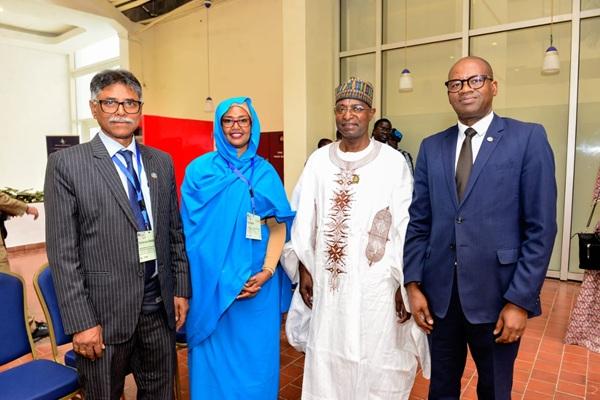
Nigeria's Minister of Livestock Development, Idi Mukhtar Maiha, has challenged African countries to move beyond policy commitments and invest the political will and resources required to control transboundary animal diseases, warning that repeated delays in implementing regional decisions are undermining livestock productivity, food security and trade across the continent.
Mukhtar gave the charge on Tuesday 10th November, 2026 in Abuja, at the opening of the 13th Meeting of the Regional Steering Committee of the Global Framework for the Progressive Control of Transboundary Animal Diseases (GF-TADs) for Africa, hosted by the Federal Ministry of Livestock Development.
He noted that despite two decades of regional deliberations, the gap between decisions and implementation remained a major weakness in Africa's response to animal disease outbreaks.
“The record shows a Committee that has become very good at convening and less sure that its decisions travel,” he said, noting that strategies agreed at regional meetings often encounter funding constraints and competing priorities when they reach national institutions.
He warned that animal diseases continued to spread across borders without regard for national boundaries, threatening livestock production and limiting Africa's ability to benefit from regional and international trade.
“Diseases do not go on recess or take a break. They cross and ravage on without regard to boundaries, political or administrative,” Mukhtar said.
He identified the revision of the African Peste des Petits Ruminants (PPR) eradication timeline, replenishment of the continental vaccine bank and stronger coordination of Foot-and-Mouth Disease (FMD) control as priority issues requiring concrete decisions.
On the proposed revision of the 2030 PPR eradication target, the Minister called for an evidence-based deadline supported by clear accountability for vaccination coverage and delivery.
He also stressed the need for a continental vaccine bank that can respond quickly to outbreaks, arguing that accessibility and delivery time should guide decisions on vaccine stock management.
“A continental vaccine bank that can be drawn down within days of an outbreak is worth more to Africa than a larger stock held further away. Africa's vaccine sovereignty is a matter of animal health security, and the replenishment question ought to be answered on that basis, ” he said.
The Minister reaffirmed Nigeria's commitment to the GF-TADs mechanism, explaining that the country accepted to host the meeting because of its confidence in the framework as an important instrument for addressing Africa's animal health challenges.
He pledged Nigeria's political support for the committee and said the Federal Government would work with the 36 states and the FCT, including relevant institutions to strengthen implementation of its decisions.
Earlier, the Permanent Secretary of the Ministry, Dr. Chinyere Ijeoma Akujobi, said Nigeria's hosting of the meeting reaffirmed its commitment to regional biosecurity, safe animal trade and the development of a resilient livestock sector.
Dr. Akujobi who was represented by the Chief Veterinary Officer of Nigeria, Dr. Samuel Anzaku, noted that transboundary animal diseases do not recognise national boundaries, making collective action essential.
“They do not check passports at our borders. As such, our challenges are shared, and consequently, our solutions must be collective, synchronised and resolved,” she said.
The Director of AU-IBAR, Dr. Huyam Salih, also underscored the importance of translating continental priorities into coordinated national action. In her remarks, she highlighted the need to review progress under the existing strategic framework, establish clear priorities for the next implementation period and strengthen coordination between continental institutions, regional economic communities and national governments.
Salih urged participants to ensure that recommendations from the meeting were aligned with Africa's broader livestock development priorities and supported by effective implementation arrangements.
In a goodwill message, the representative of the World Organisation for Animal Health (WOAH), Dr. Neo Joel Mapitse, called for stronger government ownership and increased domestic funding for transboundary animal disease control.
He said development partners were willing to support African countries but expected governments to demonstrate commitment through political will and adequate budgetary allocations.
Mapitse highlighted progress in strengthening veterinary services across Africa, noting that all WOAH member countries on the continent had undergone the Performance of Veterinary Services (PVS) evaluation process, including Nigeria.
He also called for stronger coordination among AU-IBAR, WOAH, the Food and Agriculture Organization of the United Nations (FAO) and other institutions under the One Health approach.
The FAO representative, Dr. Mohammed Shamsuddin, identified gaps in disease surveillance, laboratory services, biosecurity and emergency preparedness as continuing challenges to effective animal disease control.
He noted that transboundary diseases were affecting livestock producers, pastoralists, food security, public health and trade, with climate variability and changing production systems further complicating the situation.
Dr. Shamsuddin highlighted FAO's support for strengthening animal health systems across Africa, including the training of nearly 3,000 professionals in 46 countries and capacity development for 70 veterinary laboratories. He added that 53 laboratories across the continent had the capacity to identify priority economically important animal diseases.
He urged participants to shift attention from reporting activities to measuring results, including earlier disease detection, faster outbreak response and the translation of regional strategies into adequately funded national programmes.
The three-day meeting is expected to review progress on previous recommendations and agree on priority interventions for the control of transboundary animal diseases in Africa.
Key areas of deliberation include PPR eradication, FMD prevention and control, African Swine Fever, vaccine bank replenishment, disease surveillance, laboratory capacity, digital monitoring and coordination among national and regional veterinary services.
The meeting brings together representatives of AU-IBAR, FAO, WOAH, regional chief veterinary officers, development partners and other stakeholders.
___________________________________________________________________________________
by Oghenekevwe Uchechukwu
For: Head, Press and Public Relations
10th November, 2026