

Central Africa Validates Its Regional Strategy for the Eradication of Peste des Petits Ruminants (PPR)
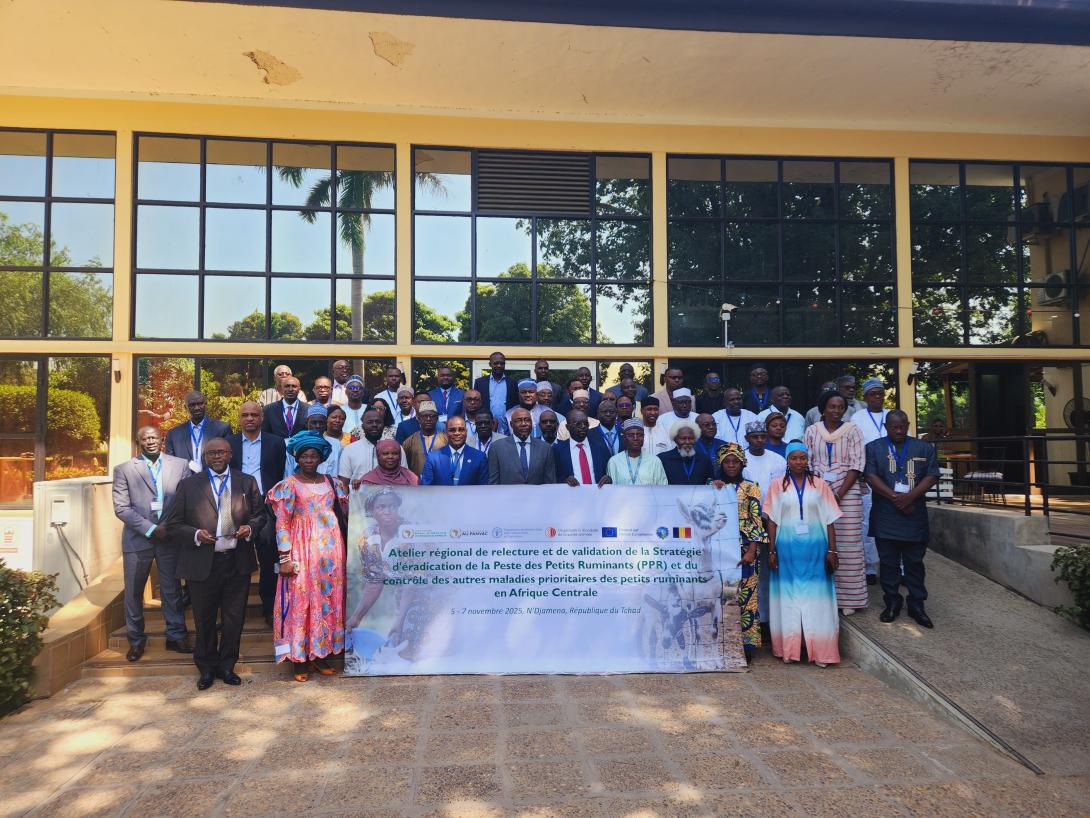
N’Djamena, Chad 5-7 November 2025-The fight against Peste des Petits Ruminants (PPR) took a decisive step forward in Central Africa with the Regional Workshop for the Review and Validation of the Regional PPR Eradication Strategy, held from 5 to 7 November 2025 in N’Djamena, Chad.
Organized under the leadership of the African Union- Interafrican Bureau for Animal Resources (AU-IBAR), in collaboration with the Economic Community of Central African States (ECCAS/CEEAC) through the ECCAS Regional Animal Health Centre for Central Africa (RAHC-AC) and Chad Government, and with the financial support of the European Union (EU), the event gathered over 60 participants from seven ECCAS Member States, technical and financial partners, and international organizations including the Food and Agriculture Organization (FAO), the World Organisation for Animal Health (WOAH), AU-PANVAC, the International Committee of the Red Cross (ICRC) , German Corporation for International Cooperation (GIZ), Veterinarians Without Borders (VWB) and Lake Chad Basin Commission (LCBC)
This high-level workshop aimed to update and harmonize the 2016 Regional PPR Eradication Strategy in line with the latest continental and global frameworks notably the FAO WOAH Global PPR Eradication Strategy (2015-2030), the AU Blueprint (2023–2027), and the Pan-African PPR Eradication Programme (PPE-PPR) led by AU-IBAR.
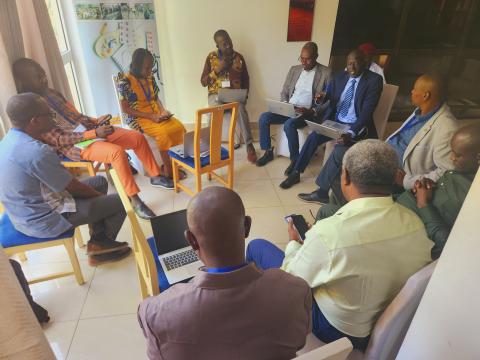
Participants worked to integrate lessons learned, align national and regional priorities to continental PPR Eradication and control of other small ruminant priority diseases, and adopt a shared roadmap to accelerate PPR eradication by 2030
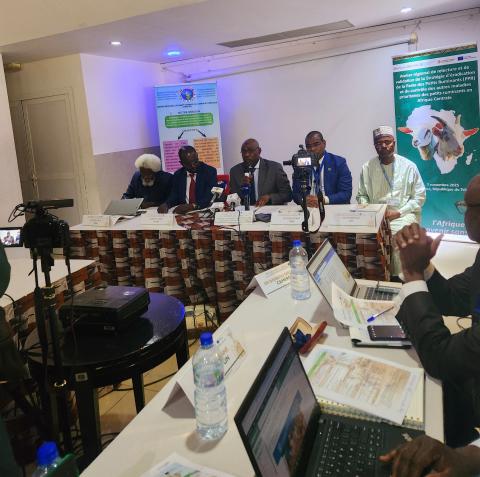
The official opening was presided over by H.E. Prof. Abderahim Awat Atteib, Minister of Livestock and Animal Production of Chad, who underscored the strategic importance of the workshop for the livelihoods of millions of rural families:
“PPR is not only an animal disease it is a systemic threat to food security and rural stability. Each outbreak undermines the income, dignity, and resilience of our pastoral communities. We must act collectively and decisively to eliminate it from Africa.”
He called upon all Central African States to allocate specific national budget line, dedicated to PPR eradication in respective countries and to sustain veterinary services and ensure ownership of the eradication process.
Representing the AU-IBAR, Dr. Hiver Boussini, Senior Animal Health and Pan African PPR Eradication Program Secretariat Head, conveyed the message of Dr. Huyam Salih, AU-IBAR Director. He praised the commitment of ECCAS Member States and the establishment of the Regional Animal Health Centre in N’Djamena, stressing that:
“The eradication of PPR by 2030 is not only a continental goal but a symbol of Africa’s capacity to unite for food security, prosperity, and resilience. According to the speaker, AU-IBAR remains committed to providing technical, institutional, and strategic support to Member States.”
Also addressing the opening session were representatives of FAO, WOAH, the European Union, CEBEVIRHA, and RAHC, all reaffirming their support for regional coordination, laboratory strengthening, and vaccination coverage improvement.
Over three days, participants engaged in plenary presentations, working group discussions, and technical reviews. The agenda covered:
• Epidemiological trends and diagnostic capacity in Central Africa;
• Integration of wildlife surveillance and socio-economic dimensions in control programmes;
• Review of ToR of the RESEPI-AC (Epidemiological Surveillance Network), RESOLAB-AC (Regional Veterinary
Laboratory Network), and the Regional Veterinary Committee (CRV) frameworks;
• And Drafting respective action for 2026.
Participants were divided into thematic groups focusing on:
1. Updating and aligning the regional strategy with the AU Blueprint;
2. Reinforcing veterinary governance and laboratory coordination;
3. Developing a 2026-2030 Regional Roadmap for implementation and monitoring.
The discussions emphasized the need for digitalized surveillance, national ownership, and strengthened cross-border coordination through RECs.
During the plenary session, the consolidated version of the Revised Regional PPR Eradication Strategy was presented and validated by consensus.
Delegates endorsed the updated document as the regional framework guiding all ECCAS countries toward PPR eradication and integration of One Health principles.
The validation also marked a renewed political and technical commitment among Central African governments and partners to intensify resource mobilization and sustain collective progress.
The workshop concluded with a closing ceremony chaired by the Ministry of Livestock and Animal Production, in the presence of AU-IBAR, ECCAS, and partner representative.
Key recommendations adopted included:
1. Integration of PPR funding into national budgets and strengthening of veterinary governance;
2. Operationalization of RESEPI-AC, RESOLAB-AC, and CRV with clear coordination mandates;
3. full implementation of the Regional Roadmap 2026 by respective responsible institutions ;
4. Promotion of digital tools for disease monitoring and reporting;
5. Enhanced regional cooperation and donor engagement for sustainable financing and technical capacity building.
The validated strategy will now undergo ministerial endorsement and official dissemination by early 2026, under ECCAS strategic coordination, AU-IBAR technical support and with EU financial contribution.
Next Steps
• Ministerial endorsement of the validated strategy by December 2025;
• Printing and distribution to all ECCAS Member States and regional partners by January 2026;
• Launch of implementation phase (2026–2030), focusing on surveillance, vaccination, and data integration.
The workshop reaffirmed Central Africa’s determination to progress toward a PPR-free Africa by 2030, aligned with Agenda 2063 and the Sustainable Development Goals (SDGs).
The N’Djamena workshop stands as a landmark in the regional fight against PPR a tangible demonstration of solidarity, scientific collaboration, and political will.
Through the leadership of AU-IBAR, the coordination of ECCAS/RAHC-AC, and the support of FAO, WOAH, and the European Union, Central Africa is setting a continental example in veterinary cooperation and sustainable livestock development.