

Ethiopia Reviewed and Validates Its Second National Strategic Plan for the Eradication of PPR by 2030
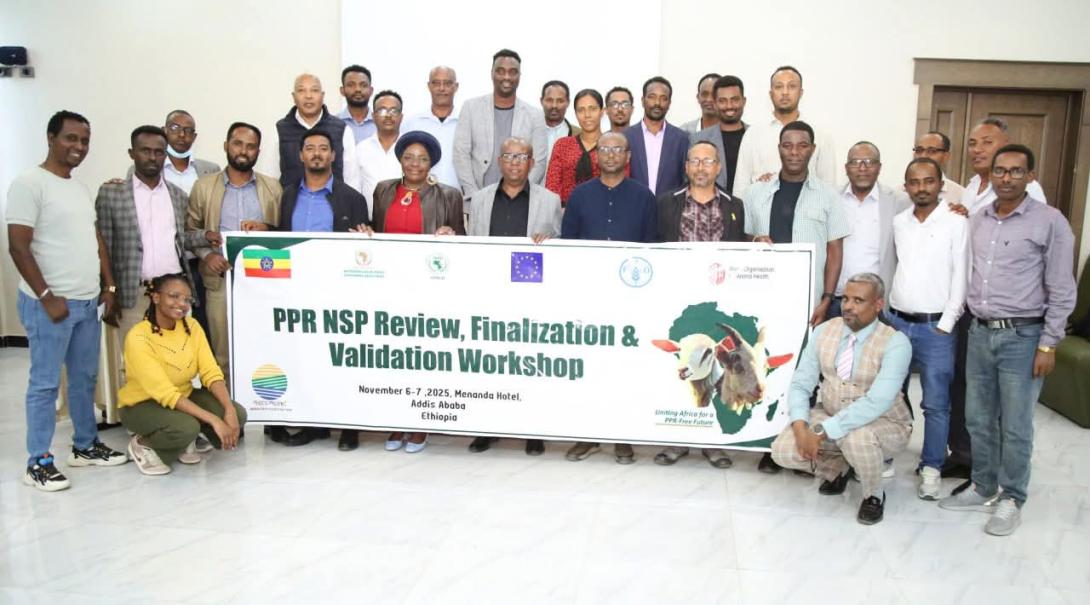
6-7 November, Ethiopia, Addis Ababa has taken a decisive step toward eradicating Peste des Petits Ruminants (PPR) with the successful review, finalization, and validation of its Second National Strategic Plan (NSP 2025-2030). The event marks a renewed national and regional commitment to eliminate one of Africa’s most devastating transboundary animal diseases affecting sheet and goats.
Convened by the Ministry of Agriculture (MoA) in partnership with the African Union-Interafrican Bureau for Animal Resources (AU-IBAR) and the IGAD Centre for Pastoral Areas and Livestock Development (ICPALD), the two-day workshop gathered over 30 participants from national institutions, regional organisations, and international partners.
Key partners FAO, VSF Germany, VSF Suisse, ILRI, BioFarma, and the Ethiopian Wildlife Conservation Authority (EWCA),actively participated in reviewing the updated strategy and aligning it with the Global PPR Eradication Programme, the Pan-African.
The official opening was conducted by Mr Girma Mulugeta, on behalf of H.E. Dr Fikru Regassa, State Minister and Chief Veterinary Officer (CVO) of Ethiopia. In his address, Mr Girma reaffirmed the government’s strong political will:and he added
“The eradication of PPR is not just a veterinary target , it is an economic and social necessity.
Ethiopia remains committed to implementing the National Strategic Plan with the same determination that led to our historic success against Rinderpest. We will strengthen veterinary services, invest in research, and work with regional partners to achieve a PPR-free
Africa by 2030.”
This workshop demonstrates Ethiopia’s unwavering commitment to livestock health and resilience. AU-IBAR Represented by IGAD Coordinator Dr Wubishet Zewdie appreciates the Government of Ethiopia for hosting this milestone event and for the close collaboration among partners in refining the national PPR strategy.Representatives from FAO (Dr Hassen), VSF Germany (Dr Abay Bekele), ILRI (Dr Gezahegn Alemayehu), and EWCA underscored the need for coordinated, multi-sectoral collaboration to eradicate PPR and protect rural livelihoods.
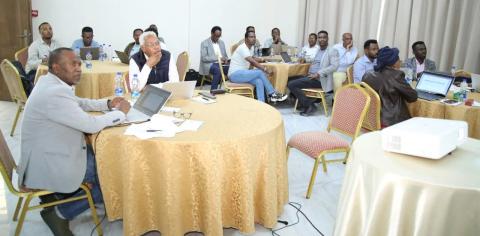
Participants then reviewed each component of the NSP and provided technical inputs, ensuring that national priorities remain harmonised with continental and regional frameworks.
Throughout the process, AU-IBAR played a central coordinating and technical role, reaffirming its continental mandate to improve animal health, enhance livestock productivity, and promote regional integration.
The workshop achieved the following results:
-
Validated Ethiopia’s Second PPR NSP (2025-2030) through broad consensus among national and regional experts.
-
Secured national ownership and partner alignment for coordinated implementation.
-
ntegrated wildlife surveillance, risk-based vaccination, and communication pillars into the final plan.
-
Established follow-up actions for ministerial endorsement, printing, and dissemination before the end of 2025.
-
Strengthened multi-sectoral collaboration across veterinary, wildlife, research, and private sectors.

In the closing ceremony, Dr Annie Kigezo, speaking on behalf of Dr Huyam Salih, Director of AU-IBAR, congratulated the Government of Ethiopia and partners:
“Ethiopia’s renewed commitment to PPR eradication is an inspiration for the continent.
AU-IBAR will continue supporting Member States in implementing effective control measures, strengthening veterinary systems, and ensuring that no country is left behind on the path to a PPR-free Africa.”
Representatives from ILRI (Dr Gezahegn Alemayehu) and VSF Germany (Dr Abay Bekele) reaffirmed their commitment to assist the Mministry of Agriculture in implementing the NSP and achieving eradication targets.
Finally, Mr Girma Mulugeta, representing H.E. Dr Fikru Regassa, formally validated and closed the workshop, highlighting that “Ethiopia’s veterinary sector is fully mobilised to deliver on the PPR eradication agenda and to strengthen national and regional livestock systems.”
Under the leadership of the Ministry of Agriculture, with technical support from AU-IBAR, regional coordination by IGAD, and financial assistance from the European Union, Ethiopia’s Second PPR National Strategic Plan (2025–2030) stands as a model of national ownership, scientific excellence, and regional solidarity.
It contributes directly to Agenda 2063, the Global PPR Eradication Programme, and the Pan-African PPR Framework, reaffirming Ethiopia’s role as a driving force in advancing food security, rural livelihoods, and sustainable livestock development.