

Uganda Validated Its National Strategy Plan to Eradicate PPR by 2030

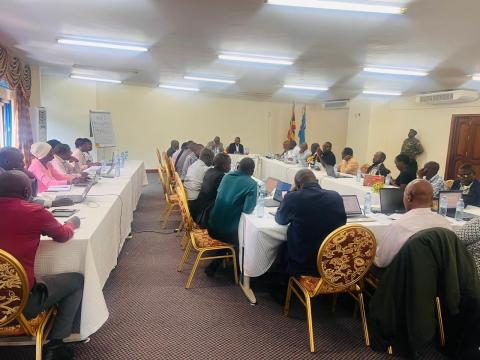
Entebbe, Uganda, 2-3 November 2025-Uganda has taken a decisive step forward in its commitment to eradicate Peste des Petits Ruminants (PPR) by 2030. National experts, policymakers, and key stakeholders convened in Entebbe for a two-day national workshop to review, finalize, and validate the National Strategy for the Eradication of PPR (2025/26–2029/30).
The workshop brought together representatives from the Ministry of Agriculture, Animal Industry and Fisheries (MAAIF), district veterinary officers, research institutions, and farmer associations, alongside regional and international partners such as the African Union – Interafrican Bureau for Animal Resources (AU-IBAR), the Food and Agriculture Organization (FAO),World Organisation for Animal Health (WOAH) and the European Union (EU) the funding partner supporting this continental effort.
The national consultation aimed to ensure Uganda’s PPR eradication strategy is fully aligned with continental, global and regional frameworks. Specifically, it sought to:
- Integrate lessons learned from the 2020-2024 implementation period;
- Address remaining epidemiological and operational gaps;
- Strengthen inter-institutional coordination and accountability; and
- Define measurable milestones and indicators to guide Uganda’s path toward a PPR-free status by 2030.
Peste des Petits Ruminants (PPR), remains one of the most devastating transboundary animal diseases, threatening the livelihoods of millions of smallholder farmers across Africa. Uganda’s revised strategy draws inspiration from its historic success in eradicating Rinderpest, reaffirming its position to eradicate PPR by 2030.
The workshop was officially opened by Hon. Dr. Bright K. Rwamirama, State Minister for Animal Industry, who underscored the government’s determination:
“By following in the footsteps of our historic success against Rinderpest, Uganda can write a new chapter of victory. We are committed to eradicating PPR by 2030 together, let us make PPR a disease of the past.”
Speaking on behalf of Dr. Huyam Salih, Director of AU-IBAR, Prof. James Wabacha commended Uganda’s leadership and consistency:
“Eliminating PPR will protect the assets of rural communities, safeguard livelihoods, and contribute meaningfully to the socio-economic development of the African continent.”
Uganda’s Chief Veterinary Officer, Dr. Anna Rose Ademun, emphasized a collective approach:
“The success of this strategy depends on our unity, technical rigor, and shared determination to make small-ruminant farming more resilient and productive.”
At the conclusion of the workshop, participants agreed on a series of priority recommendations to accelerate Uganda’s progress toward PPR eradication and ensure sustainable implementation of the strategy:
- Strengthen national coordination mechanisms under MAAIF to enhance inter-agency collaboration, monitoring, and accountability at all administrative levels.
- Integrate PPR control into national livestock and resilience programmes, ensuring sustainable financing through domestic budget allocations and alignment with the African Union’s PPR Global Eradication Programme (PPR-GEP).
- Enhance diagnostic and surveillance capacities, including laboratory infrastructure, sample transportation systems, and real-time data sharing through the continental RESEPI network.
- Scale up vaccination campaigns using harmonized regional approaches, supported by private sector partnerships and community-based delivery models.
- Promote public awareness and behavioral change, targeting livestock keepers, traders, and local authorities through inclusive communication strategies that emphasize the economic and social benefits of eradication.
- Foster cross-border collaboration with neighboring countries and Regional Economic Communities (RECs) to prevent disease re-introduction and ensure synchronized interventions.
- Mobilize sustainable financing through continued EU support and engagement with other development partners such as AfDB, World Bank, and bilateral donors.
These recommendations will guide the next phase of Uganda’s implementation roadmap (2025–2030) and serve as a model for other countries advancing toward PPR eradication.
This milestone was achieved under the EU-funded Project to Support the Eradication of PPR from Africa, implemented by AU-IBAR in collaboration with FAO, WOAH, and the Regional Economic Communities (RECs). The validation marks a significant step toward achieving Africa’s continental goal of PPR eradication by 2030, reinforcing the EU–AU partnership for sustainable livestock development and resilient rural livelihoods.
By adopting this new roadmap (2025–2030), Uganda demonstrates that eradicating PPR is not merely a veterinary target, but a strategic economic, social, and humanitarian priority for the nation and the continent.
With financial support from the European Union Implemented by AU-IBAR in collaboration with FAO,WOAH and REC.