

The Gambia Advances Toward a PPR-Free Future: National Stakeholders Unite to Review and Update the 2025-2030 PPR Eradication Strategy
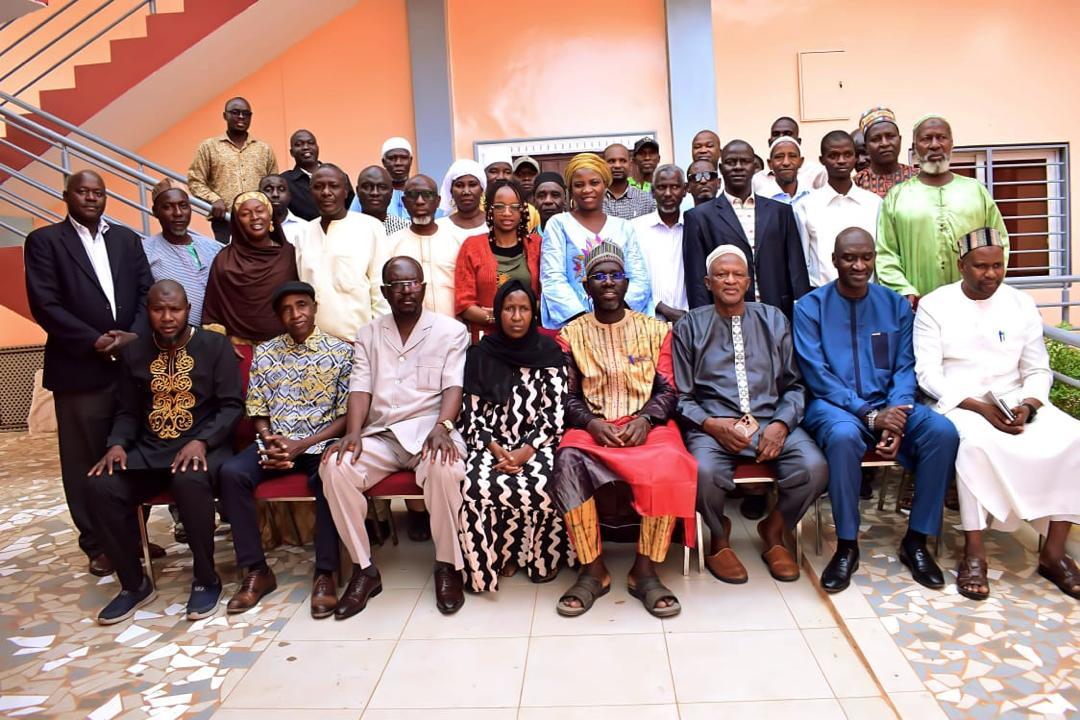
From 23–24 November 2025 Baobab Holiday Resort, The Gambia has taken a decisive step toward strengthening its fight against Peste des Petits Ruminants (PPR), a devastating livestock disease that threatens rural livelihoods, women’s economic empowerment, and national food security.
Over two days, government officials, livestock experts, regional and continental partners, and farmer organizations convened for a high-level national workshop to review and update the country’s National PPR Control and Eradication Strategy (2017-2027) and develop a new, costed Action Plan for 2025-2030.
The workshop, supported by the Pan-African PPR Eradication Programme and funded by the European Union, brought together more than 30 key stakeholders, including representatives from the Ministry of Agriculture, Department of Livestock Services (DLS), National Livestock Farmers’ Association (NaLOA), academia, FAO, AU-IBAR and professional veterinary bodies.
In his opening address delivered on behalf of the Minister of Agriculture, the Deputy Permanent Secretary underscored the urgency of revitalizing the national strategy, highlighting that PPR remains a direct threat to livestock productivity, household nutrition, and resilience. The Minister called on participants to be analytical, innovative, collaborative, and ambitious, emphasizing that the revised strategy will serve as “a blueprint for protecting the wealth of our nation, stored in the hooves of our livestock.”
The Director General of DLS echoed this message, pointing to the heavy socio-economic burden of PPR. Despite progress including improved diagnostics, partner-supported vaccination campaigns, and epidemiological mapping the country continues to face shortages of veterinary personnel, cold chain gaps, and porous borders. These realities, he stressed, require practical, well-coordinated solutions.
Representing the Director of AU-IBAR, Dr. Hiver Boussini delivered a comprehensive technical address situating The Gambia’s efforts within broader African and global frameworks, including Agenda 2063, CAADP commitments, LiDeSA, and the FAO,WOAH Global PPR Eradication Strategy.
He noted that while the 2017–2027 strategy is solid, it must evolve to become more operational, better aligned with PPR GEP II (2023–2027), and strongly connected to the continent-wide EU-funded Pan-African PPR Eradication Programme.
Among the recommended priorities for the 2025–2030 strategy, he highlighted:
- Strengthened governance and Veterinary Services
- Risk-based surveillance and hotspot mapping
- Structured vaccination planning with post-vaccination evaluation
- Increased laboratory quality assurance and regional networking
-
Image

- A dedicated communication and advocacy strategy
- A realistic and diversified resource-mobilization plan
He reaffirmed AU-IBAR’s long-term technical support, noting that “The Gambia will not walk this path alone. AU-IBAR, ECOWAS, FAO, WOAH and AU-PANVAC stand ready to support implementation through the Pan-African PPR Secretariat.”
Following the opening ceremony, the Chief Veterinary Officer (CVO) presented the workshop’s objectives, which ranged from reviewing the epidemiological status of PPR to updating the strategy and producing a costed Action Plan aligned with continental and global frameworks.
Participants then broke into four technical working groups to conduct a chapter-by-chapter review of the current strategy and its first Action Plan. The session identified both achievements and implementation gaps, setting the foundation for drafting the revised 2025–2030 strategy. Themes included:
- Surveillance and reporting
- Vaccination strategy and cold chain
- Laboratory diagnosis
- Cross-border movement and risk analysis
- Stakeholder coordination and communication
- Resource needs and financing mechanisms
Throughout the workshop, speakers emphasized that PPR is not only an animal health issue, but a livelihoods and human development issue.
The Gambia is home to roughly half a million sheep and goats, with women managing the majority of goats and nearly half of sheep. When PPR strikes, it wipes out income, nutrition, school fees, and household resilience forcing families to sell animals at low prices or reduce food consumption.
This human dimension framed the urgency of developing a strong, actionable strategy for the next five years.
In the closing session, AU-IBAR commended the active engagement of government officials, technical experts, development partners, livestock farmers, and community leaders. Over two days, participants:
- Reviewed achievements and gaps
- Strengthened stakeholder coordination
- Set strategic priorities for surveillance, vaccination, laboratory systems, and communication
- Agreed on the foundations for a new, operational, and results-oriented PPR strategy
Stakeholders reaffirmed their commitment to ensure the revised strategy becomes a robust tool for protecting rural livelihoods and accelerating progress toward a PPR-free Gambia by 2030.