

White Paper and industrialisation framework set Zimbabwe on an export path for feed and fodder
A newly agreed White Paper and industrialisation framework are positioning Zimbabwe’s feed and fodder sector as a strategic, export-oriented industry, following a consensus reached at a national workshop on 10 December 2025. The outcome marks a clear shift from a primarily domestic support function to a competitive regional supply base for high-quality livestock inputs.
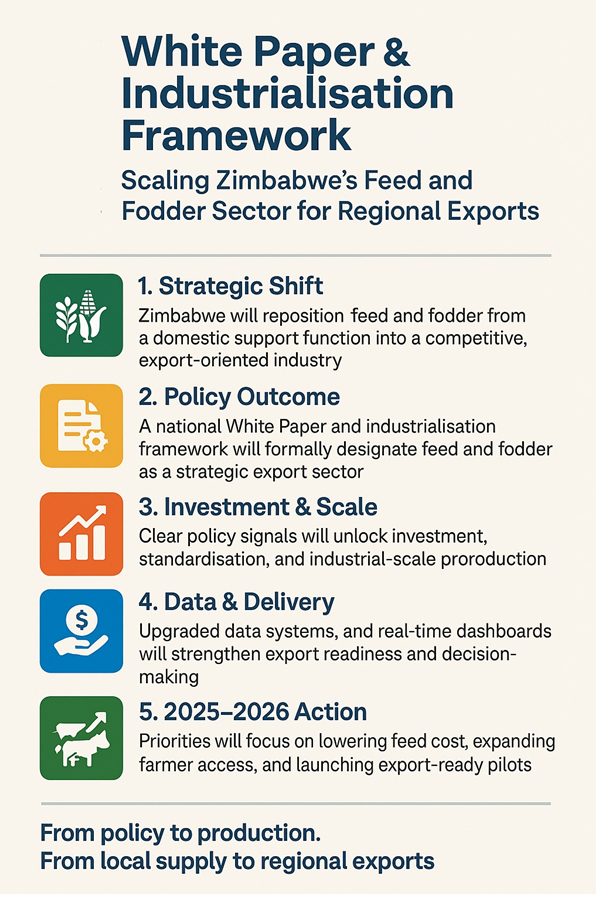
The framework establishes feed and fodder as a recognised export sector and provides the policy and investment signals required to attract finance, strengthen standards, and align public–private action. To support export competitiveness, Zimbabwe will upgrade its Feed and Fodder Information Management System, deploy real-time data dashboards, and finalise a standalone feed and fodder policy focused on export growth, incentives, and coordinated sector governance.
A defined 2025–2026 implementation roadmap translates the framework into action, with priorities to reduce feed costs through local input substitution, expand farmer access to improved fodder, and pilot export-ready initiatives across key value chains and trade corridors. Key risks—such as currency volatility, energy constraints, low uptake, and data gaps—will be managed through measures including foreign-currency contracts, renewable energy solutions for processing, export-linked offtake arrangements, and institutionalised market intelligence.
Backed by strong political commitment and technical support from partners including AU-IBAR, Zimbabwe is laying the foundations for a competitive, nutrition-sensitive and export-driven feed and fodder industry that strengthens livestock productivity, expands regional trade, and delivers measurable economic impact.