
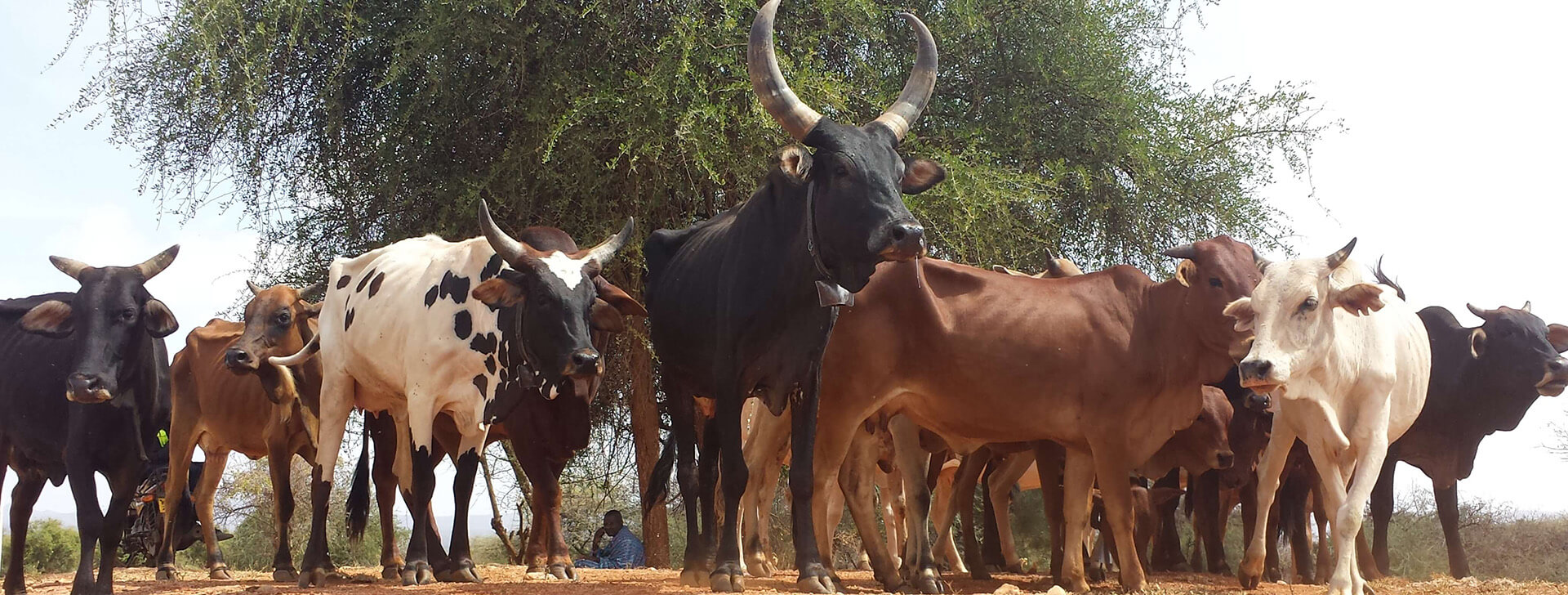
Consultancy - Development of Africa common Position for Sustainable and Resilient Nature Positive Livestock System

Introduction
The AU-IBAR which is a specialized technical Office of the Department of Rural Economy and Agriculture (DREA) of the African Union Commission (AUC) with the mandate to support and coordinate the utilization of livestock, fisheries and wildlife as a resource of both human wellbeing and economic development in the Member States of the African Union (AU). Its mission is to provide leadership in the development of animal resources in Africa through supporting and empowering AU Member States and Regional Economic Communities (RECs).
Africa continues to face increasing challenges from climate change, the role of the livestock sector is becoming increasingly critical in addressing both environmental sustainability and the socioeconomic needs of millions of people. Livestock is essential to Africa’s agricultural systems, contributing significantly to food security, livelihoods, and national economies with livestock contributing 30 – 80% of Africa’s Gross Domestic Product (GDP) and is home to 800 million livestock keepers. However, the sector also accounts for a substantial share of greenhouse gas emissions, with the potential to either exacerbate or mitigate climate change impacts depending on the strategies adopted. The need for sustainable and nature -positive livestock practices has never been more urgent. By driving innovative solutions, scaling up investments, and supporting adaptation and mitigation strategies, the transformation of the Africa’s livestock sector is evident. A greener African livestock sector will help reduce agricultural emissions, protect biodiversity, restore degraded land, improve livelihoods, secure food systems, and contribute to healthier communities. Strengthening resilience by enhancing the adaptive capacity of livestock keepers is now urgent and essential.
The incoming LiveSYS project aims to drive climate and biodiversity protection and adaptation in livestock systems. This project is funded by the German Federal Ministry for Economic Cooperation and Development (BMZ) with the support of the Deutsche Gesellschaft für Internationale Zusammenarbeit (GIZ). African Union InterAfrican Bureau for Animal Resources (AU/IBAR) as the main implementing entity is working in close collaboration with ILRI, Alliance of Biodiversity and CIAT to promote strategic adaptation and mitigation actions including climate governance at national, regional and continental levels. The overall outcome is to drive green economies in Africa.
Rationale
The LiveSYS project is aimed at achieving four main outputs (i) global agendas and advocacy (ii) Capacity development (iii) Knowledge exchange and networking and financing for climate action. AU-IBAR leveraging on its continental mandate aims to implement the project through (i)Promoting enabling institutional and policy environment for climate smart production systems through the African Common Position for Sustainable, resilient and nature-positive livestock food systems;(ii)Supporting deployment, adoption and upscaling of climate smart, environmentally friendly and gender inclusive technologies, tools and innovations (iii)Supporting the generation and dissemination of knowledge products and (iv) Promoting advocacy and awareness creation on climate finance and opportunities. These interventions are dovetailed with the other implementing partners activities to ensure the realization of the common vision “driving the resilient and nature positive livestock food systems”.
Core to the implementation of the LiveSYS project is the development of the African Common position for sustainable, resilient and nature-positive livestock food systems. The "Common African Position" will address global issues in a coordinated manner. The Common African Position will equally serve as a platform for Africa to speak with one voice on issues such as development, peace and security, and global governance. In this context, AU-IBAR is supporting AU Member States to craft a Common African Position
on Sustainable, Resilient and Nature-Positive Livestock Food Systems.
This Common Position seeks to:
- Reframe livestock as a key part of climate solutions, not only a source of emissions.
- Highlight the differentiated realities of pastoralists, smallholders, and emerging.
- Commercial livestock producers.
- Strengthen Africa’s voice and coherence in global fora (UNFCCC, CBD, food systems.)
- Negotiations, climate finance discussions, etc.)
- Anchor livestock transformation in four interlinked pillars.
- Advancing nature-positive production.
- Fostering inclusive and resilient communities and livelihoods.
- Strengthening climate and environmental governance.
- Mobilising sustainable and equitable financial alliances and climate finance.
To enable this action, AU-IBAR intends to commission a short-term consultancy to draft the African Common Africa common position for the sustainable, Resilient and Nature-positive Livestock food systems.
Objectives of the Consultancy
The purpose of this consultancy is to support AU-IBAR to design, and facilitate an inclusive, evidence-informed and politically sensitive process that leads to the development, validation and endorsement of a robust Common African Position on Sustainable, Resilient and Nature-Positive Livestock Food Systems by the AU members states through AU policy organs. The consultancy is primarily process-oriented, but includes targeted technical inputs to ensure that the final Common Position is:
• Co-created and validated by AU Member States and Regional Economic Communities
• (RECs)
• Informed by scientific evidence, local knowledge and lived realities
• Aligned with continental and global frameworks on climate, biodiversity, food systems and finance
• Strategically positioned to influence regional and global negotiations and financing instruments
The specific objectives of the consultancy are:
1. To design a participatory consultation and drafting roadmap for the development of the Common African Position, in close collaboration with AU-IBAR, the AU Commission and other relevant AU organs
2. To facilitate multi-stakeholder consultations at regional and continental levels with all relevant partners
3. To draft the African Common Africa common position for the sustainable, Resilient and Nature-positive Livestock food systems ensuring coherence, clarity and political feasibility
4. To co-ordinate the validation of the common position for the sustainable, Resilient and Nature-positive Livestock food systems
5. To develop advocacy and awareness creation mechanisms/frameworks for the common position including best practices
Scope of Work / Key Tasks
The consultancy will cover, but not be limited to, the following tasks:
Inception and Process Design
- Conduct an inception meeting with AU-IBAR and, as necessary, other relevant AU organs to clarify expectations, agree on roles, timelines and coordination mechanisms.
- Map key stakeholders to be consulted, potentially including AU organs, RECs, Member States, development partners, producers’ organisations, pastoralist networks, women and youth platforms, private sector, technical agencies, and other non-state actors.
- Develop a final refined consultation roadmap and methodology.
Technical Writing of Zero Draft
- Undertake a rapid desk review of relevant policies, strategies, and evidence.
- Coordinate and, where necessary, provide technical inputs to the writing of a zero draft for the Common Position.
- Ensure that technical drafting reflects the four pillars and cross-cutting issues (gender, youth, equity, conflict sensitivity, indigenous/local knowledge, digital innovation).
Stakeholder Consultations
- Support AU-IBAR and RECs to plan and run regional consultations with Member States (virtual and/or physical), including:
o Design of agendas, facilitation guides and background materials.
o Moderation and process facilitation during regional workshops.
o Use of participatory tools to capture regional priorities.
o Ensuring participation of pastoralist communities, producer organisations, women and youth representatives. - Produce regional consultation reports, highlighting key messages and region-specific priorities for livestock climate action and nature-positive systems.
Synthesis and Advanced Draft Development
- Incorporate consultations outputs and draft draft a common position that;
o Articulates a vision, principles and strategic priorities under the four pillars.
o Includes clear messages for global processes (e.g. COP, Food Systems, climate finance negotiations);
o Highlights specific asks to development partners and climate finance mechanisms.
o Reflects differentiated responsibilities and circumstances of Member States, while preserving a unified African voice.
Validation and finalization
- Design and facilitate a continental validation workshop (physical or hybrid) with representatives of:
o AU Member States / RECs.
o AU organs.
o Key stakeholder groups (pastoralists, producers, private sector, civil society, youth, women, development partners).
Expected Outputs/deliverables of the consultancy
- Document the discussions and agreed revisions in a validation report.
- Finalize the Africa common position.
- Inception Report - Roadmap.
- Zero Draft Outline / Concept Note for the Common African Position.
- Regional Consultation Reports.
- Continental / Thematic Consultation Reports.
- Consolidated Synthesis Report of all consultations and key messages.
African Common Position for Sustainable, resilient and nature-positive livestock food systems
Submission & Approval of Reports
- Copies of the approved reports referred above must be submitted to AU-IBAR. AU-IBAR is responsible for approving the progress reports.
Time frame
The assignment will be conducted for a maximum period of three (3) months. The assignment will start immediately after signature of the contract by both parties.
Duty Station
This consultancy will be home-based.
Criteria for Scoring
| CRITERIA | SCORES (%) |
|---|---|
| Qualifications | 20 |
| General Experience | 50 |
| Methodology | 15 |
| Other Skills | 15 |
| Total | 100 |
Gender Mainstreaming
The AU Commission is an equal opportunity employer and qualified women are strongly encouraged to apply.
Competences and experience
Qualifications
A minimum of a Master’s degree in agriculture/livestock, environmental management, climate change, public policy, economics, development studies, or any other related field.
Specific Experience
- At least ten (10) years’ experience in facilitating high-level policy processes in Africa, preferably with AU institutions or RECs.
- Minimum of 10 years’ experience in livestock policy formulation, advocacy, or development at continental or national levels.
- Proven track record in multi-stakeholder facilitation, political economy awareness and consensus-building.
- Strong understanding of livestock value chains, climate resilience, animal health, and trade policies in Africa.
- Demonstrated experience in climate change / livestock / agrifood systems in Africa.
Required Skills
- Exceptional writing and synthesis skills, with experience drafting regional or continental positions/strategies.
- Diplomacy and good interactive skills necessary for dealing with senior officials in Government, Regional Organizations, and donor/development organizations in Africa.
- Good networking skills and ability to maintain positive and constructive dialogue and relationships with key institutions or stakeholders operating in the regions.
- Proficiency in at least 2 AU official languages.
Remuneration
The consultant will be paid a lump sum amount of USD 9,000.00 upon satisfactory completion and delivery of the expected outputs.
Supervision
The consultant will work under the overall guidance and supervision of Project lead for LiveSYS project AU-IBAR.
Disclaimer
All data, information and reports generated form the consultancy is intellectual property of AU-IBAR.
Submission of Applications
Applications should be submitted through email to: procurement@au-ibar.org with a copy to emmah.boro@au-ibar.org and should include the title “Drafting of The Africa Common Position for The Sustainable, Resilient & Nature-Positive Livestock Food Systems” in the subject of the email.
Applications should include the following:
i. Detailed curriculum vitae (CV) and brief cover letter.
ii. Copies of academic and professional certification documents.
iii. Proposed methodology and approach for the assignment (workplan).
iv. Declaration on exclusion criteria (see format attached).
v. Identification documents.
A Personal Data Protection and Privacy Statement is attached as information for the applicants.
Application Deadline
Applications should be submitted to the address given above by 02nd March, 2026 at 23:45hrs Nairobi Local Time.
| Élément joint | Taille |
|---|---|
| Terms of Reference(English Version) | 192.5 Ko |
| AU-IBAR Declaration Form | 210.87 Ko |
| AU-IBAR Personal Data Protection Form | 147.59 Ko |