

Strengthening PPR Surveillance in Southern Africa: A Regional Step Toward Eradication by 2030
Johannesburg, South Africa |30 March 1 April 2026
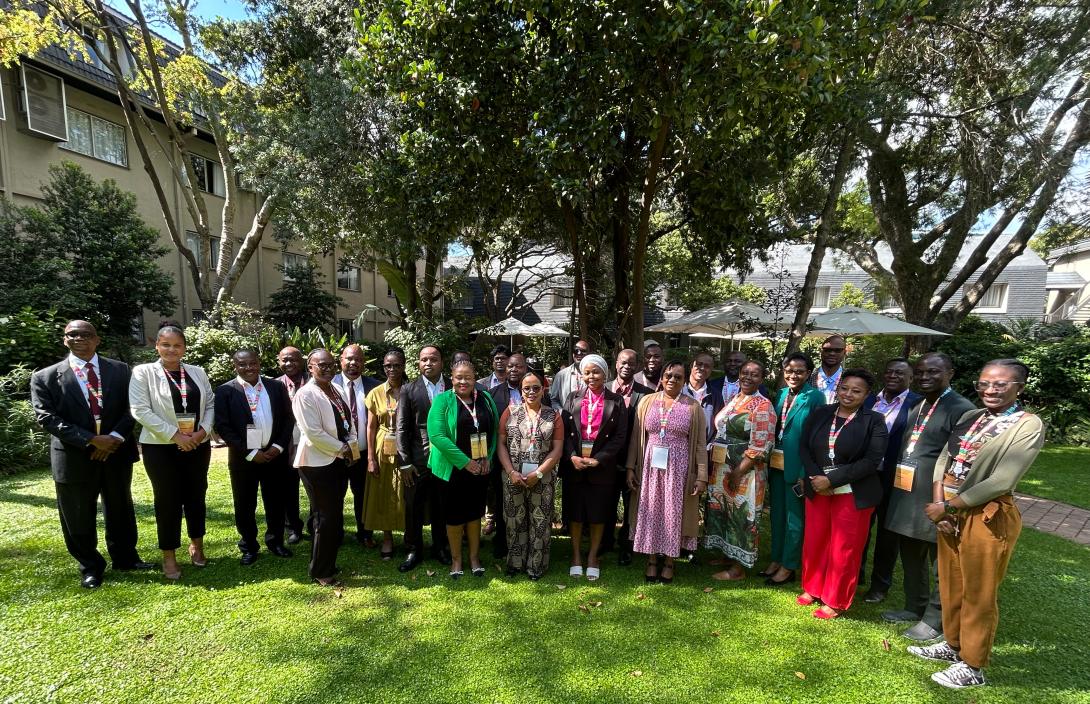
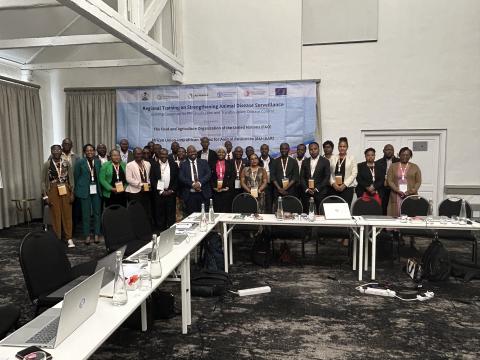
Efforts to accelerate the eradication of Peste des Petits Ruminants (PPR) in Southern Africa gained renewed momentum following a regional training on strengthening surveillance capacities, bringing together 29 participants from National PPR Focal Points, National Epidemiologists, FAO specialists, and the SADC Secretariat.Organized by the Pan-African PPR Secretariat (PAPS), hosted by AU-IBAR, and funded by the European Union.The training aimed to strengthen participants’ capacities in disease surveillance and information management.
The opening ceremony was officiated by Dr. Oseke Precious Monicca Ngobeni, the National PPR Program Coordinator representing the Department of Agriculture, Land Reform and Rural Development (DALRRD), South Africa, who reaffirmed the SADC region’s commitment to the global goal of eradicating PPR by 2030. Goodwill messages were delivered by:
• Babagana Ahmadu - FAO Representative for South Africa
• Gaolathe Thobokwe - Livestock Director, SADC Secretariat
• Representative of the Director, AU-IBAR
Their messages emphasized the urgency of harmonized surveillance, cross-border coordination, and the ecosystem approach to address transboundary animal diseases across Southern Africa.
The three-day training aimed to strengthen national and regional capacities to detect, report, and respond to PPR and other transboundary animal diseases.
Key priorities included:
• Enhancing participatory and risk-based surveillance approaches
• Harmonizing data collection, analysis, and reporting systems
• Strengthening regional coordination and information-sharing platforms
• Integrating advanced tools such as ARIS, WAHIS, and EMPRES-i+ into surveillance systems
A central theme of the training was the transition from broad surveillance approaches to targeted, risk-based systems.
Participants explored the episystem approach, enabling countries to:
✔ identify high-risk zones and transmission corridors
✔ target vaccination and surveillance efforts more effectively
✔ optimize the use of limited resources
This shift marks a critical move toward evidence-based decision-making, where surveillance data directly informs action.
Despite progress, participants highlighted several constraints affecting the region’s capacity to achieve the 2030 eradication target:
• Limited and unsustained funding for surveillance activities;
• Weak laboratory capacity and inadequate diagnostic resources;
• Porous borders and uncontrolled livestock movements;
• Limited wildlife surveillance, particularly in high-risk ecosystems;
• Gaps in traceability systems for small ruminants.
These challenges underscore the need for stronger investment, coordination, and innovation.
The training reinforced the importance of cross-border coordination, particularly along high-risk corridors such as:
• Zambia – Democratic Republic of the Congo
• Tanzania – Kenya
• Namibia – Angola
• South Africa – Lesotho / Eswatini
Participants emphasized that PPR eradication cannot be achieved at the national level alone; it requires coordinated regional action. Encouragingly, many SADC countries have already made significant progress:
• Several countries have achieved or are advancing toward PPR-free status.
• Others are strengthening surveillance systems as part of the eradication pathway.
• Tanzania continues mass vaccination efforts in endemic zones.
To accelerate progress, the meeting called for action:
• Increased financial and technical investment in surveillance systems
• Strengthened laboratory and diagnostic capacity
• Enhanced community engagement and awareness
• Development of DIVA vaccines and improved diagnostic tools
• Integration of wildlife surveillance into national strategies
Surveillance is not just about data collection; it is about enabling timely action to protect livelihoods, food systems, and economies. With strengthened capacities, improved coordination, and a shared commitment, Southern Africa is advancing toward a common goal.