

Major Breakthrough: Ethiopian National Veterinary Institute NVI Advances Thermotolerant PPR Vaccine to Tackle Eastern Africa's Cold Chain Crisis in poor infrastructure and conflict affected areas
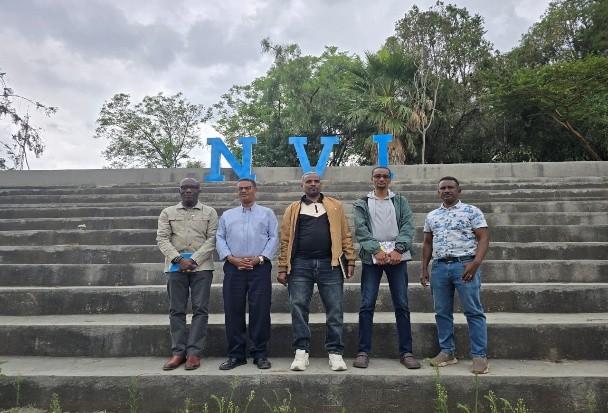
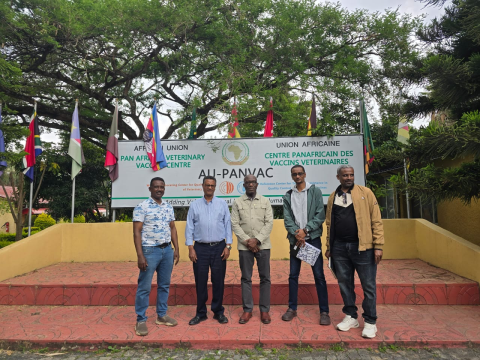
Ethiopian National Veterinary Institute (NVI) visited and discussion was held in Bishoftu at the National Veterinary Institute (NVI), with Directors of NVI and the African Union Pan African Veterinary Vaccine Centre (AU-PANVAC), and experts working on thermostable PPR vaccine.
During this discussion, NVI reported that it has already developed a thermotolerant PPR vaccine capable of maintaining stability for up to five days at 40°C. The institute is further advancing research on an improved formulation with extended stability of 7–10 days at the same temperature, which is expected to be submitted to AU-PANVAC for certification. This represents a significant breakthrough for the Eastern Africa region, where maintaining cold chain systems remains a major challenge particularly in arid and semi-arid areas of the region.
NVI further indicated that its production capacity could reach 25–30 million doses annually once full-scale manufacturing of the thermostable vaccine is operational. The AU-PANVAC Director Dr Charles Bodjo reaffirmed: "We stand ready to evaluate and certify this vaccine swiftly, provided it meets our rigorous standards a game-changer for PPR eradication in the region and across the continent."
PPR continues to devastate small ruminants, costing African economies over $2.5 billion yearly in lost of small ruminant . In Eastern Africa, weak cold chains systems particularly in arid and semi-arid areas with poor infrastructure and in conflict-affected settings significantly constrain effective vaccine delivery. NVI's innovation enables thermotolerant vaccines, empowering herders, boosting food security, and aligning with AU's PPR Global Eradication Strategy by 2030.
This breakthrough positions Eastern Africa as a thermotolerant vaccine production and distribution hub. AU-IBAR urges partners to support certification and scale-up for equitable access.