

Strengthening PPR Surveillance Through Targeted Diagnostic Support
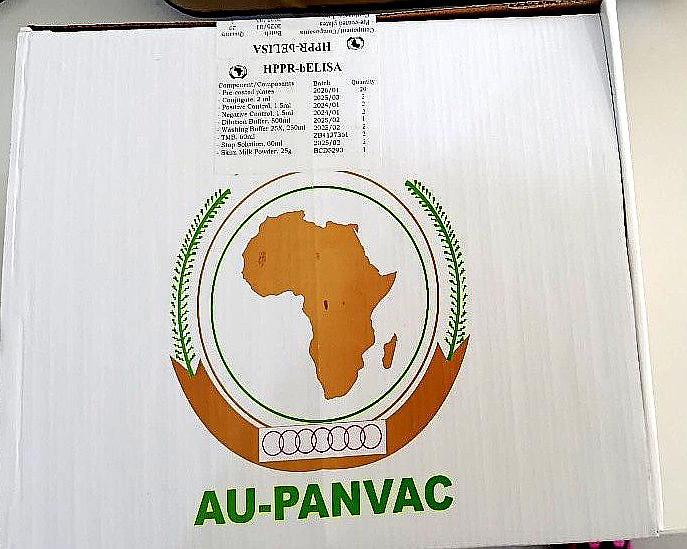
In March 2026, the AU-PANVAC intensified its support to Member States by deploying PPR bELISA diagnostic kits to priority countries, reinforcing national laboratory capacity and surveillance systems. A total of six kits were delivered to Malawi (1), Zambia (4), and the Democratic Republic of the Congo (1), with additional consignments being prepared for Namibia, Mozambique, Sudan, South Sudan, Kenya, Somalia, Ethiopia, Djibouti, Eswatini and Mauritius.
Each bELISA kit enables national laboratories to conduct large-scale serological testing, supporting the confirmation of suspected cases as well as surveillance activities in both endemic and at-risk areas. This strengthens countries’ ability to generate reliable epidemiological data, identify transmission hotspots, and monitor disease trends over time.
By enhancing diagnostic capacity, AU-PANVAC is directly supporting early warning systems and rapid response mechanisms, ensuring that outbreaks are detected earlier and contained more effectively. The availability of timely and accurate data also enables countries to optimize vaccination strategies, target high-risk zones, and allocate resources more efficiently.
This intervention reflects a clear strategic pathway from diagnosis to outbreak control and ultimately to eradication while strengthening the operational backbone of national animal health systems.
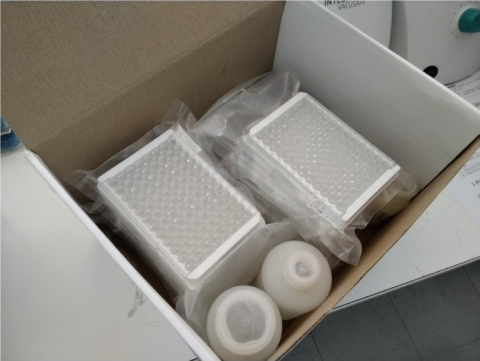
Beyond immediate outbreak response, the deployment of diagnostic kits contributes to:
• improved disease reporting and data quality
• strengthened laboratory networks and technical capacity
• enhanced cross-border surveillance and coordination
Also, to identify existing and potential vaccine banks and facilitate linkages to accelerate countries’ access to quality vaccines, PPR vaccine seeds in AU-PANVAC’s repository and vaccine samples from Manufacturers were sent for sequencing using the next-generation techniques, analysis will be conducted upon recieving the final results.
By reinforcing surveillance as a core pillar of eradication, this targeted support contributes directly to the continental ambition of achieving a PPR-free Africa by 2030, while building more resilient and responsive animal health systems across the region.