

AU-IBAR and AWFISHNET Elevate African Women in Fisheries at Global Congress
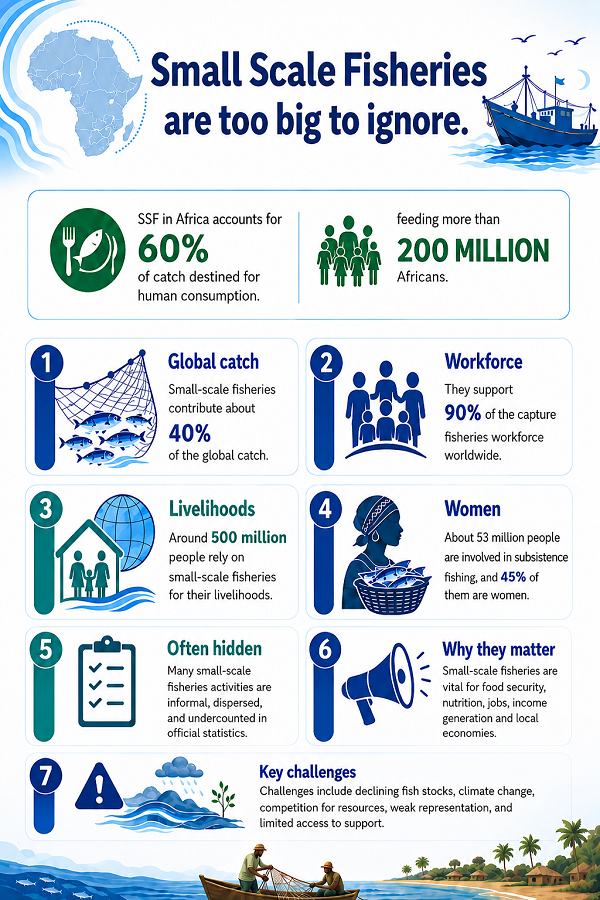
Small-scale fisheries are a major part of Africa’s food systems, livelihoods and blue economy. The sector supports fishing communities, fish processors, traders, transporters and many informal workers. It accounts for 60% of fish catch destined for human consumption, feeding more than 200 million Africans, making it critical for food and nutrition security, employment, income generation and local economic development.
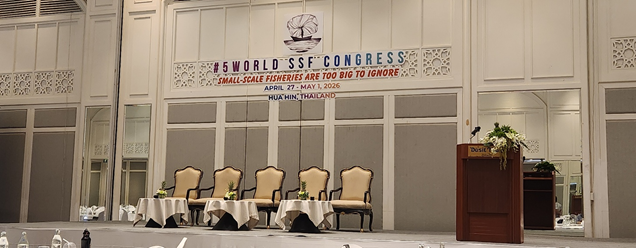
AU-IBAR’s participation in the Global Small-Scale Fisheries Congress, held from 27 April to 1 May 2026 in Hua Hin, Thailand, was therefore strategic. The Congress provided a global platform for researchers, policymakers, fishers’ organisations, civil society and development partners to discuss the future of small-scale fisheries and identify pathways for more sustainable and inclusive governance.
From a continental perspective, AU-IBAR’s participation helped position Africa’s small-scale fisheries priorities within global discussions. This is important because global fisheries debates often focus on production, trade, conservation and industrial fishing, while the social and economic contribution of small-scale fisheries can remain undervalued. AU-IBAR’s engagement helped bring attention to the role of small-scale fisheries in food security, poverty reduction, gender inclusion and community resilience.
AU-IBAR’s contribution is anchored in its mandate as a specialised technical office of the African Union Commission, supporting the sustainable development and utilisation of animal resources, including fisheries and aquaculture. Its work in the fisheries sector is guided by the African Union Policy Framework and Reform Strategy for Fisheries and Aquaculture in Africa, endorsed in 2014. This framework provides a continental basis for fisheries reform and focuses specifically on small-scale fisheries development.
A key strength of AU-IBAR’s work is that it links policy frameworks to implementation mechanisms. The continental ten-year action plan on small-scale fisheries for 2017–2026 provides a practical pathway for implementing the small-scale fisheries component of the Policy Framework and Reform Strategy. Through the FishGov projects, supported by the European Union and implemented by AU-IBAR and AUDA-NEPAD, this agenda is being advanced at continental, regional and national levels.
The Congress also highlighted the importance of inclusive governance. Small-scale fisheries involve many actors, including fishers, women processors, traders, youth, community organisations, researchers and government institutions. Effective governance must therefore create space for these actors to participate in policy dialogue and decision-making. AU-IBAR has contributed to this through platforms such as the African Fisheries Reform Mechanism, AFRIFISH-NET and the African Women Fish Processors and Traders Network, known as AWFISHNET.
AWFISHNET was a particularly important part of AU-IBAR’s engagement. AU-IBAR co-authored a side event with AWFISHNET and other partners titled “Visible Voices, Vital Value: Centering African Women in Small-Scale Fisheries for a Sustainable Blue Future.” The session demonstrated that women are central to Africa’s fisheries value chains, especially in processing, trade, value addition and market systems.
The AWFISHNET presentation showed the scale and importance of women’s participation. The network represents women in 55 African countries, has national chapters in 44 countries, and 28 of these chapters are fully registered. Women also represent up to 70% of Africa’s post-harvest fisheries workforce. This means that any serious effort to transform small-scale fisheries must address women’s access to finance, infrastructure, markets, training, technology and policy spaces.
This is where AU-IBAR’s support has strategic value. By supporting AWFISHNET, AU-IBAR is helping move women from informal participation to organised representation. This is not only a gender issue; it is an economic and governance issue. When women processors and traders are better organised, they can influence policy, access markets, improve product quality, reduce post-harvest losses and contribute more effectively to food systems and trade.
The Congress also revealed a coordination gap. During the Africa regional meeting of the Too Big To Ignore Africa chapter, AU-IBAR briefed participants on existing continental initiatives, including the Policy Framework and Reform Strategy, the Small-Scale Fisheries Action Plan, AFRIFISH-NET, the continental small-scale fisheries working group and the African Union Network of Centres of Excellence in Fisheries, Aquaculture and Aquatic Biodiversity. Many African delegates were not fully aware of these platforms.
This finding is important. Africa has several policy instruments, networks and technical institutions working on fisheries, but they are not always sufficiently connected. Research may remain within universities, community knowledge may remain local, and policy processes may not always reach the people they are intended to support. AU-IBAR’s role is therefore to improve coherence by linking continental frameworks, Member States, researchers, women’s networks, civil society and development partners.
The broader context also underscores why this role is urgent. Globally and in Africa, small-scale fisheries face serious pressures, including climate change, declining fish stocks, weak infrastructure, post-harvest losses, limited access to finance, inadequate data and weak recognition of informal workers. These challenges affect productivity, incomes and food security. They also reduce fishing communities' ability to adapt to environmental and economic change.
At the continental level, the key challenge is not only policy development, but implementation. Africa has strong frameworks, including the Policy Framework and Reform Strategy and the continental Small-Scale Fisheries Action Plan. However, stronger coordination, financing, data systems and national-level domestication are needed to translate these frameworks into practical benefits for fishing communities.
Several outcomes from the Congress point to future opportunities. African delegates expressed interest in joining the African Fisheries Reform Mechanism working group on small-scale fisheries. Research institutions showed interest in joining the African Union Network of Centres of Excellence in Fisheries, Aquaculture and Aquatic Biodiversity. There was also renewed interest in organising a second African Small-Scale Fisheries Summit, building on the first summit held in Dar es Salaam, Tanzania, in June 2024, where Africa’s “One Voice” on small-scale fisheries was developed.
These outcomes show that AU-IBAR can play a stronger convening and coordination role in the next phase of Africa’s small-scale fisheries agenda. This includes supporting Member States in implementing the Policy Framework and Reform Strategy, the continental Small-Scale Fisheries Action Plan, and National Plans of Action on Small-Scale Fisheries. It also includes strengthening AWFISHNET and AFRIFISH-NET, improving coordination with the Too Big To Ignore Africa chapter, and mobilising investment for women-led post-harvest enterprises.
In conclusion, AU-IBAR’s participation in the Global Small-Scale Fisheries Congress was more than an institutional mission. It was an opportunity to position Africa’s priorities, promote inclusive governance and strengthen the link between continental policy and community-level realities. The engagement also showed that small-scale fisheries are not a marginal sector. They are central to Africa’s food security, livelihoods, trade, gender equality and blue economy transformation.
Through its technical leadership, policy coordination and support to inclusive platforms such as AWFISHNET and AFRIFISH-NET, AU-IBAR is helping Africa move from fragmented participation to a more organised and influential voice in small-scale fisheries governance.