

From Toliara’s Shores to the Region: How Octopus Fisheries Are Linking Livelihoods, Conservation and Women’s Economic Empowerment
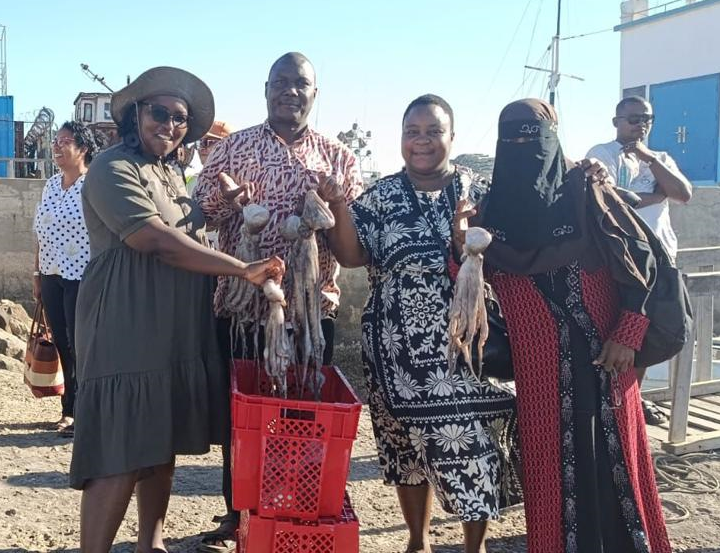
In the coastal city of Toliara, Madagascar, the day does not end when the sun begins to fall. For many octopus vendors, processors, traders and fishing families, the late afternoon marks the beginning of another important part of the value chain. Around 5 p.m., vendors begin arriving at local markets, carrying not just seafood but the story of a fishery that supports households, connects communities to regional markets, and reflects the delicate balance between livelihoods and conservation.
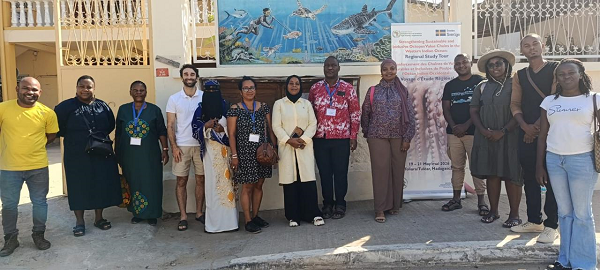
From 19 to 21 May 2026, Toliara hosted a regional study tour on sustainable octopus fisheries, harvesting, handling, processing, marketing and conservation. Organised under the Conserving Aquatic Biodiversity in the African Blue Economy Project, implemented by AU-IBAR with financial support from the Swedish International Development Cooperation Agency, the exchange brings together stakeholders from Madagascar, Kenya, Comoros, Mozambique and Tanzania to learn from practical experiences across the octopus value chain.
Octopus fisheries are among the most important small-scale fisheries in the Western Indian Ocean region. They provide income, food security, employment and export earnings for coastal communities. They are also sectors where women and youth play visible and essential roles, particularly in handling, processing, and marketing. Yet behind this promise are real challenges: pressure on resources, inconsistent harvesting practices, post-harvest losses, limited value addition, weak market linkages and unequal distribution of benefits among small-scale actors.
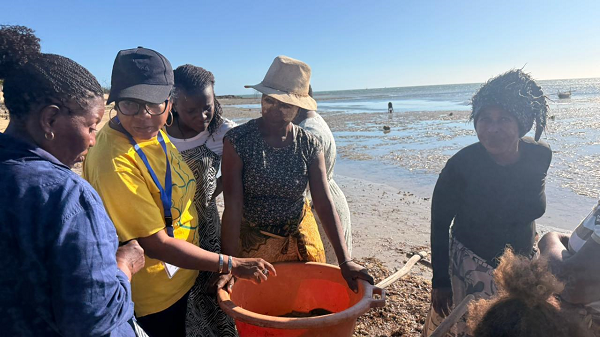
The study tour is designed to move learning beyond meeting rooms. Participants will visit octopus markets in Toliara, processing facilities such as Copefrito and Murex, and the octopus landing site in Ifaty, about 25 kilometres north of Toliara. The Ifaty visit is especially important because the village is linked to local management arrangements through the Locally Managed Marine Area, FIMIHARA. These visits will allow participants to see how harvesting, landing, handling, processing and marketing are connected, and how local governance can support both livelihoods and conservation.
 |
 |
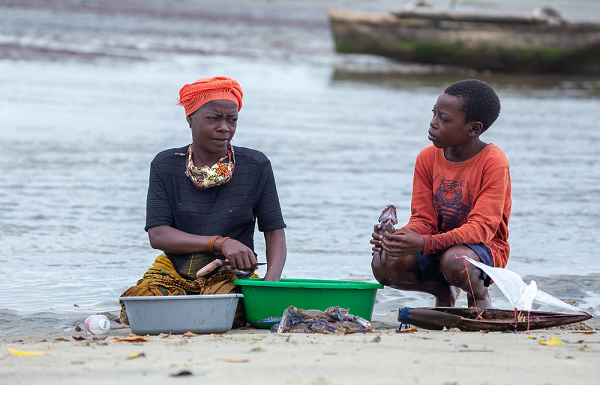 |
For coastal communities, sustainable octopus fisheries are not only about protecting a species. They are about protecting a way of life. When octopus stocks decline, the effects are felt in household incomes, women’s trading activities, youth employment, food availability and local resilience. Climate change is also placing increasing pressure on coral reefs and related species such as octopus, affecting productivity, seasonality and the stability of coastal livelihoods.
The exchange builds on earlier AU-IBAR-supported work that assessed small-scale octopus value chains in Kenya, Tanzania/Zanzibar, Comoros and Madagascar. One of the key outcomes of that process was the establishment of the Western Indian Ocean Network on Sustainable Octopus Fisheries, a regional platform created to promote sustainable, inclusive and rights-based small-scale octopus fisheries.
What makes this initiative significant is its human focus. It recognises that conservation cannot succeed without the participation of the people who depend on aquatic ecosystems every day. Fishers, women processors, traders, cooperatives, private-sector actors, researchers, and national institutions all have knowledge to share and roles to play. Through peer learning, the study tour will help document best practices, identify practical ways to reduce post-harvest losses, improve quality standards, strengthen market access and promote gender-responsive value chains.
The exchange is intended to generate practical recommendations, strengthen partnerships among Member States, the private sector and development partners, and support a post-exchange action plan for continued regional collaboration. In this way, lessons from Toliara, Ifaty and other coastal communities can inform wider action across the Western Indian Ocean region.
As Africa advances sustainable Blue Economy development, the octopus value chain offers a powerful example of how local action can contribute to regional transformation. By improving how octopus is harvested, handled, processed and marketed, communities can protect aquatic biodiversity, increase economic opportunities and strengthen resilience in the face of environmental change.
From the markets of Toliara to the landing sites of Ifaty, this regional exchange shows that sustainable fisheries governance begins with people, place and practice. It is through such community-rooted learning that Africa can build inclusive blue value chains that work for ecosystems, economies and future generations.