

Advancing Africa’s Blue Economy: From Frameworks to Implementation
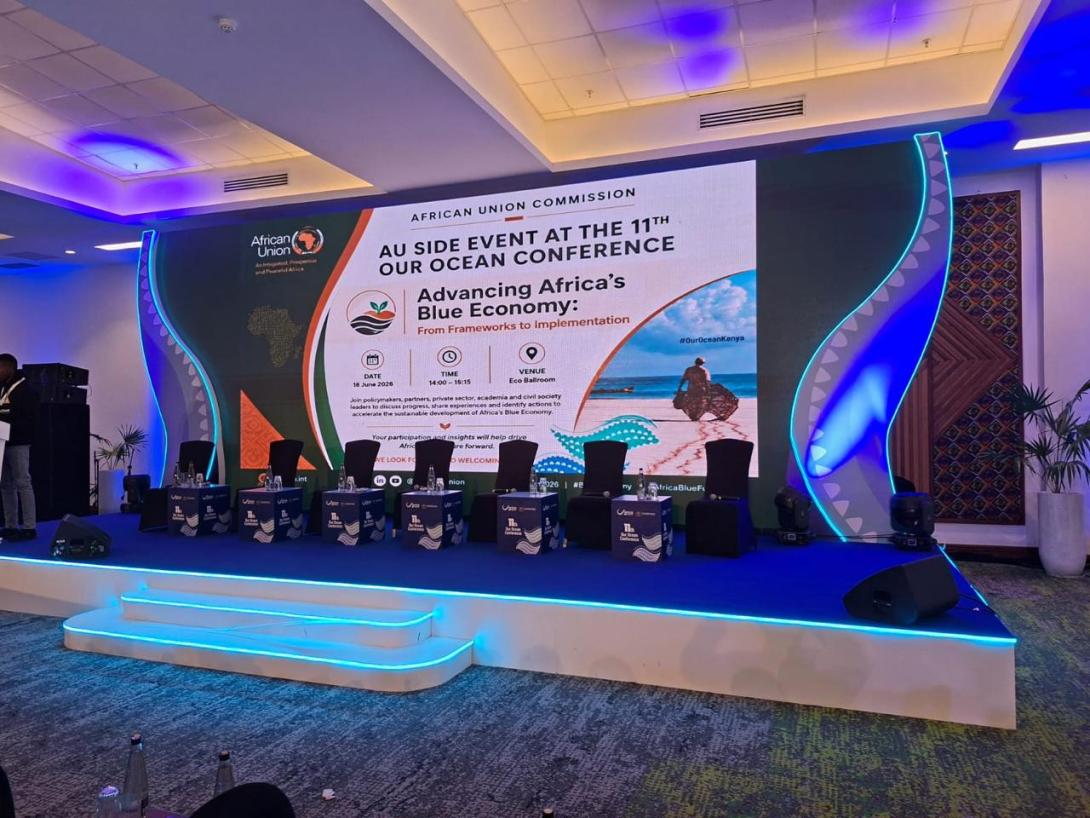
AFRICAN UNION SIDE EVENT – 11TH OUR OCEAN CONFERENCE
Messages and Key Takeaways from the Panel Discussion
Date: 18 June 2026 Venue: Eco Ballroom Convened by: The African Union Commission
The African Union convened a high-level side event at the 11th Our Ocean Conference under the theme “Advancing Africa’s Blue Economy: From Frameworks to Implementation.” The discussion brought together policymakers, technical experts, development partners, financing institutions, private-sector actors, and practitioners around a single, deliberate message: the conversation is no longer about why the blue economy matters, but about how to deliver results at scale.
Africa’s oceans, seas, coasts and inland waters are among the continent’s greatest strategic assets, encompassing more than 13 million square kilometres of Exclusive Economic Zones, over 47,000 kilometres of coastline and vast freshwater ecosystems. Over the past decade, the African Union and its Member States have built strong policy foundations through continental instruments such as the Policy Framework and Reform Strategy for Fisheries and Aquaculture, the 2050 Africa’s Integrated Maritime Strategy and the African Blue Economy Strategy. The next phase, panellists agreed, is about moving from plans to projects, from commitments to investments, and from aspirations to measurable impact for communities, businesses and ecosystems.
The African Union Inter-African Bureau for Animal Resources (AU-IBAR) featured prominently in the dialogue. Dr Mohamed Seisay reflected on the lessons and scalable interventions emerging from more than a decade of fisheries and aquaculture implementation, while Dr Patrick Karani addressed the investments most urgently required and how financing can advance sustainability and economic growth in tandem. Their key messages are captured below.
Lessons from Fisheries and Aquaculture Implementation
Dr. Mohamed Seisay, AU-IBAR
Reflecting on the implementation of the Policy Framework and Reform Strategy for Fisheries and Aquaculture (PFRS) since its adoption by the African Union Policy Organs in 2014 – conceived as a blueprint for an enabling environment that drives equitable social and economic development – Dr. Seisay identified five lessons that have shaped delivery across the continent.
-
Statistical data must be complemented by research, socio-economic and environmental data. Catch and production statistics alone are insufficient for holistic resource management. Effective, evidence-based decision-making depends on stock assessments and socio-economic and environmental data, underpinned by a reliable data repository and the capacity to collect, analyse and interpret information for sustainable development.
-
Formal collaborative frameworks and coordination remain weak. This is most acute in the management of transboundary, migratory and straddling fish stocks. Concerted continental action is needed to combat Illegal, Unreported and Unregulated (IUU) fishing, to harmonise the management of marine and freshwater ecosystems, to safeguard environmental and biosecurity standards in aquatic production systems including cage culture, to sustain Regional Aquatic Animal Health Networks, and to strengthen policy coherence through the PFRS.
-
Integrated management of aquatic ecosystems must be enhanced. This requires stronger capacity for aquatic biodiversity conservation, ecosystem restoration and the rebuilding of fish stocks through Marine Protected Areas, Marine Spatial Planning and climate change mitigation, supported at national level by interagency coalitions for a sustainable blue economy.
-
Value chains must be inclusive and intra-regional fish trade promoted. Regional frameworks for intra-regional trade, measures to reduce post-harvest losses, and inclusive governance through stakeholder platforms led by women and youth are central to improving fish supply, availability and equitable benefit.
-
African best practice and a coordinated African voice matter. Effective and coordinated participation in global processes is essential if the continent is to articulate common African positions and adhere to international best practice.
Interventions with the Greatest Potential for Scaling
Dr. Mohamed Seisay, AU-IBAR
Dr. Seisay highlighted a set of interventions that have demonstrated clear potential to be replicated and scaled across Member States and regions.
-
AFADATA as a continental data repository. The development of AFADATA to collate data on fish production, fishing capacity and fish trade flows (imports and exports) supports sustainable exploitation, investment and continental benefit. This is reinforced by the endorsement of African Union Centres of Excellence and African Fisheries Reform Mechanism (AFRM) policy working groups to bridge gaps in comprehensive data analysis and enable science-based decision-making.
-
Stronger institutional capacity of regional institutions. Support to Regional Economic Communities and specialised regional fisheries bodies to combat IUU fishing promotes sustainable fisheries, investment, revenue and food security. Collaborative mechanisms such as the AFRM and APRIFAAS have enhanced regional cooperation, information sharing, harmonised work plans and joint implementation, while Regional Aquatic Animal Health Networks provide early warning to address biosecurity in transboundary production systems.
-
Capacity for aquatic biodiversity conservation and ecosystem management. Strengthening Member States and regional institutions in the implementation and governance of Marine Protected Areas, Marine Spatial Planning processes and nature-based solutions for ecosystem restoration has shown strong scaling potential.
-
Stakeholder platforms and networks. Networks such as the African Women Fish Processors and Traders Network (AWFISHNET) and AFRIFISHNET (for trade facilitation) improve value chains and enable inclusive decision-making at national and continental levels.
-
A consolidated Small Island Developing States platform. The establishment of a Small Island Developing States platform for fisheries and aquaculture enables consolidated African positions in global frameworks and processes.
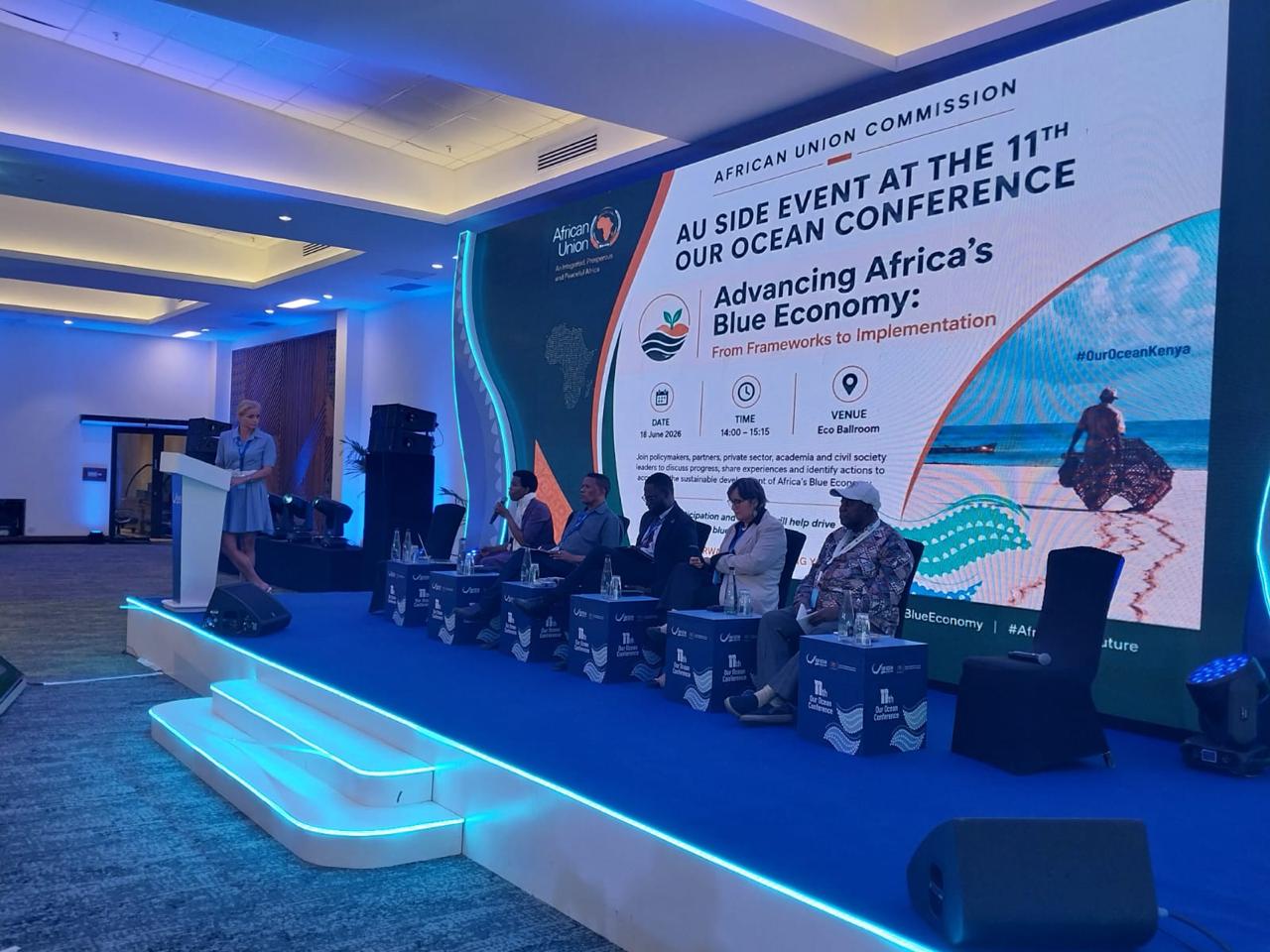
Investment Priorities for Fisheries, Aquaculture and Aquatic Food Systems
Dr. Patrick Karani, AU-IBAR
Turning to the financing dimension of Session 2, Dr. Patrick Karani addressed the investments most urgently needed to translate Africa’s blue economy frameworks into delivery, and how those investments can advance sustainability and economic growth at the same time.
Investments most urgently needed
-
Data and digital infrastructure. Sustained investment in AFADATA, stock assessment capacity, and monitoring, control and surveillance systems – including traceability and ocean observation technologies – to underpin evidence-based management and reduce risk for investors.
-
Institutional and human capacity. Financing for project preparation and the strengthening of regional fisheries bodies, aquatic animal health systems and the technical skills required to build bankable, investment-ready pipelines.
-
Value chains and post-harvest infrastructure. Cold chains, processing, storage and market infrastructure to reduce post-harvest losses, raise product value, and enable intra-African trade, including under the African Continental Free Trade Area.
-
Sustainable aquaculture. Investment in hatcheries, quality feed, biosecurity and environmental safeguards for production systems such as cage culture, to expand supply responsibly.
-
Ecosystem and climate resilience. Financing for Marine Protected Areas, blue carbon initiatives, ecosystem restoration and climate-resilient coastal development, including blended and climate finance instruments.
How investments can support sustainability and economic growth together
Dr. Karani emphasised that sustainability and economic growth are not competing objectives but mutually reinforcing ones when investment is well designed. Blended finance, public-private partnerships and climate finance can reduce project risk and attract private capital, while investment in data and governance ensures resources are exploited within sustainable limits – protecting the natural capital on which long-term revenue, food security and jobs depend. Channelling financing through inclusive instruments that reach women- and youth-led enterprises broadens economic participation, and aligning investment with the PFRS, the African Blue Economy Strategy and the aspirations of Agenda 2063 ensures that capital advances both ecological integrity and inclusive prosperity.
Key Takeaways
-
From frameworks to delivery. Africa’s policy foundations are strong; the priority now is implementation at scale, measured by tangible results for communities, economies and ecosystems.
-
Data is the foundation. Reliable, science-based data – anchored by AFADATA and complementary research – is the precondition for sustainable management, accountability and investor confidence.
-
Coordination and transboundary cooperation are decisive. Stronger regional frameworks, harmonised management, and concerted action against IUU fishing are essential for managing shared aquatic resources.
-
Investment must be made bankable. Project preparation, blended finance and risk reduction are needed to convert priorities into investment-ready, scalable projects.
-
Inclusion drives durable impact. Women and youth-led platforms and inclusive value chains ensure that growth in the blue economy is equitable and broadly shared.
-
A united African voice strengthens delivery. Coordinated participation in global processes allows the continent to articulate common positions and shape outcomes that serve African interests.
Across both sessions, the message from AU-IBAR was consistent: the building blocks for a thriving, sustainable blue economy already exist. What will determine success is the continent’s collective ability to invest, coordinate and deliver – transforming Africa’s ambitious frameworks into measurable, lasting impact.