

Africa Moves Past Crisis Narratives to Unlock the Economic Power of Pastoral Livestock
Africa’s pastoral livestock economy sustains millions of livelihoods, supplies vital foods and supports trade across some of the continent’s most climate-vulnerable regions. Yet its economic potential remains constrained by weak market systems, limited finance, inadequate infrastructure and persistent perceptions of pastoralism as primarily a humanitarian concern.
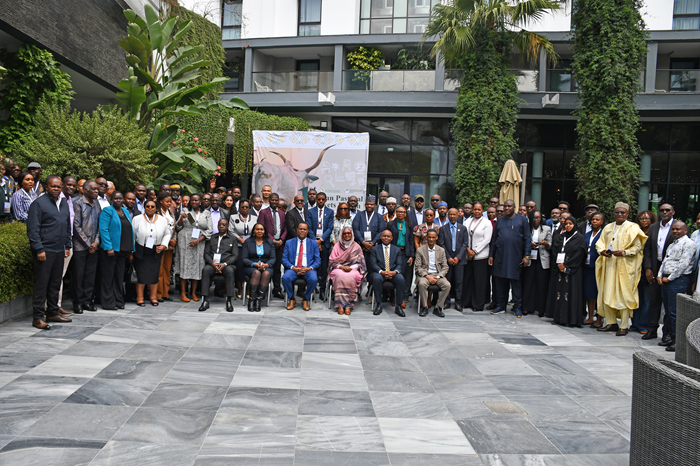
The 1st African Pastoral Markets Forum opened on 13th July, 2026 in Addis Ababa to change that narrative and, more importantly, the systems behind it. The initiative brings together more than 100 delegates, including government representatives, pastoral communities, investors, financial institutions, businesses and development partners, to transform pastoral livestock from an under-recognised asset into a stronger driver of nutrition, employment, trade, resilience and inclusive growth.
Convened by AU-IBAR, under the auspices of the African Union Commission’s Department of Agriculture, Rural Development, Blue Economy and Sustainable Environment, through the African Pastoral Markets Development Platform, with support from the Gates Foundation, the five-day Forum is designed not simply as a policy meeting but as a platform for market activation. It seeks to connect evidence with investment, enterprises with finance, and pastoral producers with more reliable and profitable markets.
From evidence to integrated regional value chains
Opening the Forum, Dr Huyam Salih, Director of AU-IBAR, said the initiative marked a deliberate shift across the continent.
“We are here to make a deliberate continental shift: from treating pastoral livestock mainly as a vulnerability issue to recognising it as a strategic economic system capable of supporting food security, trade, jobs, investment, industrialisation and regional integration.”
She explained that the APMD Platform is generating evidence, validating business models and strengthening the policy and institutional conditions needed to integrate pastoral producers into structured markets.
“What you will hear this week is not aspiration; it is evidence,” she said, calling on investors and financial institutions to help move the sector “from interest to transactions.”
Dr Salih further situated the Platform within AU-IBAR’s broader vision for Integrated Regional Livestock Value Chains. This agenda seeks to connect pastoral producers with aggregation systems, animal health services, standards and certification, processing facilities, trade corridors, and appropriate financing across Regional Economic Communities.
By strengthening these interconnected components, the initiative aims to move livestock beyond fragmented national markets and to establish more competitive regional value chains that support intra-African trade. The approach directly contributes to the Kampala Comprehensive Africa Agriculture Development Programme agenda for 2026–2035 and provides a practical pathway for translating continental policy commitments into investment, enterprise development and expanded market access.
Gates Foundation links livestock markets to nutrition
Speaking on behalf of the Gates Foundation, the Foundation’s representative, Mr Tom Osebe emphasised that stronger pastoral livestock markets must ultimately deliver better outcomes for both producers and consumers.
The message highlighted the important contribution of livestock-derived foods to improved nutrition, particularly for children, women and nutritionally vulnerable households. Milk, meat and other animal-source foods provide essential nutrients, but their nutritional benefits can only be realised when these foods are safe, affordable and accessible.
The Foundation therefore linked nutrition to the wider livestock market system. Improved nutrition depends on healthier animals, increased productivity, reliable feed systems, efficient processing and distribution, and commercially viable enterprises. It also requires greater investment in women, who play central roles in livestock production, milk processing, food marketing and household nutrition.
The Foundation stressed the importance of:
• improving livestock productivity and producer incomes;
• increasing access to safe, affordable and nutritious foods;
• supporting commercially viable enterprises across livestock value chains;
• expanding economic opportunities for women and young people;
• reducing investment risks; and
• attracting private capital to scale proven models.
The Foundation’s support for the APMD Platform therefore connects pastoral market development with improved nutrition, poverty reduction and inclusive economic growth.
A continental transformation agenda
Speaking on behalf of H.E. Moses Vilakati, African Union Commissioner for Agriculture, Rural Development, Blue Economy and Sustainable Environment, Dr Janet Edeme described pastoralism as a strategic economic, social, environmental and cultural asset.
“The African Union believes that transforming pastoral livestock markets is not simply an agricultural agenda, it is an economic transformation agenda, a peacebuilding agenda, a climate resilience agenda, and an Agenda 2063 agenda.”
She called for stronger regional market integration, improved market infrastructure, robust animal-health systems, increased value addition, digital innovation and expanded access to finance.
“The question before us is not whether pastoral livestock can drive Africa’s transformation. The question is whether we are prepared to make the strategic investments and policy choices necessary to unlock its enormous potential.”
Ethiopia calls for practical outcomes
Formally opening the Forum, Dr Fikru Raggessa, State Minister of Livestock and Fisheries of the Federal Democratic Republic of Ethiopia, recognised the contribution of pastoral communities to food production, national economies and regional trade.
He highlighted continuing constraints, including limited access to finance, inadequate infrastructure, weak market-information systems, insufficient processing capacity and difficulties in meeting quality and trade standards. He called for practical outcomes that connect producers with investors, strengthen value addition and expand access to national and regional markets.
The State Minister also stressed that policies and investments must reflect the knowledge, priorities and realities of pastoral communities, including women and young people.
The Forum will showcase viable business models, connect enterprises with investors and develop practical policy and investment actions. Its significance lies in bringing the entire livestock market system together so that healthier animals, stronger enterprises, integrated regional value chains and more efficient markets can translate into improved livelihoods, increased trade and better nutrition across Africa.
READ MORE
Day One of the First African Pastoral Markets Forum Calls for Investment, Inclusion and Action