

Kenya, UN ECA, AU-IBAR and IGAD Launch National Effort to Build Climate Resilience in Livestock, Land and Insurance Systems
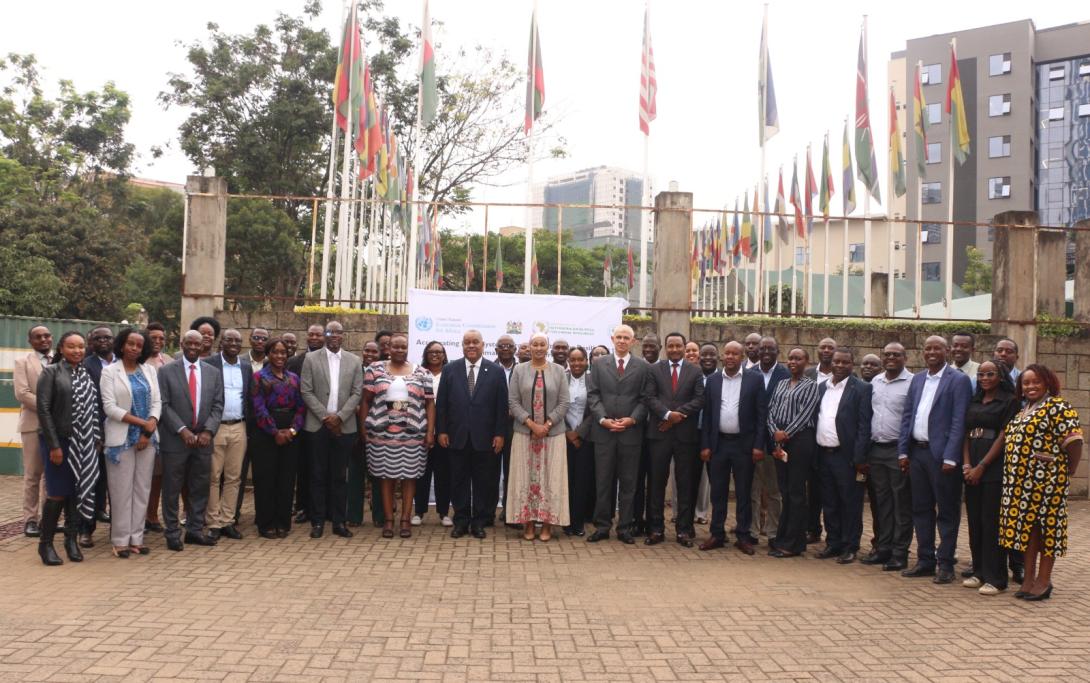
NAIROBI, Kenya, 22 July 2026 — The Government of Kenya, together with the United Nations Economic Commission for Africa (ECA), the African Union Inter-African Bureau for Animal Resources (AU-IBAR) and the Intergovernmental Authority on Development (IGAD), today launched the Kenya National Inception Meeting under the project Accelerating Food Systems Transformation for Resilience to Climate Change in Africa at AU-IBAR headquarters in Nairobi.
The meeting marked the operational start in Kenya of a three-year regional initiative that will also be implemented in Uganda and Somalia from 2026 to 2028. The project seeks to strengthen the resilience of livestock-based food systems to climate change and variability through four interconnected areas of work: livestock value chains, climate/index-based livestock insurance, land tenure security, and climate-land information systems for evidence-based decision-making.
The inception meeting brought together representatives from national and county governments, the National Land Commission, development partners, pastoralist associations, private-sector institutions, researchers, and technical experts to review four inception reports and agree on a Kenya-specific implementation roadmap.
Opening the session, UN ECA emphasized the urgency of transforming Africa’s food systems in response to rising food insecurity, climate shocks and underutilized productive assets.
“Africa’s persistent hunger, despite its land, livestock, labour and market endowments, is fundamentally a problem of converting existing assets into value, jobs, trade and resilience, rather than a problem of scarce resources,” said Dr. Medhat Elhelepi coordinator of the project, noting the need for practical, country-owned solutions that can unlock the full value of the livestock sector.
AU-IBAR highlighted the importance of placing livestock at the centre of Africa’s agri-food systems transformation agenda, stressing that stronger productivity, resilience and competitiveness are essential for food security, jobs and inclusive growth.
“This integrated approach, linking value chain analysis, insurance, land tenure and data systems, offers a more complete response to the constraints facing Africa’s livestock sector than addressing each issue separately,” said Dr. Sarah Ashanut Ossiya, speaking on behalf of the Director of AU-IBAR.
IGAD underlined the immediate relevance of the initiative in the Horn of Africa, where climate variability continues to affect pastoral systems, cross-border livestock movement and food security. The organization called for stronger regional early warning systems, interoperable climate data and financing mechanisms that respond to the realities of pastoral economies.
“Early warning information must be linked to early action, so that climate information systems are connected to decisions that protect productive assets before losses become irreversible,” said Dr. Ahmed Amdihum of IGAD.
The National Land Commission emphasized that secure land tenure remains fundamental to sustainable livestock production, climate adaptation and investment, particularly in Kenya’s arid and semi-arid lands.
“Secure land tenure is the bedrock of rangeland resilience, livestock productivity and climate adaptation. Without it, investments in insurance, restoration and sustainable grazing cannot be sustained,” said Ms. Kabale Kache, CEO for the Land Commission.
Dr. Gary Connile, UN Resident Coordinator in Kenya, also stressed that land governance is central to the success of climate resilience efforts in pastoral areas.
“Land tenure security is the precondition for the other three strands. Insurance, credit and investment cannot function where land ownership is uncertain,” he said.
During the technical session, participants reviewed the economic significance of Kenya’s livestock sector, the effects of repeated droughts and climate shocks, and the challenges posed by low insurance uptake, weak market systems and insecure land tenure. The Kenya Livestock Value Chain Assessment inception report highlighted the sector’s contribution to the economy and identified beef and camel milk as initial priority value chains for further analysis.
Participants also discussed the need to strengthen climate/index-based livestock insurance by improving product design, affordability, renewal rates and payout timeliness, while maintaining support for catastrophic risk. On land tenure, the meeting noted that existing legal and policy frameworks provide an important foundation, but that implementation gaps continue to limit resilience and investment in pastoral areas.
The meeting concluded with thematic breakout discussions on the four inception reports. Participants reviewed the scope, methodology, site selection, stakeholder engagement plans and work schedules, and agreed on priority recommendations to guide implementation in Kenya.
For media enquiries:
About the Project
Accelerating Food Systems Transformation for Resilience to Climate Change in Africa is a UN-funded initiative implemented by the United Nations Economic Commission for Africa (ECA) in partnership with AU-IBAR, IGAD and the Governments of Kenya, Uganda and Somalia. Running from 2026 to 2028, the project supports participating countries to strengthen the resilience of livestock-based food systems to climate change through integrated work on livestock value chains, climate/index-based livestock insurance, land tenure security and climate-land information systems.
About ECA
The United Nations Economic Commission for Africa (ECA) is one of the five regional commissions of the United Nations, mandated to promote the economic and social development of its member States, foster intra-regional integration and promote international cooperation for Africa’s development.
About AU-IBAR
The African Union Inter-African Bureau for Animal Resources (AU-IBAR) is a specialised technical office of the African Union Commission mandated to support and coordinate the sustainable development and utilisation of animal resources across Africa.
About IGAD
The Intergovernmental Authority on Development (IGAD) is a regional economic community bringing together countries of the Horn of Africa — Djibouti, Ethiopia, Kenya, Somalia, South Sudan, Sudan and Uganda — to promote regional cooperation and integration, including on food security, environment and climate resilience.
About the National Land Commission
The National Land Commission is an independent constitutional commission established under the Constitution of Kenya 2010 and mandated to manage public land, advise the national government on land policy and address historical land injustices.