

In Rome, High-Level Dialogue Brings Political Leaders, Technical Institutions and Financing Partners Together to Accelerate PPR Eradication
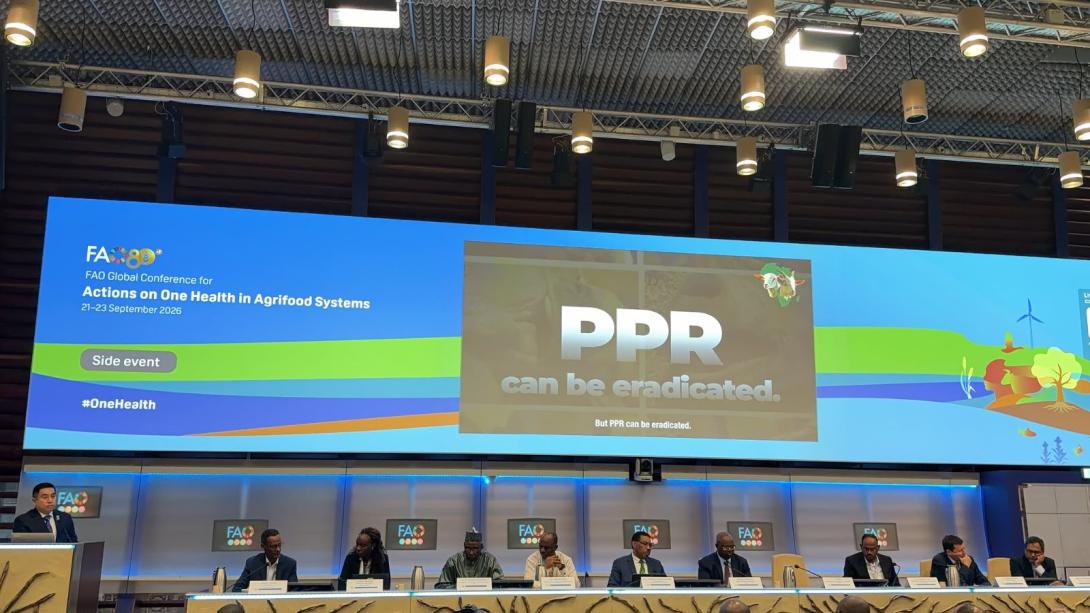
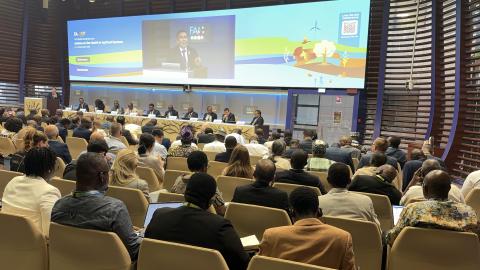
The high-level side event on agrifood systems transformation through the One Health approach, the eradication of Peste des Petits Ruminants (PPR), and the control of Foot-and-Mouth Disease (FMD) brought together political decision-makers, regional and international institutions, as well as technical and financing partners in Rome around a shared objective: turning political commitments into sustainable investments and coordinated action on the ground.
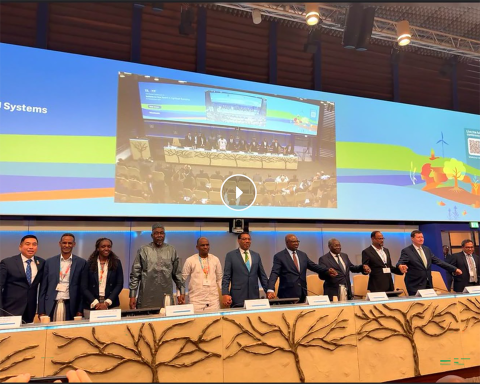
The dialogue notably brought together the Prime Minister of the United Republic of Tanzania, ministerial representatives from Chad, Cameroon, Bangladesh and Burkina Faso, alongside the World Bank, the Gates Foundation, IGAD, the European Union, the African Union, and international technical organizations working in animal health.
The Prime Minister of Tanzania highlighted his country’s political commitment and investments in vaccination, animal health and livestock sector transformation. He emphasized that investing in PPR eradication is also an investment in food and nutrition security, rural livelihoods, livestock trade and the resilience of agrifood systems.
Chad highlighted national efforts to strengthen vaccination campaigns, veterinary infrastructure and services for pastoral communities. Cameroon, meanwhile, shared its experience in mobilizing public investment for animal health, including PPR vaccination campaigns and the strengthening of veterinary services.
Representatives from Bangladesh and Burkina Faso also contributed national perspectives, highlighting experiences in tackling transboundary animal diseases and the importance of sustained investment in stronger animal health systems.
From the financing perspective, the World Bank highlighted the growing attention being given to livestock development, animal health and the sustainable transformation of livestock systems. The Gates Foundation contributed the perspective of development partners on mobilizing investment and accelerating high-impact interventions.
IGAD emphasized a critical priority: the need for costed national plans integrated into national and regional investment frameworks. Such an approach is essential to quantify financing needs, demonstrate the economic benefits of disease eradication, and position animal health as a strategic investment for economies and communities that depend heavily on livestock.
One of the significant financing messages of the dialogue came from the European Union, which stressed that PPR is not only an animal health, economic or trade challenge, but also a major social and livelihood issue, given its direct impact on household incomes, food security and communities dependent on sheep and goats.
Against this backdrop, the European Union announced an additional €50 million investment for a second phase of support to PPR eradication in Africa, with the prospect of mobilizing a further €40 million through blended financing.
This commitment is expected to reinforce ongoing efforts by African countries, the African Union and its specialized institutions, together with international partners, to accelerate the implementation of national and regional eradication strategies.
A central message emerged from the discussions: PPR eradication cannot be achieved through vaccination alone.
Success requires an integrated approach combining high-level political commitment, sustained domestic investment, effective veterinary services, stronger surveillance and laboratory capacities, access to quality vaccines, reliable animal health information systems, cross-border cooperation, and coordinated public, private and development financing.
The discussions also underscored that Africa is not starting from scratch. Important foundations are already in place, including national strategies, vaccination programmes, laboratory networks, vaccine production and quality assurance capacities, disease information systems, regional coordination mechanisms and cross-border initiatives.
The priority now is to consolidate these gains, close financing gaps and accelerate implementation at the scale required to achieve measurable impact.
The Rome dialogue therefore reinforced a shared understanding: investing in animal health means investing in livelihoods, food security, trade and the resilience of communities and agrifood systems.
From political commitment to investment, from investment to action, and from action to impact PPR eradication requires sustained, coordinated and collective action.