

Comoros validates its 2026 to 2030 plan to eradicate PPR and protect livestock farmers' livelihoods.
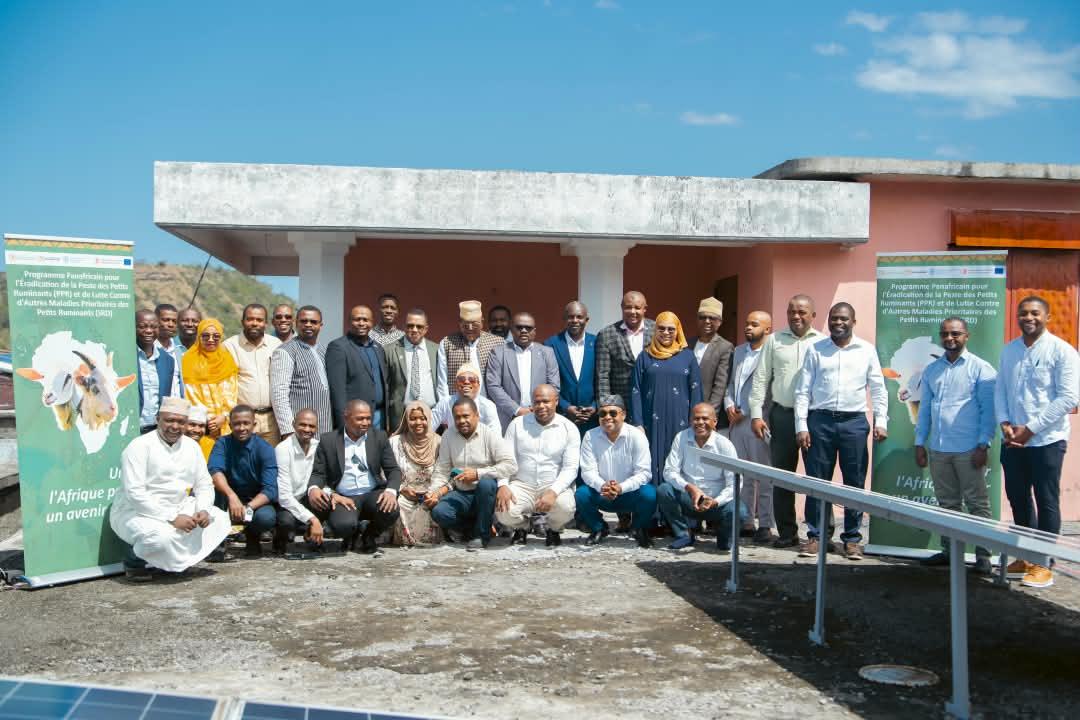
Meeting in Moroni on 16 and 17 September 2026, national stakeholders validated the 2026 to 2030 Peste des petits ruminants (PPR) Strategic Control and Eradication Plan. Targeted vaccination, surveillance on the three islands and securing imports are the priorities of this roadmap, with a budget of 2.67 billion Comorian francs.
The Comoros has reached a major milestone in its fight against PPR. After two days of work, the national stakeholders validated a strategic plan for the period 2026 to 2030, adopted its revised budget and agreed on an epidemiological surveillance and mapping action plan to be carried out before the end of the year.
Organized by the National Livestock Directorate, with technical support from AU-IBAR and financial support through the Pan-African Secretariat of PPR (PAPS), the workshop brought together national and island animal health services, research institutions, representatives of governorates, the private sector and professional organizations.
This validation gives the country a shared reference framework to organize the response. It must now be followed by the ministerial endorsement of the plan, the implementation of its steering mechanism and the mobilization of the resources needed to deliver it.
Recent outbreaks highlight the urgent need for action. PPR has been present in the Comoros since November 2012 and remains a threat to goats, sheep and families who depend on them. According to documents reviewed at the workshop, no vaccination campaign has been conducted since 2014. Outbreaks reported in Koua in 2025 and Ntsaueni in 2026 underscore the need for sustained strengthening of prevention and surveillance.
For rural families, the loss of an animal goes beyond market value alone. It can reduce the resources available for food, care or schooling. Small ruminants also serve as savings that can be drawn on in hard times and to meet social obligations.
In her message read by Dr. Jean-Marc Feussom, PAPS expert in disease control and health security management, the Director of AU-IBAR, Dr. Huyam Salih, recalled this economic and social dimension. She also stressed the conditions for an effective response: “Vaccination alone will not be enough.” Surveillance, laboratory confirmation, quarantine, control of inter-island movements and participation of herders must accompany the campaigns.
The strategy is adapted to the risks of each island, and the plan favors a differentiated response. In Ngazidja, where the disease is considered endemic, it provides for mass vaccination with a coverage target of at least 80% of the identified herd. This percentage is a target to be reached, not a result already achieved.
In Anjouan and Mohéli, the priority is enhanced surveillance, with ring vaccination around confirmed outbreaks. This approach should allow interventions to be tailored to the epidemiological situation of each island.
Another major component is the strengthening of the Comoros National Animal Disease Surveillance Network (RENESMAC). The planned system includes 19 monitoring posts in the Rural Economic Development Centers and 12 posts at points of entry. It aims to improve the detection of suspicions, the escalation of alerts and the flow of information between the field and veterinary authorities.
The plan also includes operationalizing the molecular diagnosis of PPR at the National Research Institute for Agriculture, Fisheries and the Environment (INRAPE), to strengthen confirmation of infections.
Imports of live animals and movement between islands are central to the strategy. The plan includes a 21-day official quarantine for imported consignments and strengthened controls at points of entry, including secondary ports.
These measures require functional infrastructure, equipment and clearly defined responsibilities. Participants recommended that priority be given to surveillance capabilities, laboratory capabilities, cold chain and quarantine facilities.
They also gave top priority to launching the implementing regulations of the Livestock Code. The challenge is to translate the legal framework into operational measures for vaccination, surveillance, imports and outbreak management.
The revised budget amounts to 2,671.9 million Comorian francs over five years, including contingencies. This covers laboratory equipment, transportation, vaccine and sample storage, solar energy and agent training.
However, the adoption of this budget does not mean that its financing is secured. The workshop report states that the distribution of contributions between the State and partners remains to be determined. An operational funding plan should specify the resources available, priority needs and amounts to be mobilized.
Community participation is also an integral component. The plan provides 63 million Comorian francs for risk communication and community engagement. Actions should encourage the reporting of suspicions, adherence to vaccination and compliance with health measures, involving farmers, importers and market leaders.
The participants adopted an immediate action plan, including consolidation of serological findings, a second round of surveillance in Anjouan and Mohéli, and updating of the mapping of episystems. A monitoring and mapping report must be sent to partners by 31 December 2026.
The establishment of the National Steering Committee and the organization of quarterly reviews are among the recommendations to track progress on commitments.
By 2030, the plan calls for the submission of a dossier for official recognition of PPR-free status to the World Organisation for Animal Health (WOAH). This ambition will depend on the results achieved and the health evidence gathered.
By supporting this process, AU-IBAR and PAPS are helping to link Comorian priorities to the continental eradication effort. For the Comoros, the next step will be decisive: transforming the validated plan into accessible services, funded interventions and better protected herds.