

Fisheries Directors Set Out Next Steps for Fisheries Reform as FishGov2 Ends
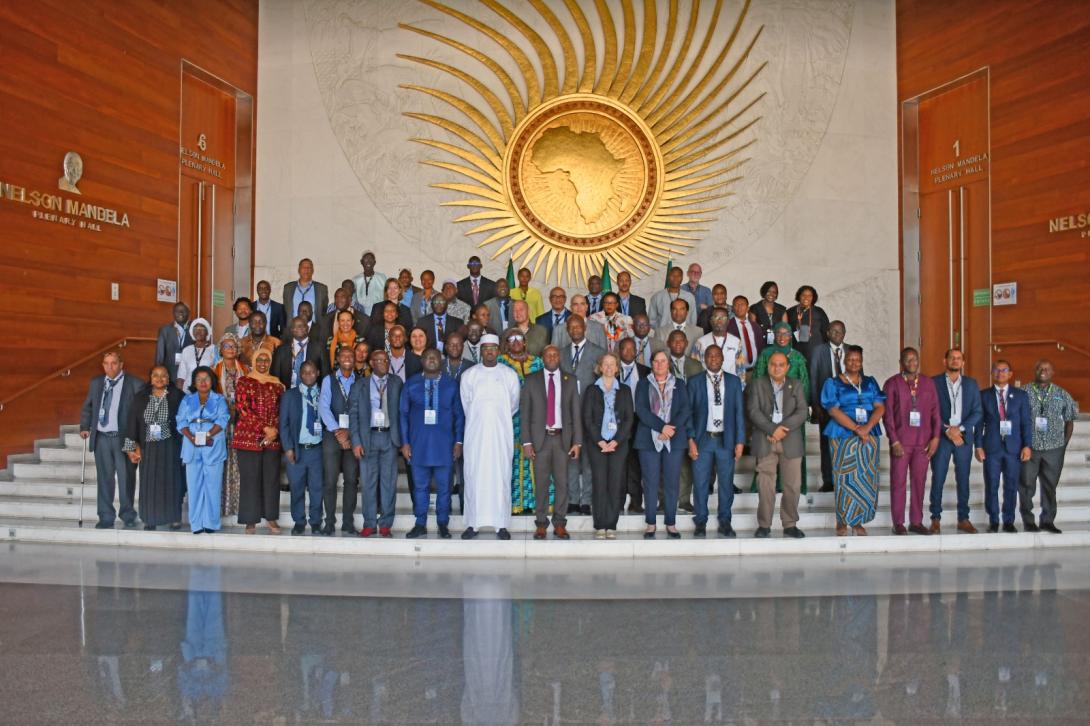
Addis Ababa, 21 October 2026 – Directors of fisheries and aquaculture and experts from African Union Member States met in Addis Ababa from 20-21 October 2026 to close the programme Enhancing Sustainable Fisheries Management and Aquaculture Development in Africa: A Programme for Accelerated Reform of the Sector (FishGov2), and to agree on how its results will be carried forward once the programme ends on 31 October 2026.
Funded by the European Union and implemented by the African Union Inter-African Bureau for Animal Resources (AU-IBAR) with the African Union Development Agency (AUDA-NEPAD) and the World Organisation for Animal Health (WOAH), FishGov2 began in January 2021 and, following a 16-month no-cost extension, has run for five years and ten months. It has supported Member States to implement the Policy Framework and Reform Strategy for Fisheries and Aquaculture in Africa (PFRS), adopted by African Heads of State and Government in Malabo in 2014, and the Africa Blue Economy Strategy.
The two-day technical meeting (20–21 October) brought together Member States, Regional Economic Communities (RECs), Regional Fisheries Bodies, AU Centres of Excellence, continental networks, non-state actors, the private sector and development partners. Participants reviewed the programme's results and lessons, its financial report, and its sustainability and exit strategy, and finalised recommendations to present to ministers and the Project Steering Committee on 22 October.
From policy to implementation
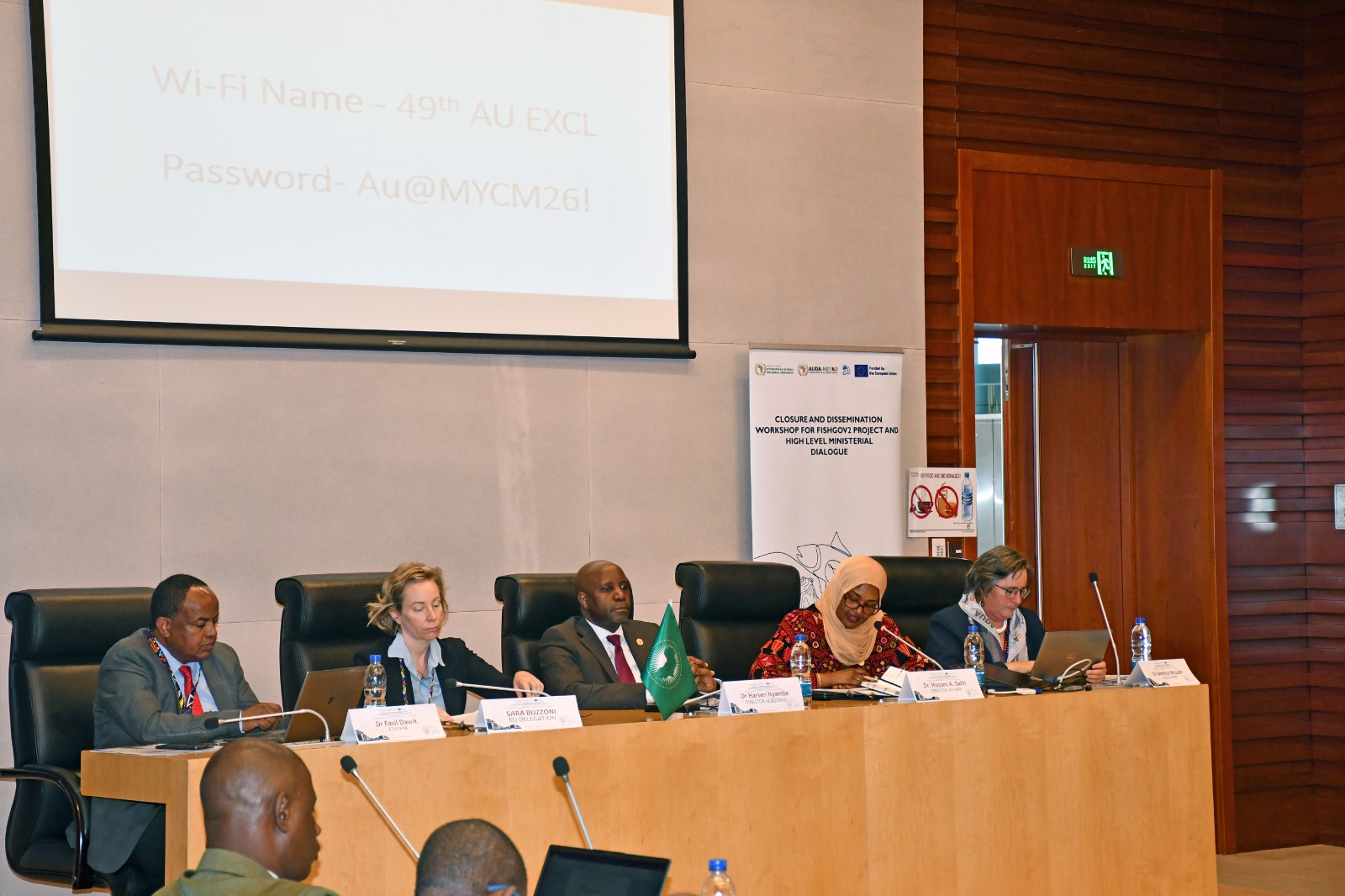
Speaking on behalf of H.E. Moses Vilakati, Commissioner for Agriculture, Rural Development, Blue Economy and Sustainable Environment, Dr Harsen Nyambe, Director of Sustainable Environment and Blue Economy and Acting Director of Agriculture and Rural Development at the African Union Commission, said FishGov2 had strengthened policies and institutions across the continent, but that poverty in fishing communities, climate change, illegal, unreported and unregulated (IUU) fishing and post-harvest losses continued to hold the sector back. The task now, he said, was to move from policy to implementation and to attract investment, building on the foundation the programme had laid.
He cited the strengthened African Fisheries Reform Mechanism (AFRM), the African Fisheries and Aquaculture Data Platform (AFAData), support for policy alignment, and continental networks of regional institutions, small-scale fishers, women fish processors and traders, aquaculture practitioners, and aquatic animal health specialists as concrete results. “Implementing the sustainability and exit strategy is crucial to sustaining the project's achievements going forward,” he said, adding that lessons from FishGov1 and FishGov2 had informed a proposed Transformative Programme for Sustainable Fisheries and Resilient Aquaculture Value Chains (2026–2035), which ministers will be invited to endorse.
Dr Bernice Mclean of AUDA-NEPAD described the closure as the celebration of a continental journey and a moment to reflect on the path from FishGov1 and the Fish Trade project. She said decisions taken under the programme reflected African ownership and priorities and carried a responsibility to safeguard the continent's aquatic resources. She called for investment in African data, skills and institutions, with particular attention to young people and women, and for stronger partnerships that serve future generations.
Dr Patrick Bastiaensen, Programme Officer at WOAH, reflected on joint implementation between AU-IBAR, WOAH and AUDA-NEPAD, particularly on aquatic animal health, and called for its continued strengthening.
Speaking for the Food and Agriculture Organisation of the United Nations (FAO) in Africa, Dr Tarub Bahri noted that aquaculture production on the continent has considerable room to grow and that FAO's Guidelines for Sustainable Aquaculture are ready for countries to adopt. Drawing on the State of World Fisheries and Aquaculture (SOFIA) report, she stressed the importance of strengthening fish value chains to create jobs and said the 2014 study on the value of African fisheries needed updating.
Ms Sarah Buzzoni of the European Union Delegation to the African Union said participants needed to decide how to consolidate and sustain the programme's results, pointing to AFAData, the knowledge products developed, and common African positions in international negotiations. She called for continued coordination among partners and said the meeting's value lay in looking beyond the current phase toward a future continental programme.
Opening the meeting for the host country, Dr Fasil Dawit, Ethiopia's Director of Fisheries, said Ethiopia had a direct stake in the agenda, noting that national fish production had tripled in recent years and that the results included operationalising the AFRM. With the roadmap now clear, he said, partners needed to renew their commitments.
Results on the ground
Since 2021, FishGov2 has contributed to measurable change in how Africa governs its fisheries and aquaculture:
- Twenty-eight countries have aligned their national fisheries policies with the PFRS, and 18 of them now include fisheries in their agricultural investment plans.
- AFAData is operational in 12 countries and was endorsed by African Heads of State and Government in February 2026.
- The network of AU Centres of Excellence in fisheries and aquaculture has grown from eight to 14 institutions.
- Networks representing small-scale fishers and women in fisheries and aquaculture are now recognised at African Union level.
- Member States agreed 44 common African positions for global fisheries negotiations and took part in 19 international fora.
Recommendations for ministers
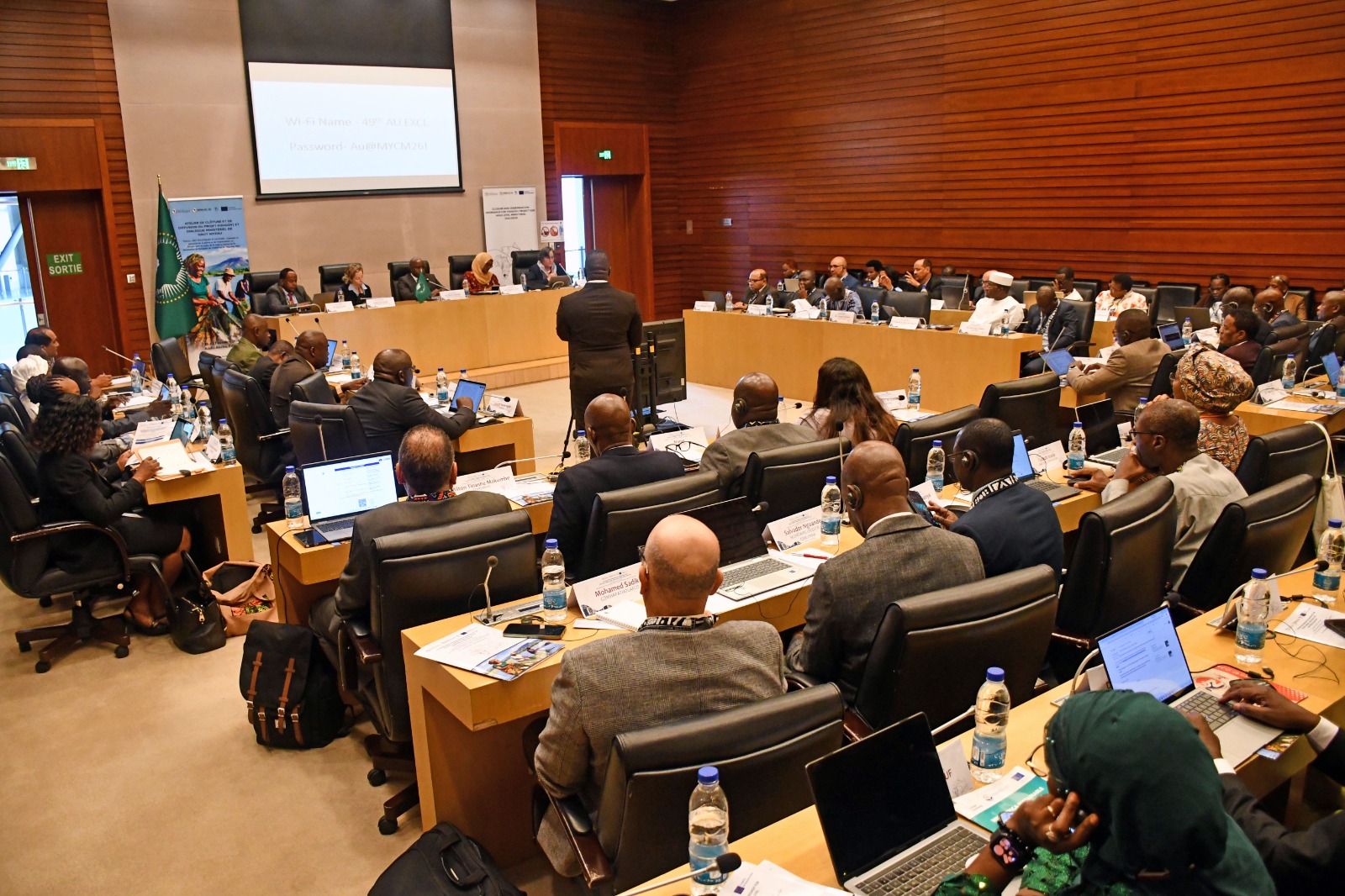
Discussions on the second day were organised around three panels: from evidence generation to policy, investment and implementation; from policy alignment to action; and from policy action to global influence. Recommendations emerging from the meeting, to be set out in a communiqué for submission to the Steering Committee and ministers, include, among others, such as:
- integrating AFAData into national statistics systems and institutionalising the Gross Value Added (GVA) toolkit so that countries can show the sector's contribution to their economies within the Comprehensive Africa Agriculture Development Programme (CAADP) Results Framework;
- translating policy alignment into funded action by including fisheries and aquaculture priorities in costed national and regional CAADP investment plans under the Kampala Declaration;
- strengthening aquatic animal health services and sanitary cooperation to reduce cross-border barriers to fish trade, particularly for women processors and traders;
- maintaining Africa's coordinated engagement in global negotiations and pursuing a structured AU–EU dialogue on fisheries, aquaculture and market access;
- adopting a costed transition plan, developing the 2026–2035 programme with Member States, RECs and partners, exploring new sources of financing, and pursuing a third phase of the fisheries governance programme.
Ministerial Dialogue and final Steering Committee, 22 October
The FishGov2 closure concludes tomorrow, 22 October 2026, with a High-Level Ministerial Dialogue and the final FishGov2 Project Steering Committee. Ministers and senior representatives from Ethiopia, Cameroon, Ghana, Eswatini, Uganda and Egypt will share national perspectives.
The Steering Committee will then consider the recommendations of the technical meeting, review the programme's achievements, lessons and financial report, and adopt final recommendations, including on the endorsement of the Transformative Programme for Sustainable Fisheries and Resilient Aquaculture Value Chains (2026–2035) as the vehicle for sustaining and scaling up FishGov results over the next decade.
About FishGov2
FishGov2 is funded by the European Union and implemented by AU-IBAR in partnership with AUDA-NEPAD and WOAH. The programme supports African Union Member States, RECs, and specialised institutions in strengthening fisheries and aquaculture governance in line with the PFRS and the Africa Blue Economy Strategy.