
Ministers: Africa’s fisheries frameworks must now reach national budgets
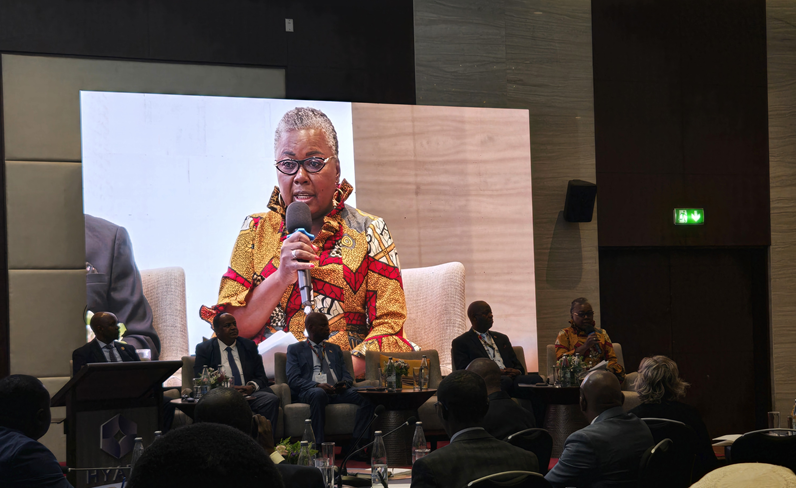
Addis Ababa, 22 October 2026 – Ministers responsible for fisheries and aquaculture used the High Level Ministerial Dialogue at the close of FishGov2 to share national reforms and to press for a shift from policy to investment.
The dialogue was chaired by Mr Harsen Nyambe, Acting Director of Sustainable Environment and Blue Economy and Agriculture and Rural Development at the African Union Commission. Ethiopia, Cameroon, Ghana, Eswatini, Uganda and Egypt delivered statements.
Ghana: fishers are the private sector
Opening the ministerial dialogue, H.E. Emelia Arthur, Ghana's Minister for Fisheries and Aquaculture, argued that Africa cannot remain rich in aquatic resources while the communities that depend on them stay poor. She said fisheries must be treated as central to national economies, not as subsistence activities.
In Ghana, fisheries and aquaculture support more than 3 million livelihoods, about 10 per cent of the population, and fish provides around 60 per cent of animal protein. Its per capita consumption is well above the African average of about 9 kg.
She put three questions to her peers: how to move from policy to implementation, how to mobilise the investment needed, and how to make sure fishing communities, women and young people benefit first. She reminded the room that small-scale fishers are the sector's private sector. "They are not in suits holding briefcases. They are holding canoes and paddles."
Ghana shared practical steps. These include the Fisheries and Aquaculture Act 2025, the first inland fisheries management plan, a community-based commercial aquaculture scheme for women's and youth cooperatives, and planned Aquaculture Economic Zones. The cooperative scheme now runs in 19 of the country's 261 districts, with government covering the capital costs of setting up fish farms as community businesses. The Minister said the Finance Minister had asked for a costed four-year plan to close a fish supply gap of about 500,000 tonnes now met by imports, with a budget allocation expected in November.
She also described an inter-agency response to recent fish kills in an inland water body, involving fisheries, veterinary and local government authorities. Her conclusion was about cooperation. Countries will excel in different areas, she said, and the days of competing to be judged the best must be behind us. She invited fisheries economists from other countries to work with Ghana on its plans.
Uganda: regulation and budgets
Speaking for Uganda, H.E. Robert Migadde said FishGov2 support had helped align national policy with continental frameworks as the country finalises regulations under its Fisheries and Aquaculture Act 2023. The regulations will cover fishing gear, breeding and nursery areas, closed seasons, aquaculture, fish quality assurance and biosecurity, and the role of fishing communities in managing their own resources.
He listed the challenges Uganda faces: unsustainable fishing practices driven by rising demand, habitat degradation, and weak handling and marketing infrastructure. Implementation, he said, needs commitments on investment and budgets, as well as fisheries statistics, inspection and certification. He called on Member States to back implementation with budget allocations, in line with the CAADP commitment to spend 10 per cent of national budgets on agriculture, and to build partnerships with the private sector, fishing communities and development partners.
Eswatini: a place for landlocked countries
For the Kingdom of Eswatini, H.E. Mandla Tshawuka made the case for landlocked countries in the blue economy. Countries without coastlines, he said, also have a place at the table through their rivers, dams and inland waters.
He highlighted the SADC Regional Fisheries Monitoring, Control and Surveillance Coordination Centre in Mozambique as a model of collective action against illegal fishing. He described Eswatini's push to expand aquaculture and youth involvement in fish farming, including a national workshop held the previous week with government officials, researchers, fish farmers and technical experts. He asked that regional enforcement and collaboration with Centres of Excellence continue without interruption into the next phase.
Egypt and Ethiopia
In a statement delivered on behalf of Prof. Salah Aly, Egypt commended the project's results, including its support for data systems and economic valuation tools, and endorsed a third phase of FishGov. It proposed priorities for the next phase, including artificial intelligence and digital tools, certification of aquaculture farms against international standards, insurance for small-scale fish farmers, integrated aquaculture–agriculture systems, and support for youth-led and women-led enterprises. Egypt said it was ready to share its experience.
Ethiopia's statement, delivered on behalf of H.E. Fikru Regassa, called on ministers to endorse the framework and carry the agenda forward in national plans and budgets beyond October 2026. Cameroon also took part in the dialogue.
Across the statements, ministers agreed on a shared direction, that although studies and frameworks are in place, the next test is national investment.