

AU-IBAR-Supported Regional Gene Bank Advances Animal Genetic Conservation and Youth Enterprise in Africa
Entebbe, Uganda
AU-IBAR's investment in Uganda's National Animal Genetic Resources Centre and Data Bank (NAGRC&DB) continues to deliver regional value, strengthening animal genetic resource conservation, technical capacity and livestock service delivery across Africa.
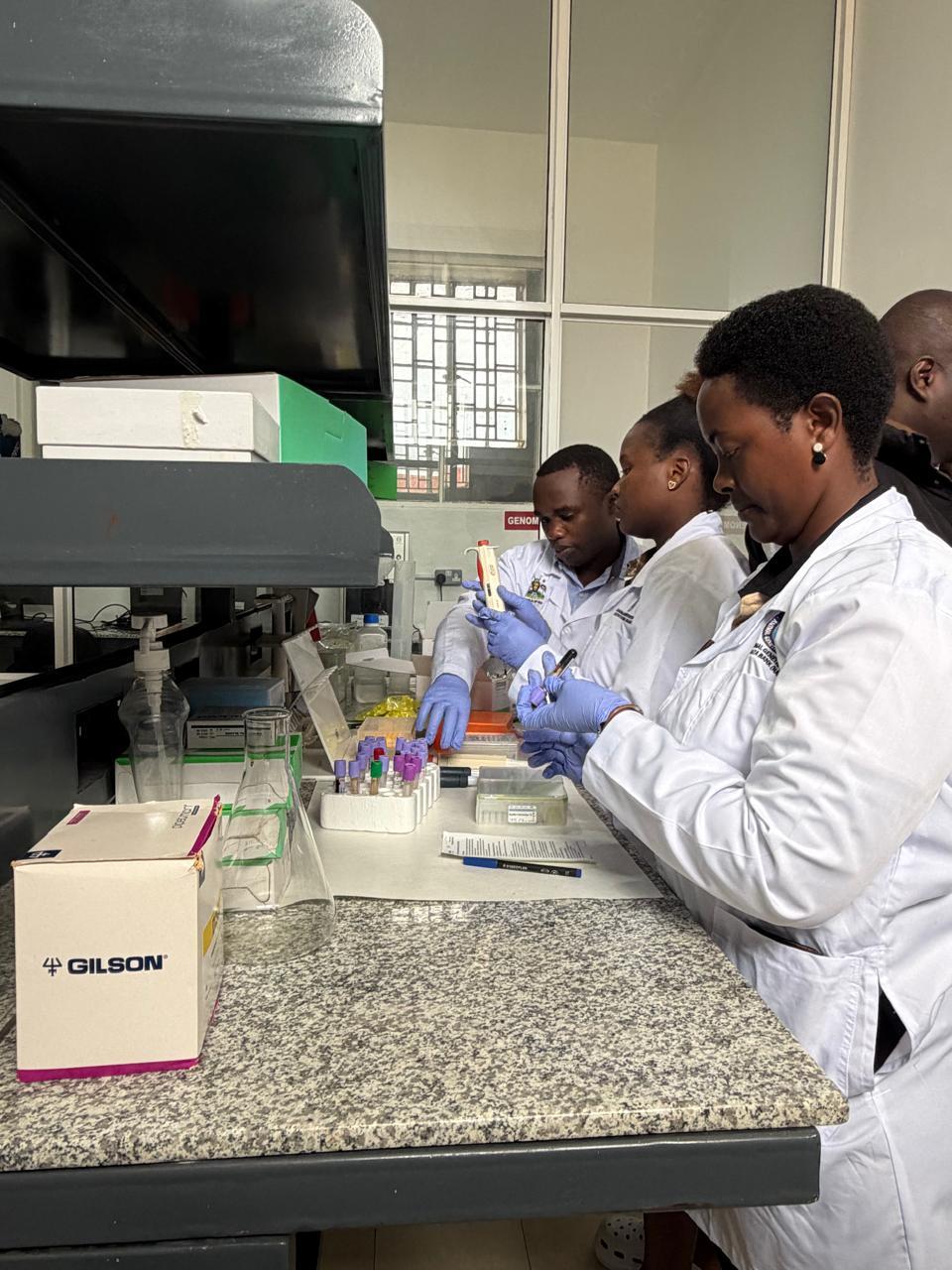
During a visit to the Centre, the Director of AU-IBAR inspected the Semen Collection Centre and Livestock Experimentation Station, including equipment previously donated by the Bureau to support the establishment of the Eastern Africa Regional Gene Bank. Encouragingly, the equipment remains in good working condition and continues to support the Centre's operations. NAGRC&DB technical staff demonstrated its application in semen collection, processing and genetic resource conservation.
The facility has since supported specialised capacity development across the continent, including Artificial Insemination and Embryo Transfer training for participants from 50 Member States, chicken biobanking involving seven Member States, Africa Biogenomics training and capacity building in quality laboratory management systems.
In discussions with NAGRC&DB Executive Director, Dr Peter Beine, attention turned to leveraging this institutional capacity for the Integrated Regional Livestock Value Chains (IRLVC) Programme, particularly through youth enterprise development. Dr Beine highlighted the Centre's experience in training over 5,000 young people in artificial insemination and equipping them with AI kits, semen, liquid nitrogen and motorcycles to deliver services in rural communities.
The model demonstrates how technical capacity can translate into youth employment, enterprise opportunities and improved access to livestock services. It also offers a practical pathway for the IRLVC programme to position youth and women as delivery agents and sustainable economic actors within livestock value chains, building on existing institutional capacities rather than establishing parallel interventions.
The Director reaffirmed AU-IBAR's commitment to ensuring that the Gene Bank is fully operational and serves other Member States beyond Uganda. "Our investment must deliver value beyond the host country. The facility should serve as a regional resource, strengthening genetic conservation, technical capacity and livestock productivity across Member States."
Dr Beine confirmed NAGRC&DB's readiness to support other countries through technical training and institutional collaboration, while emphasizing the need for formal cooperation frameworks to facilitate access and structure regional engagement.
The continued use of AU-IBAR-supported infrastructure, continental technical training and the deployment of over 5,000 trained youth demonstrate the lasting value of investing in institutional capacity. The next priority is to expand regional access to these capabilities and leverage proven models of youth-led service delivery to advance more productive and competitive livestock value chains across Africa.