

Setting the Tone for Africa’s Agri-Food Transformation through Innovation, Investment & Execution
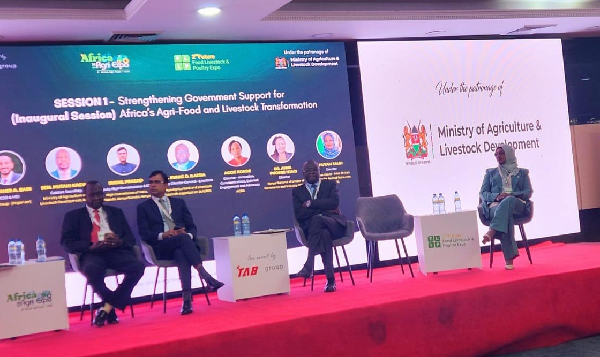
The Africa Agri Expo 2026, held alongside the Future Food, Livestock and Poultry Expo 2026, opened with a clear message: Africa’s agri-food transformation will depend not only on ambition but also on coordinated action across policy, research, business, and investment.
Bringing together government leaders, continental institutions, research organizations and private-sector actors, the opening session framed the summit theme — Driving Africa’s Agri-Food and Livestock Transformation through Innovation, Technology, Investment & Sustainability — as both an opportunity and a responsibility.
Agriculture at the Core of Africa’s Economy
Representatives from the Kenya National Chamber of Commerce and Industry underscored agriculture’s foundational role in Africa’s development. The sector employs over 60% of the continent’s workforce and contributes roughly 23% of GDP, yet Africa accounts for less than 3% of global agricultural trade.
The key concern raised was value capture. While production is widespread, processing, branding, quality assurance and export competitiveness remain limited. Speakers emphasized the need to shift from raw commodity exports to integrated, value-added supply chains capable of creating jobs and retaining wealth within the continent.
AfCFTA: From Commitment to Competitiveness
The African Continental Free Trade Area (AfCFTA) was repeatedly cited as a transformative platform. However, speakers cautioned that market size alone does not ensure impact.
Unlocking intra-African trade requires harmonized standards, strengthened sanitary and phytosanitary (SPS) systems, improved logistics and enterprise readiness. Without regulatory predictability and competitive production systems, the benefits of continental integration may remain constrained.
Livestock and Fisheries as Strategic Growth Frontiers
In her keynote, Dr Huyam Salih, Director of AU-IBAR, highlighted the scale of opportunity within Africa’s animal resources sector. Livestock, fisheries, and aquaculture already contribute significantly to livelihoods and economic output, yet productivity gaps, disease burdens, and infrastructure deficits limit their performance.
She referenced continental commitments under the Kampala CAADP Declaration, including strengthened SPS systems, improved disease surveillance, enhanced vaccine production, investment in feed and genetics, and sustainable fisheries management. Programmes such as the Pan-African PPR Eradication initiative illustrate growing coordination to protect livelihoods and strengthen regional trade systems.
The livestock sector was positioned not as a subsistence activity, but as an investable value chain capable of driving youth employment, trade expansion and climate-smart growth.
 |
 |
 |
Research, Technology and the Adoption Gap
Dr. Evans Ilatsia of KALRO emphasized the importance of research, genetics and innovation partnerships in closing productivity gaps. International collaboration and knowledge exchange were presented as accelerators of transformation.
At the same time, private-sector leaders highlighted a persistent adoption gap. Technologies are available, but uptake among smallholders remains limited due to constrained access to finance, perceived risk and fragmented advisory systems. Innovation must therefore be affordable, scalable and embedded within functioning market ecosystems.
Infrastructure, Investment and Sustainability
Speakers repeatedly stressed the need for coordinated investment in feed systems, cold chains, processing infrastructure, digital traceability and quality assurance. Post-harvest losses—estimated in some value chains at 30–50%—remain a major barrier to profitability and competitiveness.
Climate-smart productivity improvements were also emphasized. Enhanced feed efficiency, improved genetics and integrated crop–livestock systems can increase output while reducing emissions intensity, aligning sustainability with economic performance.
Strategic Themes Emerging
From the opening session, six priorities stood out:
- Value Addition and Competitiveness
- Operationalizing AfCFTA through Standards and Enterprise Readiness
- Productivity Gains through Research and Disease Control
- Inclusive Technology Adoption
- Infrastructure and Market Efficiency
- Collaborative Execution across Public and Private Actors
Spotlight AU-IBAR’s Programme Areas
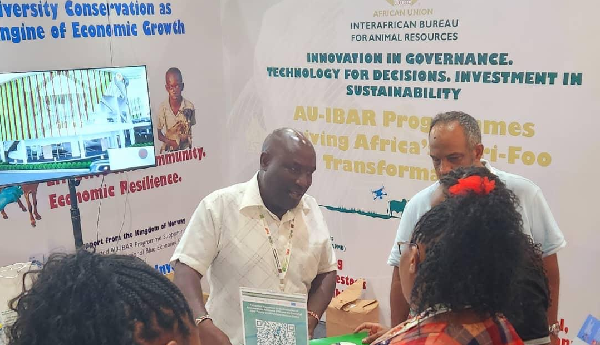
Aligned with the conference theme, the Expo has allowed AU-IBAR to showcase its strategic initiatives and programmes for 2024–2028. Key highlights include promoting regional livestock value chains (IRLVC), strengthening disease control via the Pan-African PPR Eradication Programme, advancing fisheries sustainability through the Policy Framework and Reform Strategy (PFRS), and supporting data-driven decision-making. The Expo facilitates partnerships among governments, financial institutions, and investors to implement actionable programmes that connect policy with investment, positioning Africa's livestock, fisheries, and aquaculture sectors for sustainable growth.