

DRC Validates Its Updated National Strategy for the Eradication of PPR: A Critical Milestone Toward a PPR-Free Africa by 2030
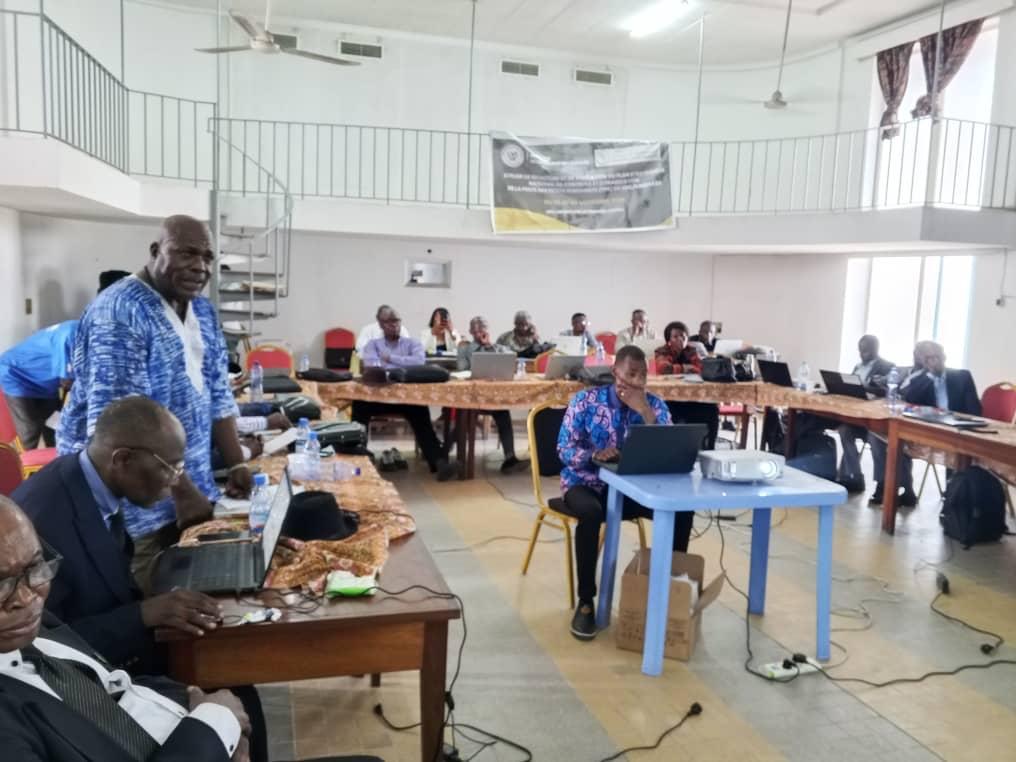
From 03 to 04 November 2025, the Democratic Republic of Congo (DRC) hosted a landmark national workshop in Kinshasa to review, update, and validate its National Strategic Plan (NSP) for the control and eradication of Peste des Petits Ruminants (PPR). Convened at the Central Veterinary Laboratory, the meeting brought together more than 30 national experts, including representatives of the Ministry of Fisheries and Livestock, provincial veterinary services, national laboratories, wildlife authorities, and key technical partners.
This collective effort marks a decisive advancement for the DRC, aligning national actions with the Global PPR Eradication Programme, the AU-IBAR Pan-African PPR Strategy (2025-2027), and regional coordination mechanisms led by SADC and ECCAS.
Small ruminants especially goats and sheep play a central role in the livelihoods of millions of Congolese families. Yet, PPR continues to threaten these vital assets, driven by a combination of structural and epidemiological challenges:
- porous borders and intense cross-border movements,
- busy livestock markets,
- limited diagnostic capacity,
- inconsistent vaccination coverage, and
- insufficient surveillance in remote or insecure areas.
- Civil strive in the eastern parts of the country
In this context, revising the 2017 NSP became imperative. The updated plan now integrates new epidemiological evidence, episystem-based planning, and risk-based interventions coordinated with neighbouring countries such as Angola and Tanzania, in line with emerging buffer-zone strategies.
One of the most notable aspects of the workshop was its full leadership by Congolese experts, despite the initial expectation of external facilitation. This shift underscores the growing national capacity and commitment to PPR eradication.
Participants evaluated the existing NSP using several key inputs:
- updated surveillance, laboratory, and mobility data
- recent PMAT self-assessment findings,
- insights from the WOAH PVS Evaluation,
- new guidelines from FAO, WOAH, and AU-IBAR, and
- evolving regional epidemiological realities.
To ensure deep technical reflection, the group was divided into three thematic working group:
- Communication & Stakeholder Engagement
- Vaccination Strategy and Cold-Chain Strengthening
- Surveillance, Laboratory Diagnostics & Data Flow Systems
This participatory approach allowed experts to refine each strategic component using evidence-based methods on four Pillars of the Updated Strategy
1. Enhanced Surveillance and PMAT Progression
2. Risk-Based and Synchronized Vaccination
4. Governance, MEL Framework & 90-Day Action Plan
At the conclusion of the workshop, participants endorsed a set of practical recommendations, including:
- establishing a communication and stakeholder coordination within the Ministry,
- updating the national vaccination calendar and micro-plans,
- formally integrating private sector actors and livestock keepers into the strategy,
- completing the budget and implementation chronogram for 2026-2027,
- operationalizing buffer-zone activities with SADC Member States.
The updated NSP was unanimously validated, demonstrating strong national commitment to operationalizing the plan without delay.
The validation of the DRC’s NSP comes at a crucial moment for the African continent. It reinforces:
- AU-IBAR’s continental strategy for PPR eradication,
- regional coordination through episystem-based planning, and
- Africa’s shared vision of achieving zero PPR by 2030.
With an updated strategy, enhanced national ownership, and alignment with global and regional frameworks, the DRC is now better placed to safeguard rural livelihoods, strengthen food security, and build a resilient livestock sector.