

APMD champions for market-linked livestock mobility as West Africa eyes new investment opportunities
Gradually, the rate of migration of pastoralists within and across borders in search for pasture and water has been on the increase. The influx of cross-border pastoralism has been associated with multidimensional and long-term policy and practical implications. The Transhumance protocol, defined as a policy-based framework that governs seasonal, cross-border movement of pastoralists and their livestock, has established the rules, rights, obligations and procedures that facilitate safe, orderly and sustainable mobility while minimizing conflict, ensuring animal health compliance and promoting regional economic integration. As climate variability intensifies and the demand for local livestock products grows, regulated and market-linked transhumance presents an opportunity for strengthening resilience, boosting trade and safeguarding pastoral livelihoods.
Within the Economic Community of West African States (ECOWAS), transhumance is governed by the ECOWAS Transhumance Protocol, that was formally established through Decision A/DEC.5/10/98 and operationalized through Regulation C/REG.3/01/03. ECOWAS recognizes transhumance pastoralism as a beneficial livestock production system that can largely contribute to food security together with economic and political stability. Despite the strong policy foundation, ratification, domestication and other implementation bottlenecks of the framework by ECOWAS Member States, including but not limited to fragmented coordination, insecurity along the mobility routes and inadequate infrastructure, and limited investment in the livestock-linked market systems continue to limit the potential of pastoral economies in the region.
On the other hand, the Intergovernmental Authority on Development (IGAD) region has made notable progress in operationalizing its transhumance protocol, especially in cross-border disease surveillance, multilateral arrangements, digital livestock traceability and coordinated veterinary services. It is against this backdrop, therefore, that the African Pastoral Markets Development (APMD) Platform drew the need for structured continental learning for ECOWAS and IGAD, as both regions modernize their pastoral mobility systems and reposition livestock as a frontier for economic transformation. Whereas each region has significantly made independent progress, their complementarities present a unique opportunity to accelerate the development of market-oriented and investment-ready transhumance models and to scale proven models across the continent.
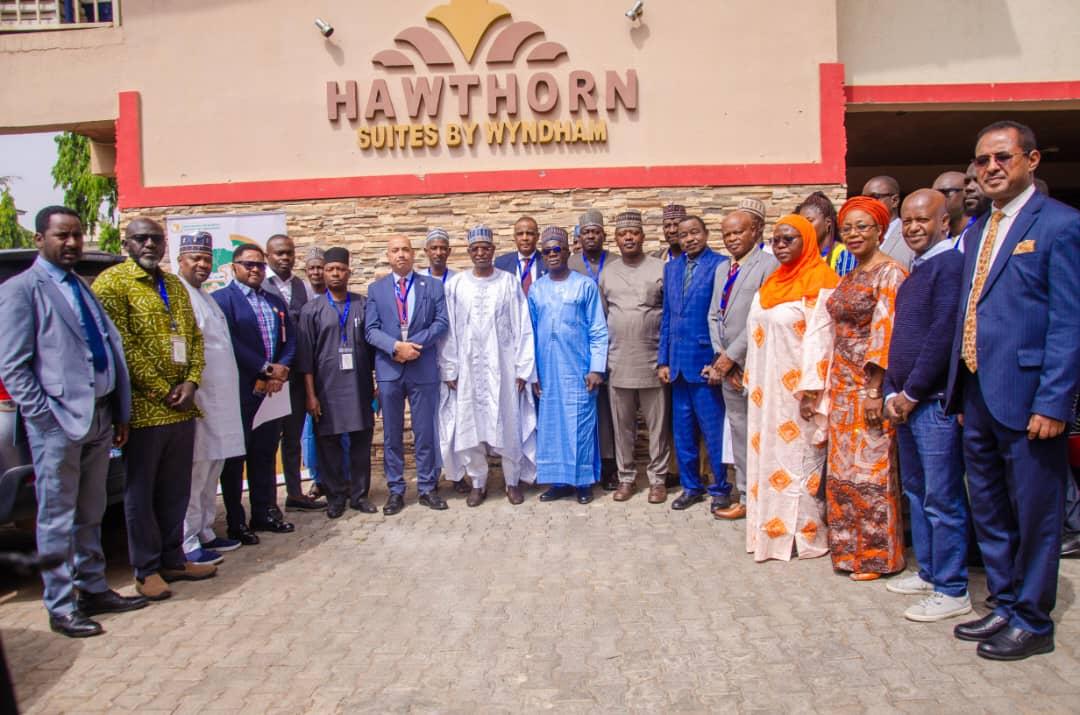
Nigeria reaffirmed its leadership commitment to transforming the livestock sector and strengthening regional cooperation as it hosted the Continental Learning Forum on Market-Linked Transhumance Models in Abuja. Graced by H.E. Idi Mukhtar Maiha, Minister of Livestock Development, Federal Republic of Nigeria, the forum is expected to enable collaborations and partnerships that will accelerate the emergence of profitable, formalized and climate-resilient economies, capable of attracting sustained private capital and investments, and delivering gender inclusive prosperity for pastoral communities across Africa.
In his opening address, Hon. Idi Mukhtar underscored the timeliness of the Forum and the importance of developing resilient livestock systems that can support economic growth, safeguard livelihoods and foster regional stability. He emphasized that the Forum’s focus on market-linked transhumance reflects the urgency to modernize mobility-based livestock production systems across West Africa. He outlined critical areas in need of regional coordination including, animal health and enhanced surveillance along mobility routes, improved livestock markets and market access, joint investment in grazing corridors and mobility infrastructure, environmental management and climate resilient land-use practices, and, dialogue platforms to address farmer-herder tensions. Further, he called for the integration of risk mitigation, early-warning systems and disease surveillance into mobility governance from the outset. “As we adopt more market-responsive mobility systems, we must anticipate emerging risks and embed mitigation measures into policies at the very beginning,” he said.
The Continental Learning Forum is calling for deeper collaboration between ECOWAS and IGAD, noting that coordinated approaches can unlock new investment incentives, reduce trade frictions and create more predictable cross-border livestock supply chains. The discussions underscore opportunities for blended financing, private veterinary services and logistics investment with the potential to transform mobility routes into profitable economic corridors.