

Training workshop for veterinary laboratories in French-speaking countries on the transport of infectious substances: focus on peste des petits ruminants (PPR) and other priority animal diseases

Côte d’Ivoire, Abidjan From 8-11 December 2025, the Pan African Veterinary Vaccine Centre (AU-PANVAC) convened a high-impact regional training workshop bringing together veterinary laboratory professionals across francophone Africa around a shared priority: ensuring the safe and compliant transport of infectious substances. Hosted at the ONOMO Hotel and implemented under the EU-funded PPR Programme, the training directly supports Africa’s preparedness and the global ambition to eradicate peste des petits ruminants (PPR).
PPR continues to rank among the most economically damaging transboundary animal diseases affecting sheep and goats. For millions of smallholder farmers, particularly in vulnerable rural communities, outbreaks translate into lost income, food insecurity, and weakened resilience. In this context, strengthening surveillance systems is not simply a technical exercise it is a strategic investment in livelihoods and food systems. Within the framework of the Global Strategy for the Control and Eradication of PPR (PPR-GCES), jointly coordinated by the Food and Agriculture Organization (FAO) and the World Organisation for Animal Health (WOAH), laboratory confirmation and safe sample movement remain central pillars of progress toward eradication.
It is precisely this operational gap that AU-PANVAC set out to address in Abidjan. Accurate diagnosis depends on the integrity of samples from field to laboratory. Yet across many countries, weaknesses in packaging, documentation, and regulatory compliance continue to pose risks not only to animal and public health but also to transport personnel and the environment. The workshop therefore focused on strengthening the practical competencies required to manage infectious substances safely and in full alignment with international standards.
The training brought together 27 veterinary laboratory professionals from 14 francophone countries, creating a dynamic regional platform for peer learning and harmonization of practices. Delivered by Dr. Charles Bodjo, Director of AU-PANVAC, and Mrs. Rahamatou M. Boukary CISSE, the programme was designed to move decisively from theory to application.
The first day focused on preparatory arrangements and participant reception, setting the stage for an intensive technical programme. Momentum quickly built on Day 2 during the official opening ceremony. In his remarks, Dr. Bodjo thanked the Government of Côte d’Ivoire for hosting the workshop and called for full engagement from participants, underscoring the strategic importance of compliant sample transport in the PPR eradication pathway. Speaking on behalf of the Ministry of Livestock, Dr. Lepry Charlotte, Director of LANADA, welcomed the initiative and emphasized its contribution to strengthening biosafety and biosecurity during biological sample shipments.
Technical sessions began immediately, grounding participants in biological risk management through the AMP approach Assessment, Mitigation, and Performance. The training then unpacked the complex regulatory landscape governing the transport of infectious substances, covering international frameworks such as ICAO and IATA alongside relevant national requirements. Step by step, participants examined the full shipping chain: classification, identification, packaging selection, marking and labeling, and completion of mandatory documentation.
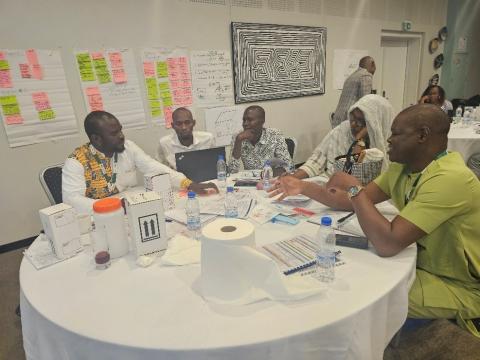
What distinguished the Abidjan workshop was its strong practical orientation? Through group exercises and scenario-based learning, participants applied classification criteria to real-world cases, debated risk profiles, and tested their understanding in a collaborative environment. This hands-on methodology continued into Day 3, where the focus shifted to risk mitigation and full regulatory compliance. Sessions on IATA packing instructions reinforced the non-negotiable requirement for triple packaging across Categories A, B, and exempt specimens. Participants also worked through marking and labeling standards and practiced completing shipper’s declarations and supporting documents.
By Day 4, the learning journey culminated in group presentations, where participants demonstrated end-to-end mastery of the shipping process using realistic shipment scenarios. The final written examination comprising 50 questions covering all course modules confirmed the strong knowledge gains achieved during the training. Most participants scored between 86 and 98 percent. Three participants who initially fell below the 80 percent certification threshold successfully passed after a retake, resulting in full certification of the cohort as qualified shippers of infectious substances.
The workshop’s impact was further strengthened through strategic partnerships. Implemented under the EU-funded PPR project, the training also benefited from FAO support, which sponsored seven participants from Burundi, Chad, the Democratic Republic of Congo, and Togo. This coordinated investment reflects growing alignment among continental and global actors working toward the same eradication goal.
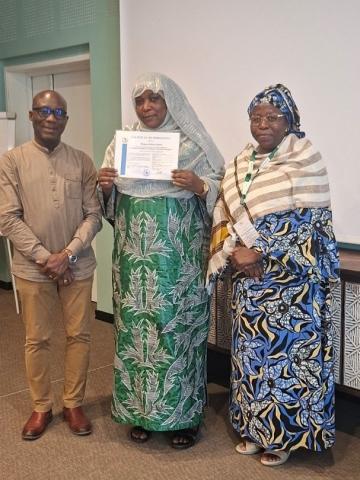
By the close of the workshop, 27 professionals from 14 countries had strengthened their technical capacity, with four participants benefiting from refresher training. Beyond the numbers, the training has expanded the region’s operational readiness to safely ship PPR samples and other priority animal disease specimens an essential enabler for timely diagnosis and effective surveillance.
Importantly, participants provided forward-looking recommendations that will shape future AU-PANVAC capacity-building efforts. Chief among these was the call to extend the duration of the training to allow deeper practical engagement. Participants also strongly recommended the inclusion of a dedicated module on emergency response procedures for accidental spills, recognizing that preparedness for incidents is as critical as prevention. Additionally, participants highlighted the value of periodic refresher trainings and the need to cascade knowledge at national level to ensure broader institutional impact.
The Abidjan workshop represents more than a standalone training it is a strategic step toward a safer, more compliant, and more connected veterinary laboratory network across Africa. By investing in people, systems, and standards, AU-PANVAC and its partners are reinforcing the operational backbone required to achieve global PPR eradication.
As surveillance quality improves and biosecurity risks are reduced, the continent moves steadily closer to a future where PPR no longer threatens the livelihoods and food security of millions of smallholder farmers.