

Strengthening Livestock Trade Corridors for AfCFTA Market Access
Africa’s livestock sector is a critical economic frontier, supporting pastoral livelihoods, regional food systems, and international trade. With the establishment of the African Continental Free Trade Area (AfCFTA), the continent has an enormous opportunity to transform fragmented livestock trade routes into integrated regional value chains capable of attracting investment and expanding market access.
To advance this agenda, the African Union Inter-African Bureau for Animal Resources (AU-IBAR), through the African Pastoral Markets Development Platform (APMD), convened Regional Technical Consultations on Cross-Border Livestock Movement Governance. These consultations built on the outcomes of the July 2025 policy dialogue, which identified key trade barriers including non-tariff restrictions, inconsistent certification systems, fragmented border management, and weak institutional coordination among regional bodies.
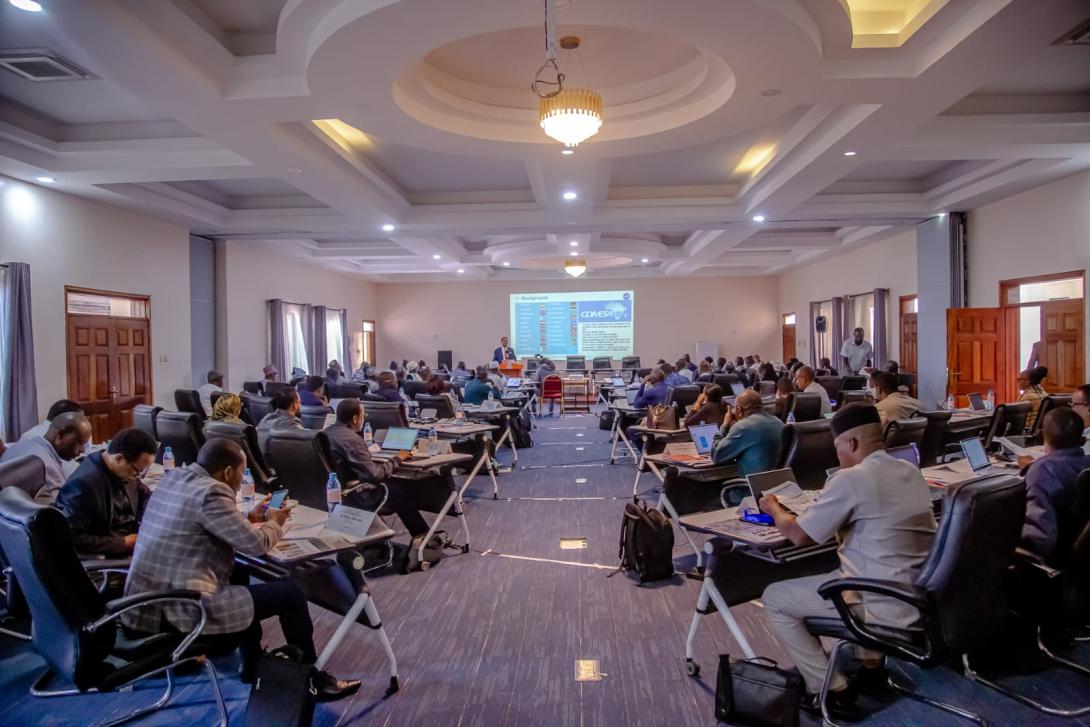
The Naivasha consultations brought together Member States (Chad, Cameroon, Ethiopia, Kenya, Somalia and Nigeria), Regional Economic Communities (COMESA, EAC and ECOWAS), private sector actors, and development partners to address the regulatory and structural barriers limiting livestock trade across the Horn of Africa and the Sahel.
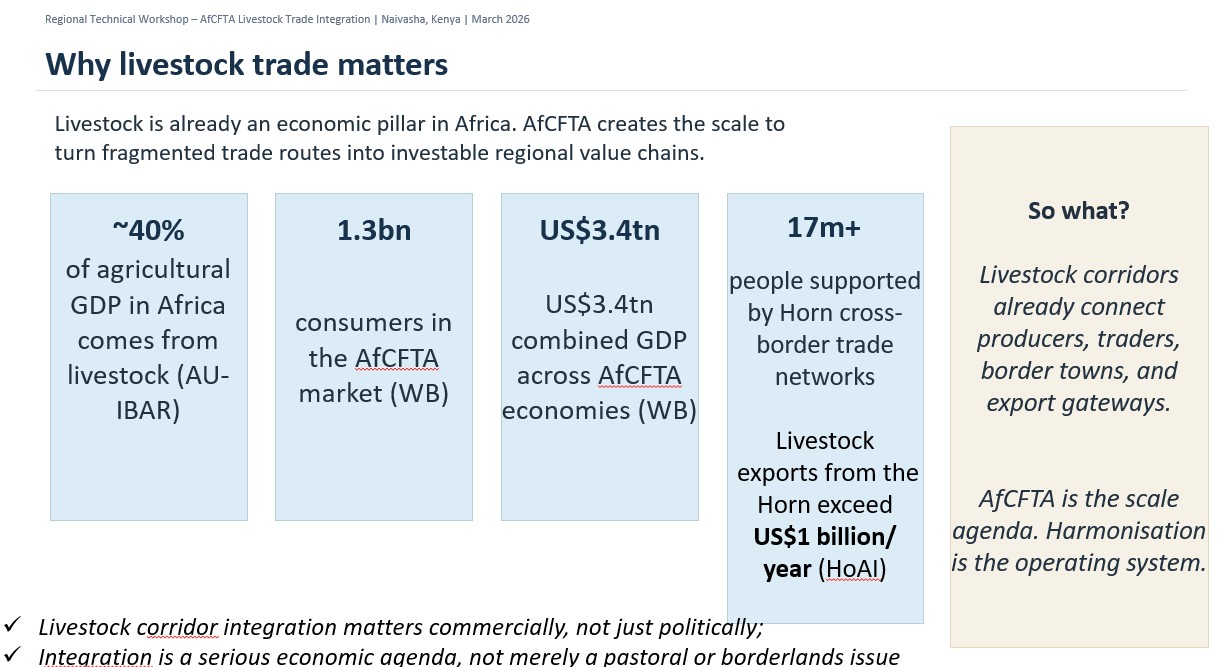
Notably, the sector contributes approximately 40% of agricultural GDP across the continent and supports millions of pastoral households. Under AfCFTA, livestock producers and traders can gain access to a continental market of 1.3 billion consumers with a combined GDP of about US$ 3.4 trillion, creating unprecedented opportunities for market expansion and investment. For instance, in the Horn of Africa, livestock exports exceed US$ 1 billion annually, while cross-border livestock trade networks support the livelihoods of over 17 million people.
Livestock trade in the Horn of Africa and Sahel operates through interconnected cross-border trade corridors, where production, aggregation, and export functions are distributed across countries. To illustrate the importance of these corridors, the Ethiopia-Kenya-Somalia livestock corridor demonstrated the interdependence of regional livestock systems. Whereas Ethiopia hosted major production zones and breeding areas, Kenya functions as a key aggregation and transit hub, while Somalia provides export gateways linking livestock supply to Gulf markets. These dynamics highlight the need for coordinated corridor-level governance rather than isolated national policies. 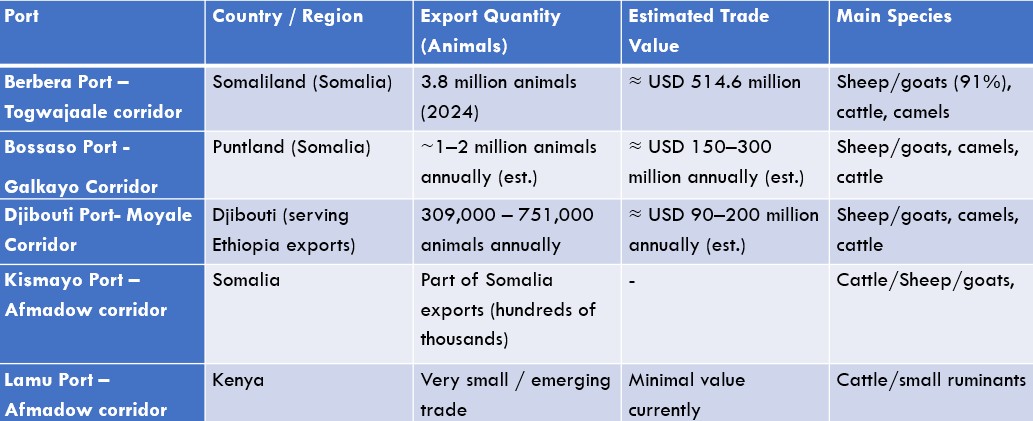
Despite this scale, evidence presented during the consultations shows that cross-border livestock trade is already active but not yet structured for large-scale regional integration. Several structural constraints continue to limit formalization and investment.
Fragmented regulatory systems persist, with countries often maintaining different sanitary and phytosanitary (SPS) rules, movement permits, and certification procedures. These inconsistencies increase compliance costs and discourage formal trade.
Duplicated inspection processes at border points poise another challenge, as traders face repeated veterinary and administrative checks. These delays could increase transaction costs and reduce the competitiveness of formal livestock trade channels. Many livestock corridors lack adequate veterinary laboratories, quarantine facilities, disease surveillance systems, and modern livestock market infrastructure. Weak traceability systems and limited cold-chain capacity further constrain the ability of producers and traders to meet SPS standards required for regional and export markets.
The consultations also focused on the development of mutual recognition mechanisms for livestock movement documentation. Currently, traders repeat certification procedures when crossing borders because veterinary documents issued in one country are not recognized in another. Mutual recognition of SPS certificates, vaccination records, livestock movement permits, and Halal certification could significantly reduce administrative barriers. By aligning animal health protocols and recognizing veterinary systems across borders, countries can streamline livestock movement while maintaining biosecurity standards.
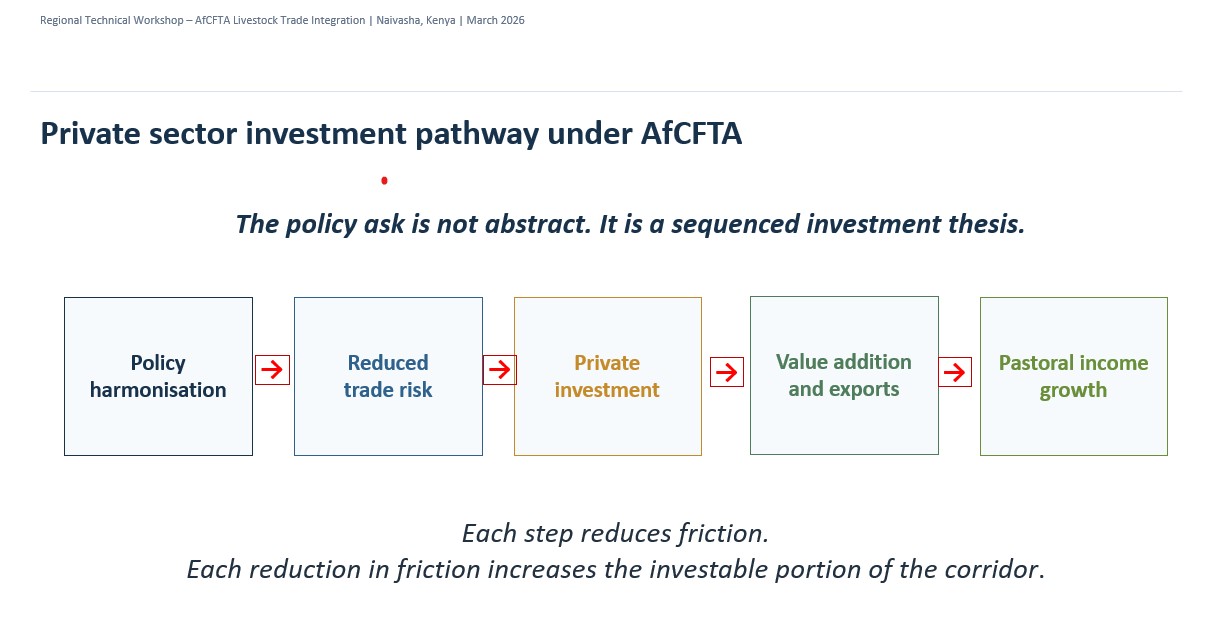 Further, the stakeholders explored the private sector investment pathways under the AfCFTA that would encourage investments within the livestock sector.
By advancing policy harmonization, strengthening corridor governance, and identifying investment priorities, the Naivasha consultations represented an important step towards integrating pastoral livestock systems into continental markets.