

Livestock Division Holds Two-Day PPR National Strategic Plan Review and Validation Workshop in Kenema
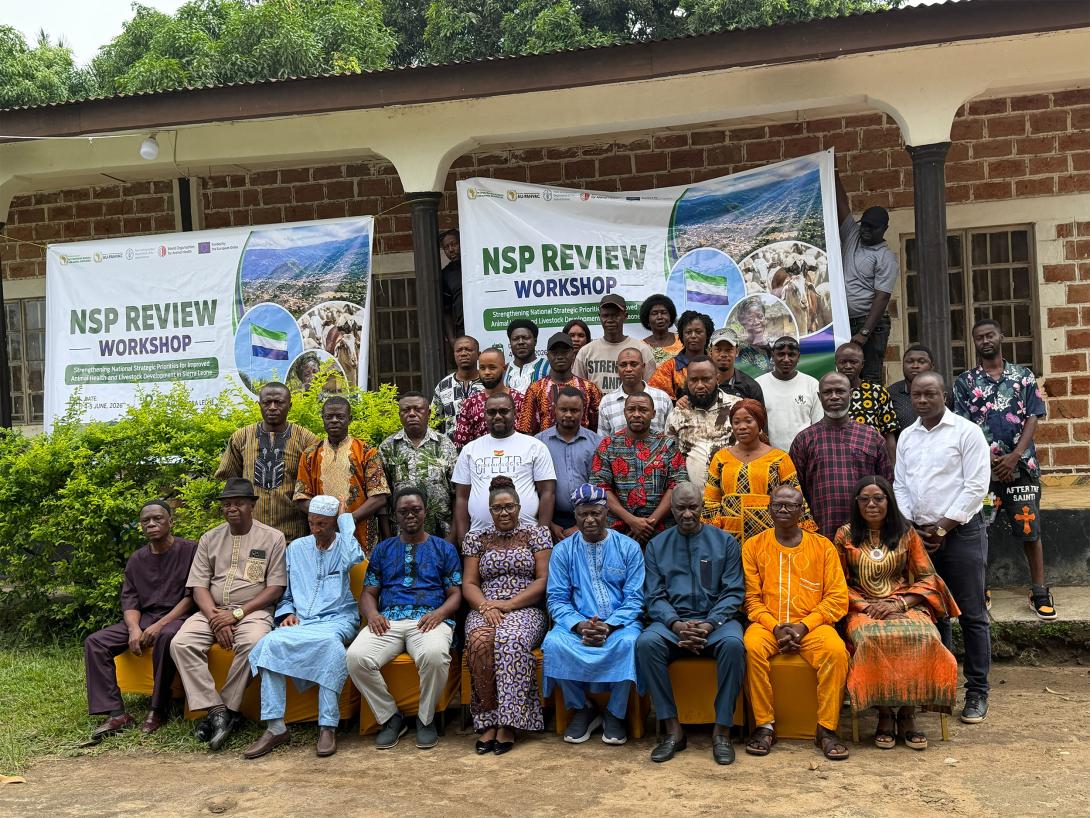
The Livestock and Veterinary Services Division under the Ministry of Agriculture and Food Security (MAFS), in collaboration with its partners, has concluded a two-day Review Workshop on the National Strategic Plan for the Eradication of Peste des Petits Ruminants (PPR), a highly contagious disease affecting goats and sheep.
The workshop, held from 4-5 June 2026 at the District Agriculture Hall, Chinese Farm at Lambayama, was funded by the European Union and hosted by African Union Inter-African Bureau for Animal Resources (AU-IBAR), a specialized technical office of the African Union Commission (AUC) that supports the livestock sector across Africa. Key participants included the Deputy Minister of Agriculture, the Director of Livestock and Veterinary Services and his technical team, the AU-IBAR Regional Coordinator for ECOWAS, the President of the Livestock Farmers Association, representatives from universities, the Sierra Leone Agricultural Research Institute (SLARI), private sector livestock organizations, local authorities, and other stakeholders.
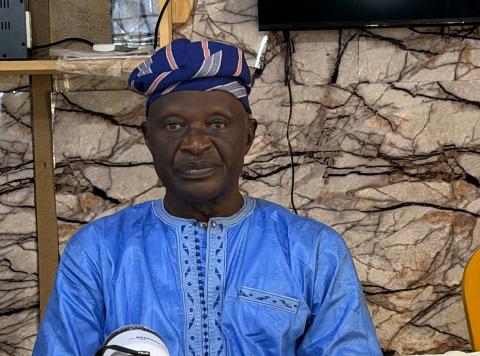
Speaking at the event, the Deputy Minister of Agriculture II, Hon. Sahr Hemore, underscored the importance of the livestock sector to the people of Sierra Leone. "The livestock sector serves as a source of quick savings for many rural women; therefore, we should make it more productive and profitable," he said.
He noted that under the ‘’Feed Salone’’ initiative, the Government is deliberately investing in the livestock sector because of its potential to improve food security and generate income for the country. "As a government, we have launched our largest livestock project valued at approximately US$107.5 million. We have trained six veterinary doctors and 22 para-veterinarians, 15 percent of the 700 agricultural staff recruited are to support the Livestock sector, and 16 vehicles and 45 motorcycles procured through Pandemic Fund. All these commitments are aimed at strengthening the livestock sector, eradicating PPR and other diseases, increasing production and productivity, and ultimately reducing poverty, malnutrition, and hunger," he concluded.
Dr. Perdita Lopes, AU-IBAR Regional Coordinator for PPR Control and Eradication, West Africa, thanked Sierra Leone for its commitment to the global campaign to eradicate PPR and acknowledged the country's significant role in efforts to eliminate the disease. "Our mission in Sierra Leone is to assess the PPR strategic plan, review it, validate it, and support its implementation," she said.
She explained that the initiative is guided by the commitments of the 2022 Nairobi Declaration on the Eradication of Peste des Petits Ruminants (PPR) by 2030, adopted by African Ministers responsible for Livestock, which calls upon AU Member States to progressively strengthen domestic ownership by allocating at least 30% of the resources required to implement their National PPR Strategic Plans. "This commitment will help improve the livelihoods of rural communities that depend on small ruminants. Goats and sheep serve as valuable assets for rural women, helping them pay school fees, medical bills, and provide nutritious food for their families," she noted. Dr. Lopes emphasized the urgency of eradicating PPR due to its devastating mortality rate and economic impact on livestock farmers. "Sometimes only two out of every ten animals survive when affected by PPR. Imagine the economic loss this causes, especially for women who depend on these animals for their livelihoods," she said.
She encouraged the Government and its partners to continue their efforts towards achieving the global target of eradicating PPR by 2030.
The Director of Livestock and Veterinary Services, Mr. Saidu Bamayange, disclosed that His Excellency the President, Dr. Julius Maada Bio has accepted an appointment to serve as a Champion for the Eradication of PPR in Africa. "This role places Sierra Leone in a strategic position to mobilize resources, strengthen cross-border coordination, and enhance communication efforts towards the eradication of PPR," he said.
Mr. Bamayange welcomed the AU-IBAR delegation and thanked them for supporting Sierra Leone in reviewing and validating the National Strategic Plan. "This document will serve as a blueprint for mobilizing resources, coordinating stakeholders, and ensuring collective action towards eradicating PPR by 2030," he concluded.
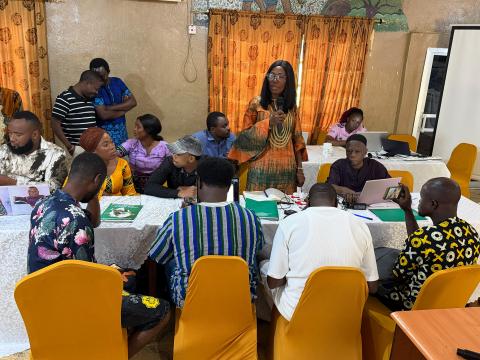
During the workshop, participants reviewed and updated the strategy to strengthen the country's fight against PPR. Stakeholders expressed optimism that through collective action and sustained commitment, Sierra Leone can successfully contribute to the global goal of eradicating PPR by 2030.