

Nigeria and AU-IBAR begin monitoring mission to accelerate PPR eradication
A disease that can wipe out a family's entire flock in days remains one of the greatest threats to rural livelihoods in Africa. Nigeria has decided it cannot afford to relax.
AU-IBAR, through the Pan-African PPR Secretariat, has launched a six-day field monitoring mission in Abuja to assess Nigeria's readiness to eliminate Peste des Petits Ruminants (PPR). It opened with the Federal Ministry of Livestock Development, led by the Honourable Minister, Mr Idi Mukhtar Maiha, and earlier technical discussions with Nigeria's Chief Veterinary Officer.
Nigeria's progress carries particular weight: it holds one of Africa's largest sheep and goat populations and sits at the centre of major livestock-movement corridors, bordering Benin, Niger, Chad and Cameroon.
"Nigeria must play a central role if we are to eradicate PPR from Africa. Because of its large population of sheep and goats, its livestock-mobility networks and its borders with several countries, the approach cannot be business as usual." — Dr Palita Yila Lucas, Regional Coordinator for PPR Eradication in West Africa
For many rural households a flock is income, food, savings and school fees, all of which an outbreak can erase within days.
"Families can lose their entire flocks, and for many households these animals represent their livelihoods, school fees, food and economic security. Nigeria cannot afford to relax its efforts." — Hon. Idi Mukhtar Maiha, Minister of Livestock Development
The FAO Representative in Nigeria and to ECOWAS, Dr Hussein Gadain, reaffirmed FAO's support for surveillance, laboratory capacity, local vaccine production and resilient veterinary systems, noting that PPR's impact extends beyond animal health to reduce productivity, limit trade and deepen vulnerability. Participants recognised the potential of Nigerian institutions, including NVRI, to serve national demand and regional vaccine supply.
Propcom+ said it stands firmly behind the Minister's early commitment to PPR eradication, and confirmed that it is working with NVRI to increase vaccine production. Its Team Leader argued that Nigeria's capacity must be scaled to meet domestic demand and to serve the wider West African market, adding that Propcom+ is deliberately reaching out to FAO and other partners so that they do not work at cross purposes.
Others echoed the point. The Veterinary Council of Nigeria pledged to mobilise veterinary directors nationwide and urged partners to align efforts and avoid duplication. NAQS outlined strategic border and quarantine posts to certify animal movements and called for joint control strategies with neighbouring countries. L-PRES reported vaccination and baseline data work already under way. Producer associations, describing sheep and goats as the cattle of the poor man and woman, declared members ready to mobilise for vaccination and awareness campaigns, and asked to be treated as partners rather than only beneficiaries.
The message was consistent: PPR eradication cannot be delivered by any one institution. It requires veterinary services, laboratories, regulators, researchers, producers, the private sector and development partners working to a shared plan, with open information-sharing across borders.
The mission will now assess surveillance and disease reporting, laboratory capacity, vaccination coverage, cold-chain and last-mile delivery, governance and cross-border coordination — validating progress and shaping the next phase of investment.
Part of the Pan-African Programme for the Eradication of PPR (PPR1, 2024–2027), funded by the European Union and implemented by AU-IBAR with AU-PANVAC, FAO, WOAH and the Regional Economic Communities. It follows missions in Tanzania, Angola, Sierra Leone, DRC and Guinea-Conakry.
The PPR1 Field Monitoring Mission is guided by three areas: accountability and validation of reported results; operational readiness and the effectiveness of national systems; and evidence generation for the programme’s Mid-Term Evaluation and transition to the next phase of investment.
Combining document review, stakeholder interviews, field observation and verification of records, the team will examine Nigeria’s National Strategic Plan for PPR, risk-based surveillance and disease reporting, laboratory diagnostic capacity, vaccine availability and vaccination coverage, cold-chain and last-mile delivery, outbreak response, border controls, governance, stakeholder communication and institutional coordination. It will also review how PPR interventions align with Nigeria’s wider livestock-transformation agenda.
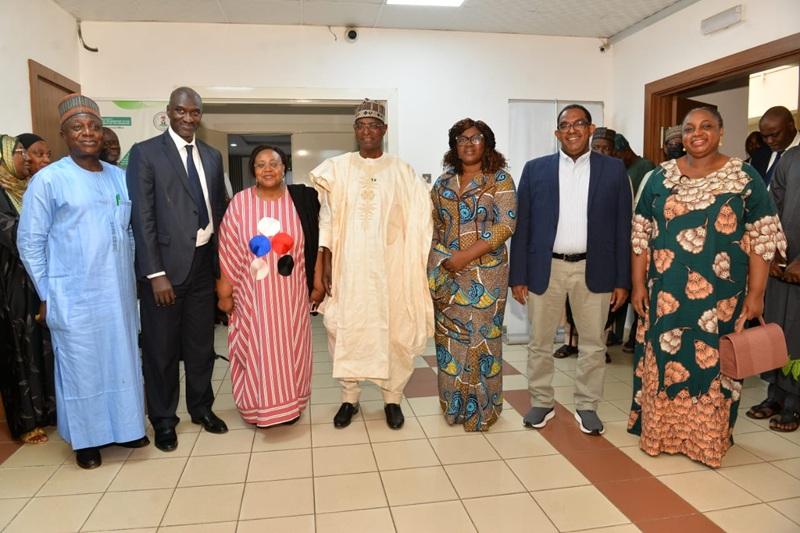
Photo:@Ministry of Livestock - Hon Minister, AU-IBAR, staff, FAO and Propom+