
Resilient African Feed and Fodder Systems
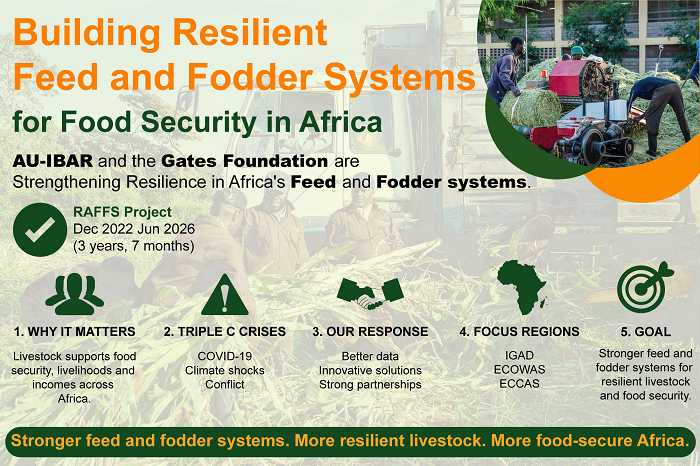
AU-IBAR, with support from the Gates Foundation, is implementing the Resilient African Feed and Fodder Systems Project to strengthen the resilience of Africa’s livestock sector.
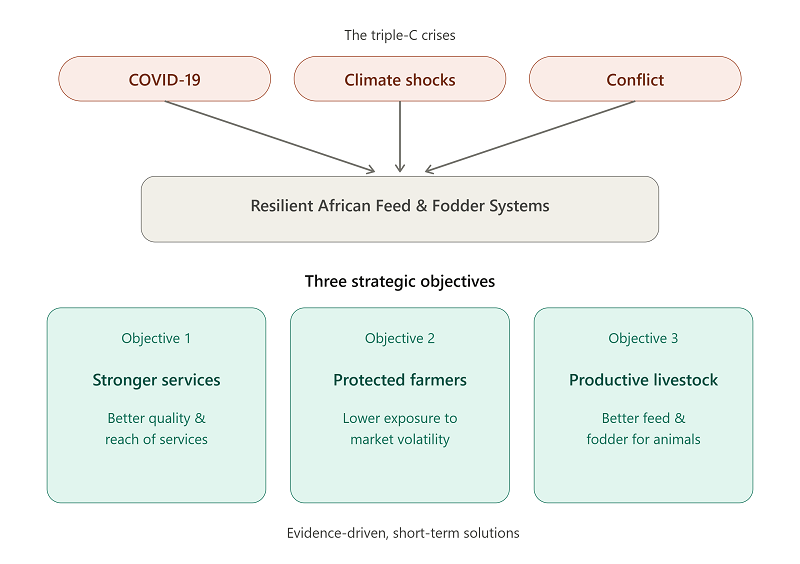
The project responds to the combined impact of the Triple C crises: COVID-19, climate change shocks, and the Russia–Ukraine conflict. These crises disrupted feed and fodder supply chains, increased shortages and costs, and exposed long-standing weaknesses in the sector.
Why Feed and Fodder Matter
Livestock is central to Africa’s food security, nutrition, livelihoods and incomes. The sector accounts for about 24% of Africa’s agricultural GDP, and in some countries, its share rises to 50–73%. It also supports millions of livelihoods, with women making up a significant share of the sector's workforce.
When feed and fodder systems are disrupted, the effects are felt across households, markets and economies through livestock losses, reduced productivity, higher food prices and weakened nutrition outcomes.
The Challenge
Despite the importance of feed and fodder, the sector remains affected by fragmented interventions, weak coordination, limited data, low investment and policy gaps. In many countries, there is no fully functional multi-stakeholder platform to coordinate action across government, private sector, research institutions, farmers’ organisations and development partners.
Addressing these challenges requires stronger evidence, coordinated investment and practical solutions that can be scaled across
countries and regions.
The RAFFS Response
The RAFFS Project works with African Union Member States and Regional Economic Communities, particularly in the most affected regions, including IGAD, ECOWAS, and ECCAS.
The Project focuses on three key areas:
1. Strengthening analytical capacity
Improving data, evidence and understanding of the factors affecting the resilience of Africa’s feed and fodder systems.
2. Promoting innovative solutions
Developing, testing, and sharing practical approaches to address feed and fodder shortages, supply chain disruptions, and sector inefficiencies.
3. Building strong partnerships
Supporting collaboration among governments, private sector actors, civil society, research institutions and development partners to improve coordination and investment.
Expected Contribution
The RAFFS Project has contributed to food security and nutrition by helping Africa’s livestock sector remain a sustainable source of food, livelihoods and income. It has also supported better understanding of crisis impacts, stimulated action and investment, and promoted systemic change to organise and strengthen feed and fodder systems across the continent.
Stronger feed and fodder systems mean more resilient livestock, more secure livelihoods and a more food-secure Africa.
Latest News



Latest Events
Latest Resources

Implementing Partners


About the Project
Africa's livestock sector feeds and sustains hundreds of millions of people, yet its feed and fodder systems have been pushed to the brink by three overlapping global shocks — the triple-C crises of COVID-19, climate change, and the conflict between Russia and Ukraine. The Resilient African Feed and Fodder Systems (RAFFS) project exists to understand these impacts and to act on them.
Our objective
The overall goal of RAFFS is to understand how the 3Cs have affected feed and fodder systems, and to build lasting capacity for data-driven decision-making across the continent. This means strengthening the analytics that inform policy, supporting regulatory and institutional reforms, and championing viable business and partnership models that reduce vulnerabilities in Africa's feed and fodder systems.
In responding to the worsening food and nutrition security caused by the 3Cs, the project pursues three strategic objectives:
- Stronger services — improving the quality, efficiency, and reach of government and private-sector services across feed and fodder systems.
- Protected farmers — reducing the impact of agricultural volatility on smallholder farmers.
- Productive livestock — enhancing livestock productivity through better feed and fodder.
How we work
RAFFS focuses on evidence-driven, short-term solutions that tackle the immediate effects of these crises. Our work centres on three areas:
- Understanding the impact of the crises on the availability and affordability of animal-sourced foods.
- Assessing vulnerability in feed and fodder production and distribution systems to climate shocks.
- Building resilience by identifying practical solutions and mitigation measures for the future.
RAFFS is built on partnership. From the outset, the project is designed around the people it serves — taking into account each stakeholder group's specific needs, abilities, and resources, and ensuring that men, women, and other marginalised groups across the ecosystem are included and heard.
Who we engage
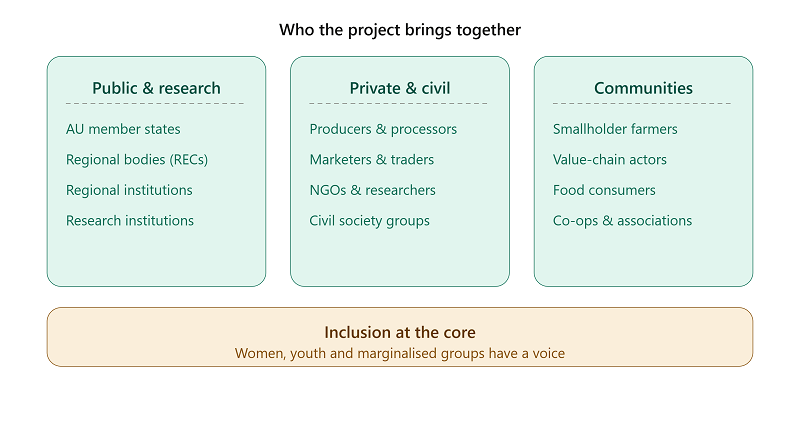
The project draws on insight and expertise from across the feed and fodder ecosystem, including:
- Public and research bodies — African Union member states, Regional Economic Communities (RECs), specialised regional institutions, and research organisations working on livestock issues.
- Private sector and civil society — businesses involved in the production, processing, and marketing of livestock products; NGOs conducting livestock research; and civil society organisations working alongside rural communities.
- Communities and value-chain actors — smallholder farmers, players along the feed and fodder value chains, consumers of livestock-sourced foods, and the cooperatives and associations that represent them.
Throughout, the project keeps women and youth at the centre, ensuring that historically disenfranchised groups have a genuine voice in shaping solutions.
How we work together
A core aim of RAFFS is to strengthen these stakeholders' capacity to understand Africa's feed and fodder ecosystem. The project builds strong partnerships and collaboration with national, regional, and continental organisations to create synergies across interventions, and convenes periodic consultations with diverse stakeholders and partners to leverage their expertise, resources, and networks.
In doing so, RAFFS lays the foundation for a shared understanding among all actors at local and regional levels; from AU member states, RECs, and specialised regional institutions to local communities, smallholder farmers, women, and youth.
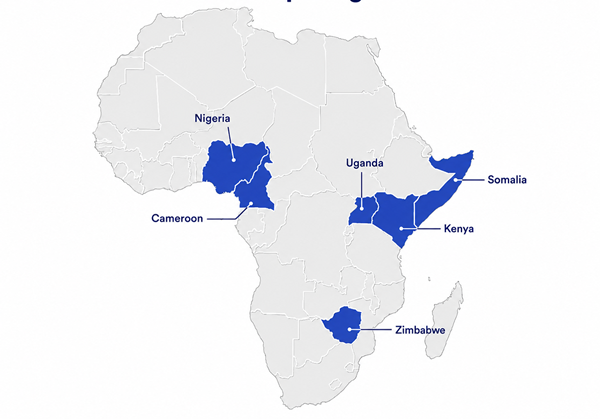
Pilot Countries
The RAFFS pilot countries: Cameroon, Kenya, Nigeria, Somalia, Uganda, and Zimbabwe provide a practical foundation for testing and demonstrating scalable solutions to strengthen Africa’s feed and fodder systems. Working closely with the Regional Economic Communities linked to these countries, the initiative supports policy alignment, regional coordination, knowledge exchange, and the identification of investment pathways that address shared challenges such as climate shocks, conflict-related disruptions, and rising input costs. Lessons emerging from the pilot countries are expected to inform wider continental action by generating evidence, models and approaches that can be adapted and scaled across Africa to enhance livestock resilience, food security, livelihoods and sustainable agricultural transformation.
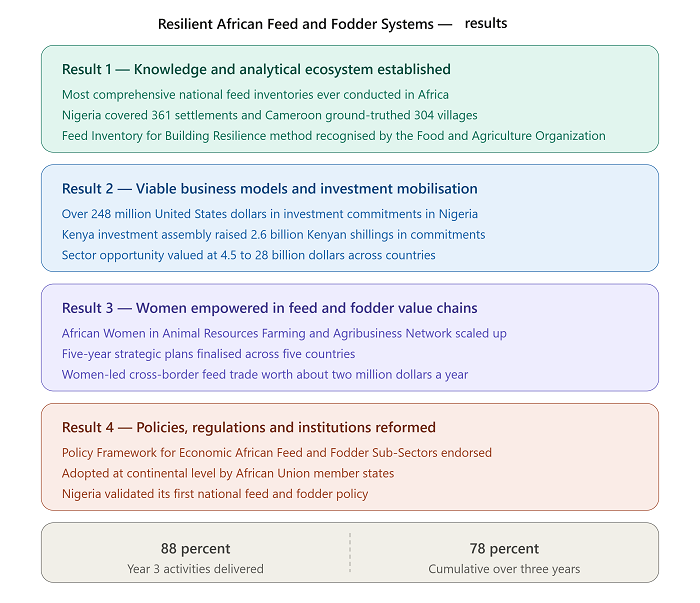
Result 1 centred on knowledge and analytics: completing the most comprehensive national feed inventories yet conducted in Africa (361 settlements in Nigeria, 304 villages in Cameroon), developing and gaining FAO recognition for the FIBRE methodology, deploying national data dashboards across five countries, and finalising four sets of data-management guidelines.
Result 2 focus was on business models and investment mobilisation; profiling sector opportunities, maturing multi-stakeholder platforms in all six countries, and convening investment assemblies that generated over US$248 million in commitments in Nigeria and KES 2.6 billion in Kenya, alongside innovative financing such as the Cooperative Fodder Fund.
Result 3 advanced women's empowerment, transforming the AWARFA-N network into an economically active body with five-year strategic plans in five countries and launching a women-led Kenya–Uganda cross-border feed trade.
Result 4 delivered policy and institutional reform, headlined by the continental endorsement of the Policy Framework for Economic African Feed and Fodder Sub-Sectors (PFEAFF) and the validation of Nigeria's first national feed and fodder policy.