
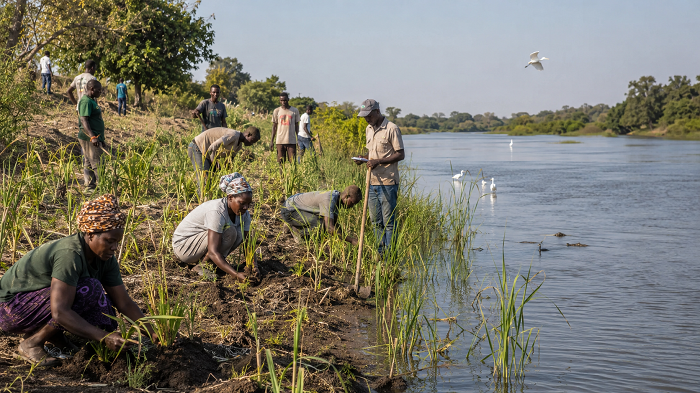
Communities to lead freshwater restoration in the Lower Zambezi
Venue
Lusaka, ZambiaEvent Date
30 Jul 2026 05:54PM
Event Type
AU-IBAR will convene a three-day community-based training workshop on Nature-based Solutions to conserve and restore freshwater ecosystems and fish stocks in the Lower Zambezi. The workshop takes place in Lusaka from 28 to 30 July 2026.
Held under the Swedish International Development Cooperation Agency (Sida)-funded project "Conserving Aquatic Biodiversity in the African Blue Economy," and in partnership with Zambia's Ministry of Fisheries and Livestock, the workshop marks the first step in a pilot intervention to restore degraded riverine habitats in one of the continent's most important freshwater systems.
The Lower Zambezi sustains rich biodiversity and supports the food security and livelihoods of an estimated 1,200 fishers and their households. Yet riverbank deforestation, unsustainable land use and climate variability have accelerated erosion, increased sedimentation and degraded the breeding and nursery habitats on which fisheries depend. The workshop responds by placing local communities at the centre of the solution.
Bringing together around 40 participants- women and youth groups, community-based organisations, local fisheries officers, community fisheries management representatives and technical staff- the sessions will be practical and hands-on. Participants will take part in demonstrations on tree nursery establishment and afforestation, share experiences across communities, and develop action plans to rehabilitate degraded riverbanks and strengthen fisheries reserves.
The workshop operationalises the African Union Continental Strategy on Nature-based Solutions for Conserving, Restoring and Sustainable Use of Aquatic Ecosystems and Fish Stocks, endorsed by the AU Specialised Technical Committee on Agriculture, Rural Development, Water and Environment. It also advances the AU Blue Economy Strategy, the Policy Framework and Reform Strategy for Fisheries and Aquaculture in Africa, and Sustainable Development Goals 2, 6, 13, 14 and 15.
The lessons generated in the Lower Zambezi are intended to guide the scaling up of community-led ecosystem restoration across Zambia and other African Union Member States, demonstrating how healthy rivers, thriving fisheries, and resilient livelihoods can be restored together.