

Africa Mobilizes Investment to Accelerate PPR Eradication and Strengthen Climate-Resilient Livestock Systems
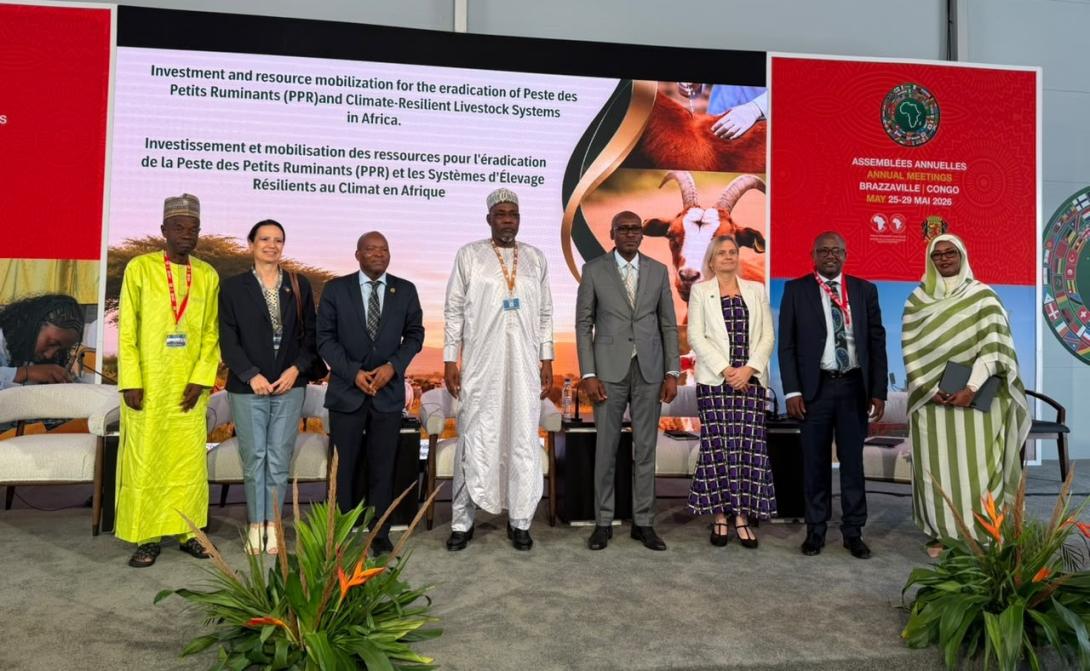
Brazzaville, Republic of the Congo, 28 May 2026 African leaders, development partners, financial institutions, livestock producers’ organizations, and technical experts have called for increased and coordinated investments to accelerate the eradication of Peste des Petits Ruminants (PPR) and strengthen climate-resilient livestock systems across Africa.
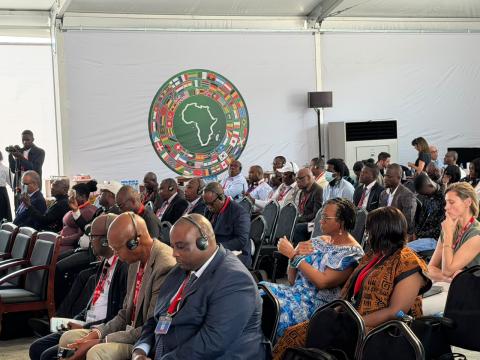
The call emerged from a high-level Side Event on “Investment and Resource Mobilization for PPR Eradication and Climate-Resilient Livestock Systems in Africa”, held during the African Development Bank (AfDB) Annual Meetings in Brazzaville. Participants agreed that achieving a PPR-free Africa by 2030 will require moving beyond political commitments and mobilizing sustainable financing, innovative investment mechanisms, and coordinated action at continental, regional, and national levels.
The event brought together senior representatives from the African Union Commission, the European Union, the African Development Bank, FAO, WOAH, AU-PANVAC, Regional Economic Communities, Member States, livestock producers’ organizations, financial institutions, and development partners. Discussions focused on mobilizing the resources needed to eradicate PPR while strengthening livestock systems capable of withstanding the growing impacts of climate change.
A central message of the dialogue was the urgent need for Africa to move from advocacy to concrete action, from commitments to sustainable financing, and from financing to measurable results on the ground. Participants reaffirmed that investments in PPR eradication are not only investments in animal health but also in food security, climate resilience, economic growth, and sustainable rural development.
Representatives of governments, financial institutions, technical partners, regional organizations, and development actors strengthened their commitments around four key priorities:
- Food security
- Climate resilience
- Strengthening animal health systems
- Protecting the livelihoods of rural communities across Africa
Participants emphasized that PPR remains one of the most damaging transboundary animal diseases affecting sheep and goats across the continent. Beyond animal health, the disease undermines household incomes, rural economies, regional trade, food systems, and the resilience of vulnerable communities. Small ruminants remain a critical asset for millions of African households, particularly women, youth, pastoralists, and smallholder farmers, providing food, income, savings, and a safety net during periods of economic hardship and climate-related shocks.
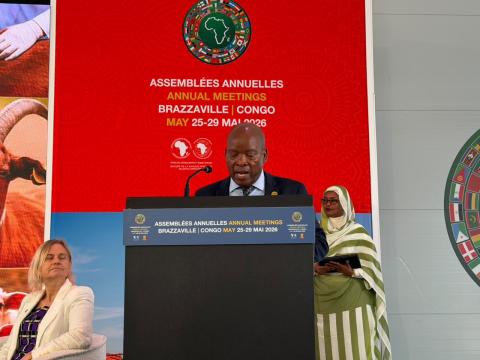
During the panel discussions, H.E. Mr. Moses Vilakati, Commissioner for Agriculture, Rural Development, Blue Economy and Sustainable Environment at the African Union Commission, delivered a strong and urgent message during the high-level strategic dialogue on #PPR2030 and resilient livestock systems in Africa, he emphasized that Africa can no longer afford the devastating economic and social losses caused by PPR. He called for bold political leadership, stronger partnerships, increased investments, and sustained commitment to protect livestock-dependent communities and strengthen resilient livestock systems across the continent.
The Commissioner stressed that political commitment, stronger country ownership, sustainable financing, and coordinated partnerships are essential to successfully eradicate PPR and safeguard the livelihoods of millions of Africans. He urged stakeholders to translate commitments into action and ensure that investments deliver tangible and measurable results on the ground.
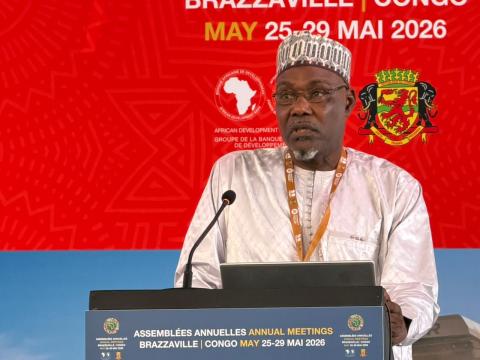
The Minister of Livestock and Animal Production, Republic of Chad H.E. Prof. Abderahim Awat Atteib called on African countries to intensify their engagement in the fight against PPR. He stressed that African governments must take greater ownership of eradication efforts rather than relying solely on external support. Describing PPR as a highly devastating disease for sheep and goats across Africa, he urged countries to pool their efforts and resources to eliminate the disease and protect the livelihoods that depend on small ruminant production.
As a key technical and financial partner in the fight against PPR, the European Union reiterated its strong commitment to supporting Africa’s eradication agenda. Speaking to the media, H.E. Anne Marchal, Ambassador of the European Union to the Republic of the Congo, underscored the critical importance of financing and awareness-raising in achieving the PPR2030 goal.
She noted that the European Union is already supporting the programme through an investment of EUR 8 million, while preparations are underway for a second phase valued at EUR 40 million. According to the Ambassador, these contributions represent a significant commitment, as effective disease control depends not only on financial resources but also on ensuring that livestock keepers and communities are informed and engaged.
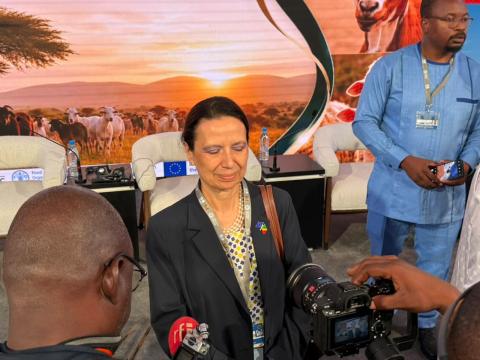
The Ambassador further highlighted the essential role of the media in disseminating information to livestock producers and rural communities. She stressed that farmers and pastoralists must be informed about vaccination campaigns and disease prevention measures, noting that animal diseases do not respect national borders and require coordinated action across countries and regions.
Representing the Minister of Agriculture, Livestock and Fisheries of Republic of the Congo, Dr. Tobi N'Kaya, appealed to development partners, particularly the African Development Bank, to support the eradication process. He emphasized that PPR continues to weaken rural economies and poses a significant threat to food security, making sustained investment in animal health a strategic priority for the continent.
Livestock producers’ organizations and pastoralist representatives brought a strong human dimension to the discussions. They reminded participants that PPR outbreaks directly affect the livelihoods of millions of families across Africa. Speakers highlighted that women are often the primary managers of sheep and goats and depend on these animals as a key source of household income. When outbreaks occur, women can lose financial independence and face greater difficulties in supporting family welfare, healthcare, and education.
The Side Event identified several priority investment areas considered essential for achieving the PPR2030 goal. These include risk-based vaccination campaigns targeting high-risk areas and livestock corridors, strengthened disease surveillance and early warning systems, enhanced laboratory infrastructure and diagnostic capacities, sustainable vaccine production and quality assurance, climate-smart cold chain systems including solar-powered solutions, mobile veterinary services for remote and pastoral communities, interoperable digital data systems, financing for livestock value chains and veterinary service delivery, and strengthened regional cooperation and cross-border coordination.
The discussions concluded with a strong consensus that Africa possesses the political commitment, technical expertise, institutional frameworks, and partnerships necessary to eradicate PPR by 2030. However, the achievement of this ambition will depend on transforming commitments into coordinated, adequately financed, and results-oriented actions. As Africa advances toward the #PPR2030 target, the Brazzaville dialogue reinforced a clear message: investing in the eradication of PPR is a strategic investment in food security, climate resilience, animal health systems, rural prosperity, women’s empowerment, youth employment, and the sustainable transformation of Africa’s livestock sector.
The event also called for strengthened partnerships, innovative financing mechanisms, and coordinated action at all levels to achieve the global goal of eradicating PPR by 2030.
This activity was organized by the Pan-African Secretariat for the Eradication of PPR (PAPS), and funded by the European Union.