
Africa Moves to Speak with One Voice on Livestock Biodiversity: AU-IBAR and ILRI Convene Continental Coalition Dialogue
Africa’s livestock sector stands at a pivotal moment. As climate change intensifies, food systems come under pressure, and global biodiversity negotiations accelerate, African institutions, governments, researchers, and development partners are converging to redefine livestock biodiversity not as a vulnerability but as a strategic asset for resilience, sustainability, and economic transformation.
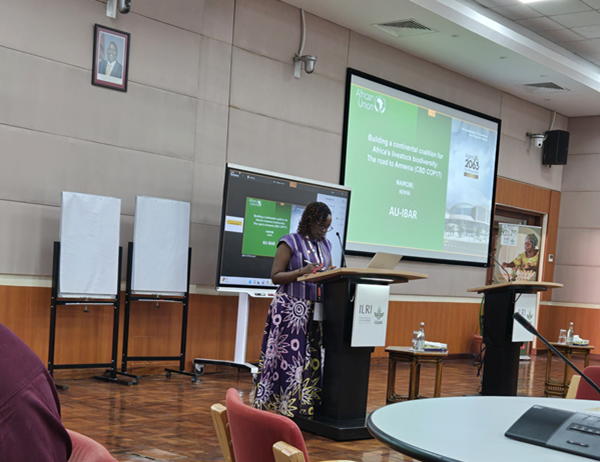
This has been the central message emerging from the opening session of the high-level dialogue on 19th February 2026, Building a Continental Coalition for Africa’s Livestock Biodiversity: The Road to Armenia (CBD COP17), convened by the African Union Inter-African Bureau for Animal Resources (AU-IBAR), in collaboration with the International Livestock Research Institute (ILRI) and partners. The meeting has brought together representatives from African government ministries, national authorities, academia, regulatory agencies, National Agricultural Research Systems, universities, regional and sub-regional bodies, private sector actors, civil society, development agencies, and UN organisations across Africa’s five regions.
At its core, the dialogue aims to strengthen learning and exchange, identify practical delivery models, and build coalitions to advance Africa’s common position on livestock biodiversity ahead of global negotiations under the Convention on Biological Diversity (CBD COP17).
Livestock Biodiversity is Africa’s Strategic Advantage
Africa holds a significant share of the world’s livestock genetic diversity, with indigenous breeds uniquely adapted to harsh climates, diseases, and diverse ecosystems. These genetic resources underpin food security, climate resilience, rural livelihoods, and cultural identity, particularly among pastoral and smallholder communities.
Yet despite their importance, livestock genetic resources remain insufficiently integrated into biodiversity governance, with fragmented institutional responsibilities and weak coordination limiting their full potential.
Opening the dialogue, Dr Mary Mbole-Kariuk, AU-IBAR, emphasised that livestock biodiversity is not merely an environmental concern but a cornerstone of sustainable development. She underscored that livestock systems are essential to achieving Agenda 2063, delivering resilient livelihoods, and supporting sustainable economic growth across the continent.
She also noted that critically, AU-IBAR has advanced the development of an African Common Position on sustainable, resilient, and nature-positive livestock systems, anchored in science, policy coherence, and coordinated continental action. This framework seeks to position livestock as a solution to climate resilience, ecosystem sustainability, and economic development.
ILRI Director General emphasises that “Africa Must Speak the Same Language”
Delivering keynote remarks, the Director General, Dr Djikeng of ILRI emphasised the urgency of coordination, evidence-based policymaking, and unified continental engagement.
He stressed that Africa’s animal genetic resources are a strategic asset that can help address food insecurity, climate vulnerability, and economic dependence on imports. However, he warned that governance fragmentation remains a major barrier.
“There is a lot happening in various places, but often we fail to come together and coordinate and channel our efforts to have a common position and speak the same language,” he noted.
The Director General further emphasised that Africa must ground its livestock biodiversity strategy in evidence and national ownership, highlighting that strong policies informed by science are essential to transforming livestock systems.
He also linked livestock biodiversity directly to climate resilience and economic sovereignty, warning that Africa’s dependence on imports of animal products undermines local economies and increases vulnerability.
Success, he explained, will require:
- Strong collaboration across organizations and countries
- Clear continental priorities and implementation blueprints
- Policy coherence across national and regional levels
- A unified African voice in global negotiations
Ultimately, he emphasized, Africa must arrive at COP17 not as fragmented participants, but as a coordinated bloc capable of influencing global biodiversity policy.
AU-IBAR Highlights that Livestock Is Not the Problem—It Is the Solution
AU-IBAR’s technical presentation reinforced a powerful shift in perspective: livestock must be repositioned from being seen as a contributor to environmental challenges to being recognised as part of the solution.
AU-IBAR highlighted several strategic realities:
- Africa’s population is projected to reach 4 billion by 2100, dramatically increasing demand for food and livestock products.
- Livestock biodiversity is essential for climate resilience, sustainable food systems, and ecosystem stability.
- Existing AU frameworks, including Agenda 2063, the Climate Change Strategy, and the Biodiversity Strategy, provide strong governance foundations, but require stronger integration into national implementation.
Importantly, AU-IBAR emphasised that livestock biodiversity remains weakly integrated into national biodiversity strategies and climate frameworks, limiting its visibility and policy support.
AU-IBAR called for coordinated continental action, strengthened advocacy, and the operationalization of the African Climate and Livestock Think Tank to support evidence generation, policy alignment, and strategic engagement.
From Conservation to Transformation: ILRI’s Vision for Genetic Improvement
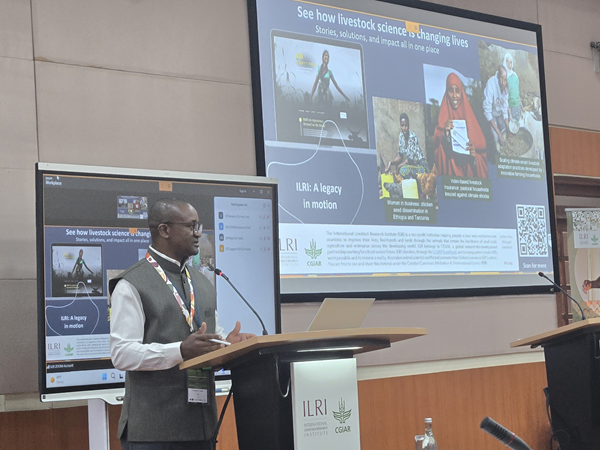
ILRI’s technical presentations during the morning session focused on the future of livestock genetic improvement and the importance of integrating biodiversity conservation with productivity, technology, and farmer livelihoods.
ILRI emphasised that genetic diversity is not an abstract concept—it directly affects farmer incomes, food security, and climate resilience.
The institute highlighted the importance of:
- Protecting locally adapted breeds
- Applying modern breeding technologies appropriately
- Developing integrated systems linking genetics, nutrition, animal health, and policy
- Ensuring farmer-centered innovation and delivery
Critically, ILRI stressed that genetic improvement must be adapted to African environments, not simply imported from external models. Locally adapted breeds offer resilience advantages essential for sustainable livestock systems.
ILRI also emphasized that success requires integrated, collaborative, and scalable solutions, linking science, policy, and delivery systems.
Building a Continental Coalition: A Strategic Turning Point
A central focus of the dialogue will be the development of a continental coalition to strengthen Africa’s collective influence in biodiversity governance and ensure livestock genetic resources are fully recognized in global frameworks.
Participants are expected to engage in discussions to:
- Identify national priorities and implementation challenges
- Develop coalition governance and delivery models
- Strengthen coordination among countries and institutions
- Align African priorities ahead of CBD COP17
- Establish mechanisms for sustained collaboration and knowledge exchange
These efforts aim to ensure that Africa’s livestock biodiversity agenda is grounded in evidence, aligned with national priorities, and supported by coordinated institutional action.
Livestock Biodiversity as the Foundation of Africa’s Future
The dialogue has so far reinforced a fundamental reality: livestock biodiversity is central to Africa’s future—not only as a source of food, but as a driver of climate resilience, economic growth, and ecosystem sustainability.
Africa possesses the genetic resources, scientific expertise, and institutional leadership required to shape the future of livestock systems. What remains is coordinated action, strategic investment, and unified continental engagement.
As AU-IBAR emphasised, the road to CBD COP17 is not simply a diplomatic process—it is an opportunity for Africa to define its future, protect its biodiversity, and position livestock as a cornerstone of sustainable development.
With strengthened collaboration between AU-IBAR, ILRI, Member States, and partners, Africa is moving decisively toward a unified voice—one capable of influencing global biodiversity policy and unlocking the full potential of its livestock genetic resources.