

African Ministers Commit to Accelerating Livestock Trade under the AfCFTA
Addis Ababa, Ethiopia, 16 July 2026
African ministers have called for stronger political leadership, harmonised trade systems and increased investment to unlock the continent’s pastoral livestock economy under the African Continental Free Trade Area.
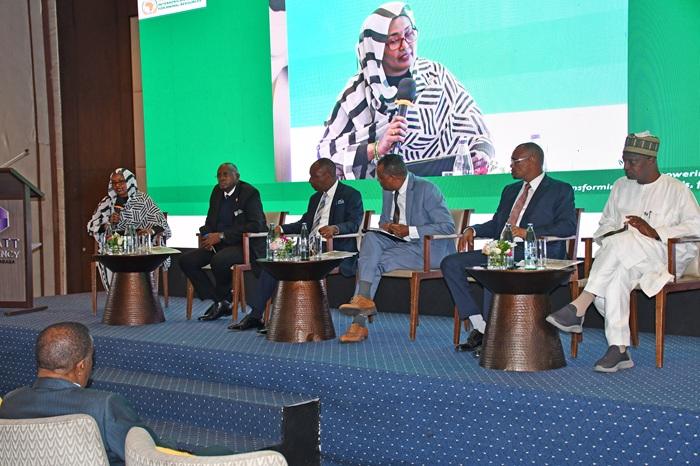
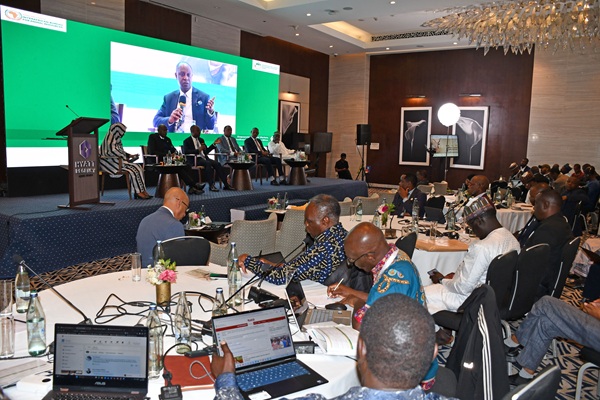
The call was made on Day 4 of the 1st African Pastoral Markets Forum, during deliberations on “Securing Political Leadership for Livestock Trade and Market Activation.”
The ministerial session brought together governments, the African Union Commission, pastoral organisations, private-sector actors, financial institutions and development partners to move the Forum’s technical and investment discussions towards concrete policy commitments.
After three days of examining livestock markets, regional trade corridors, standards, infrastructure, business models and financing pathways, Day 4 focused on the political decisions required to translate these opportunities into functioning markets.
Political leadership needed to activate markets
Opening the ministerial panel on “Accelerating Livestock Trade Facilitation and Market Activation under the AfCFTA,” Dr Huyam Salih, Director of AU-IBAR, said Africa’s livestock potential would remain underused unless governments addressed fragmented markets, trade barriers and weak enabling systems.
“The purpose of this panel is to multiply Africa’s success stories and remove what stands in their way,” Dr Salih said.
She called for stronger political support for livestock-market infrastructure, priority policy reforms, interoperable animal identification and traceability, harmonised sanitary and phytosanitary standards and sustainable financing.
The session was also expected to generate commitments on animal health, transboundary animal diseases, insurance, corridor infrastructure, energy, climate resilience and regional livestock-market integration.
The commitments emerging from the ministerial discussions will be incorporated into the Forum communiqué and tracked ahead of the next African Pastoral Markets Forum.
Pastoral livestock recognised as a strategic economy
H.E. Moses Vilakati, African Union Commissioner for Agriculture, Rural Development, Blue Economy and Sustainable Environment, said pastoralism should be recognised as a distinct economic system rather than treated as a marginal or subsistence activity.
He noted that pastoral economies are supported by livestock mobility, rangelands, water systems, animal-health services, indigenous knowledge, cross-border markets and community enterprises.
“The challenge before us is not the absence of economic value. The challenge is how we organise, finance, govern and trade that value.”
Commissioner Vilakati stressed that the AfCFTA provides a historic opportunity to build a more integrated African livestock market. However, this will require simplified certification processes, stronger animal-health systems, predictable trade arrangements and structured partnerships among pastoral producers, enterprises and financial institutions.
“Water is not only a social service; it is production infrastructure,” he said.
He called for water, animal-health systems, energy, market information, quarantine facilities and logistics to be treated as investments in regional livestock value chains rather than isolated technical interventions.
Commissioner Vilakati also called for pastoralists, women and young people to participate not only as suppliers of animals, but as owners, processors, service providers, financiers and traders within higher-value livestock enterprises.
Gates Foundation calls for action and investment
The Gates Foundation, represented by Tom Osebe, linked stronger livestock markets to improved nutrition, disease prevention and poverty reduction.
Mr Osebe observed that Africa possesses a significant proportion of the world’s livestock resources but captures only a small share of the value generated within global livestock markets.
Milk, meat and other animal-source foods, he noted, are important in addressing child malnutrition, particularly in pastoral and dryland communities where livestock frequently represent a household’s primary productive asset.
“Nutrition only reaches a child if that household can reliably access a functioning market.”
Mr Osebe also described veterinary services, animal-disease surveillance and traceability systems as more than trade-support mechanisms.
“They are frontline public-health infrastructure.”
He argued that pastoral households do not necessarily lack productive assets. Instead, those assets are often insufficiently connected to markets that provide fair and reliable returns.
“This week is not about discussing the potential of the sector. It is about acting on it.”
Through its partnership with AU-IBAR under the African Pastoral Markets Development Platform, the Gates Foundation is supporting stronger policies, improved data systems, deeper market integration and the development of investible pastoral enterprises.
Hon. Dr Rwamirama calls for political decisions that remove trade barriers
Hon. Dr Rwamirama Bright Kanyontore, Minister of State for Animal Industry in Uganda’s Ministry of Agriculture, Animal Industry and Fisheries, said Africa must move beyond focusing principally on livestock numbers and develop efficient production and market systems that reward producers, attract investment and promote value addition.
Hon. Dr Rwamirama highlighted investments in animal-health surveillance, food-safety systems, certification, processing facilities and public-private partnerships in Uganda.
However, he warned that national investments would not deliver their full value while African countries continued to impose unnecessary non-tariff barriers on products that met recognised standards.
“We have to dismantle our colonial border mentality. We must stop working in silos. African countries must work together.”
Hon. Dr Rwamirama called for the harmonisation of veterinary certification and sanitary and phytosanitary measures across Regional Economic Communities and under the AfCFTA.
He also called for sustainable financing for vaccination, surveillance, veterinary laboratories and emergency-response systems, noting that a single transboundary animal-disease outbreak could close an export market overnight.
“The future of Africa’s livestock sector will not be determined simply by the number of animals we have. It will be determined by the quality of our policies, the strength of our institutions, the confidence of investors and our willingness to trade with one another.”
Hon. Dr Rwamirama further emphasised the need for roads, livestock markets, abattoirs, cold-chain facilities, logistics systems, water and reliable energy to be treated as strategic trade infrastructure.
Mr Idi Mukhtar Maiha calls for formalised markets and open borders
Mr Idi Mukhtar Maiha, Honourable Minister in Nigeria’s Federal Ministry of Livestock Development, described pastoralism as a vital economic activity that sustains livelihoods, contributes to food security and supports national and continental prosperity.
Mr Maiha said transforming the sector would require a shift from subsistence production towards sustainable, competitive and commercially viable enterprises.
He outlined Nigeria’s efforts to modernise livestock markets by improving access to water, electricity, security, banking services and weighing systems. The country is also promoting animal identification as an important foundation for traceability, market information, insurance and access to finance.
“Our borders should not be walls; they should be bridges. We need to organise, formalise and modernise livestock trade across the continent.”
Mr Maiha said formalisation would help countries understand the number, quality and value of animals moving through domestic and cross-border markets.
He also called for improved customs procedures and greater cooperation among countries along livestock trade routes so that animals and traders could move without unnecessary delays or harassment.
“By fostering strategic partnerships, harmonising our policies and investing in critical infrastructure, we can build a livestock economy that competes effectively on the global stage.”
Mr Maiha urged the Forum to identify practical and measurable actions that governments could implement over the following 9 to 12 months rather than allowing the discussions to end with general declarations.
H.E. Dr Fikru Regassa Gari prioritises productivity and trade corridors
H.E. Dr Fikru Regassa Gari, State Minister for the Livestock and Fisheries Development Sector in the Ministry of Agriculture of the Federal Democratic Republic of Ethiopia, outlined Ethiopia’s plans to improve livestock productivity and connect pastoral production more effectively to domestic, regional and international markets.
H.E. Dr Regassa highlighted the importance of water, feed, animal-health services, quality improvement and market infrastructure in transforming the pastoral livestock sector.
He also outlined Ethiopia’s plans to develop disease-free areas linked to major livestock-export corridors and work with neighbouring countries to improve disease control and facilitate regional trade.
“We must improve the quality and productivity of our livestock, control disease and work closely with neighbouring countries. Livestock trade cannot be transformed without regional cooperation, private-sector participation and stronger market infrastructure.”
H.E. Dr Regassa said the interventions would include breed improvement, livestock identification and traceability, feed development, animal-health services, market infrastructure and the establishment of disease-free zones.
He stressed that these measures could not be implemented by governments alone and called for greater participation by private enterprises in livestock production, processing, infrastructure and market development.
“These objectives cannot be realised without the involvement of the private sector and strong cooperation among countries in the region.”
H.E. Dr Regassa committed to improving livestock quality and productivity in pastoral areas, strengthening standards and sanitary requirements and advancing disease-free zones connected to regional markets.
Hon. Jonathan Mwangangi Mueke identifies trust as the foundation of market access
Hon. Jonathan Mwangangi Mueke, Principal Secretary in Kenya’s State Department for Livestock Development, Ministry of Agriculture and Livestock Development, said traceability, quality standards and regional cooperation were essential for accessing premium markets.
Hon. Mueke outlined Kenya’s investments in animal identification, digital disease surveillance, laboratories, certification and disease-control systems. Kenya is also establishing disease-free zones and negotiating trade arrangements based on disease compartmentalisation.
These systems allow trading partners to continue accepting products from unaffected areas even when an animal-disease outbreak occurs elsewhere in the country.
“Africa’s livestock export opportunity is not simply beef. It is trust—trust built through quality, traceability, science and regional cooperation.”
Hon. Mueke said Africa’s policies must recognise that pastoralism and livestock trade have always extended across national borders.
“Let us move from subsistence to commercialisation, from fragmented markets to one integrated African livestock market, and from exporting live animals to exporting premium African livestock brands.”
Hon. Mueke committed Kenya to working with other African countries to harmonise policies, standards and systems so that the continent could compete globally based on safe food, quality products and reliable supply.
H.E. Hassan Hussein Mohamed strengthens animal health and calls for value addition
H.E. Hassan Hussein Mohamed, Minister in Somalia’s Ministry of Livestock, Forestry and Range, described livestock as a foundation of Somalia’s economy and a major source of livelihoods and export earnings.
H.E. Hassan Hussein Mohamed outlined progress in large-scale vaccination, animal-health capacity development, food-safety measures and the preparation of a national livestock strategy.
He reported that Somalia had vaccinated more than 23 million animals over the previous two years and was working to strengthen disease detection, professional training and livestock information systems.
“Livestock is the backbone of Somalia’s economy. Our priority is to protect our markets through vaccination, disease surveillance, food safety and stronger national livestock systems.”
H.E. Hassan Hussein Mohamed said Somalia was also strengthening collaboration with neighbouring countries on animal health and transboundary disease control.
He called for increased regional and private-sector investment in processing and value addition so that Somalia could diversify beyond the export of live animals and retain a greater share of livestock value within the country and the region.
“We invite investment in Somalia’s livestock resources, particularly in processing and value addition, so that we can move beyond live-animal exports and build stronger regional markets.”
H.E. Hassan Hussein Mohamed also highlighted progress towards a national livestock identification system that could be connected to disease early-warning, livestock information and market-management systems.
H.E. Mbapeua Muvangua highlights standards and science-based trade
H.E. Mbapeua Muvangua of Namibia shared Namibia’s experience in integrating animal-health systems, disease-free zones, certification, export infrastructure and digital traceability to support market access.
H.E. Muvangua identified predictable regulation, efficient border procedures and harmonised sanitary and phytosanitary protocols as essential for unlocking livestock trade under the AfCFTA.
“Livestock trade succeeds when it is supported by strong animal-health systems, predictable regulations, efficient border processes and harmonised sanitary and phytosanitary protocols.”
H.E. Muvangua highlighted Namibia’s investments in veterinary surveillance, disease control, export abattoirs and digital traceability systems that strengthen compliance and build confidence among trading partners.
She also called for greater investment in veterinary laboratories, livestock corridors, water infrastructure, digital systems, market information and the training and retention of veterinary professionals and animal-health technicians.
“By accelerating trade facilitation, strengthening sanitary and phytosanitary systems and prioritising targeted investment, we can unlock the potential of Africa’s livestock sector and build resilient and inclusive markets across the continent.”
H.E. Muvangua emphasised that science-based standards should facilitate rather than unnecessarily obstruct market access. She also called for a stronger collective African voice in international standard-setting processes.
Ministers call for mutual recognition and regional trust
Across the panel, Hon. Dr Rwamirama Bright Kanyontore, Mr Idi Mukhtar Maiha, H.E. Dr Fikru Regassa Gari, Hon. Jonathan Mwangangi Mueke, H.E. Hassan Hussein Mohamed and H.E. Mbapeua Muvangua repeatedly returned to the importance of trust between African trading partners.
The ministers encouraged countries to recognise one another’s laboratories, veterinary certificates, surveillance systems, disease-control measures and sanitary standards rather than subject African livestock products to repeated, duplicative or unpredictable requirements.
Their deliberations demonstrated that trust in livestock trade must be supported by credible systems: animal identification, traceability, disease surveillance, competent veterinary authorities, reliable laboratories and transparent certification.
They therefore called for political mechanisms that would support mutual recognition and coordinated action, particularly in addressing transboundary animal diseases and facilitating trade along regional livestock corridors.
Political commitments must be matched by financing
The ministers also examined the mismatch between livestock’s contribution to national economies and the limited public resources allocated to the sector.
Hon. Dr Rwamirama, Mr Maiha, H.E. Dr Regassa, Hon. Mueke, H.E. Hassan Hussein Mohamed and H.E. Muvangua emphasised that livestock contributes substantially to agricultural gross domestic product, employment, exports, food security and social stability.
Nevertheless, animal-health services, laboratories, infrastructure, livestock institutions and data systems remain underfunded in many countries.
The panel called for livestock to receive an appropriate share of national agricultural budgets, reflecting its economic contribution and the investment required to activate markets.
Public financing was also identified as critical for creating the conditions that can attract private capital. These include predictable regulations, credible animal-health systems, roads, water, energy, laboratories, traceability, livestock markets, quarantine facilities, cold chains and risk-sharing mechanisms.
National commitments to be monitored
The session concluded with the ministers presenting practical commitments that could be tracked ahead of the next Forum.
Hon. Dr Rwamirama committed to addressing non-tariff barriers, supporting regional trade protocols and strengthening the transformation of pastoral markets through recognised quality standards.
Hon. Mueke committed to organising and formalising Kenya’s livestock sector through commercially structured livestock companies across its counties.
“We commit to moving livestock keepers from suppliers of live animals to shareholders in commercially viable and bankable entities,” Hon. Mueke said.
H.E. Dr Regassa committed to improving livestock productivity and quality, advancing disease-free zones, strengthening market infrastructure and standards and involving the private sector more directly in livestock-market development.
Mr Maiha emphasised the formalisation and modernisation of livestock markets, while H.E. Hassan Hussein Mohamed prioritised vaccination, animal identification, animal-health systems, processing and regional investment.
H.E. Muvangua committed to advancing science-based standards, animal-health systems, trade infrastructure and support for producers to participate in formal and export markets.
The commitments will be incorporated into the Forum’s policy-to-action framework and communiqué and tracked as part of the post-Forum implementation process.
From potential to implementation
Day 4 of the Forum delivered a clear message: Africa’s livestock transformation will depend on political decisions as much as technical solutions.
Roads, laboratories, abattoirs, digital systems and markets cannot deliver results when borders remain unpredictable, standards are not mutually recognised and livestock institutions are underfunded.
Similarly, private investment cannot expand without predictable policies, functioning animal-health systems, credible data and reliable trade arrangements.
Through the African Pastoral Markets Development Platform, AU-IBAR will support Member States, Regional Economic Communities, pastoral organisations, investors, financial institutions and private enterprises to translate the ministerial commitments into policy reforms, functioning trade corridors and bankable livestock investments.
The ambition is to build an integrated African livestock economy that retains more value on the continent, rewards pastoral producers, strengthens food and nutrition security and expands regional trade under the AfCFTA.