

Africa’s AMR Challenge: The Urgency Highlighted at the WOAH Standards Workshop
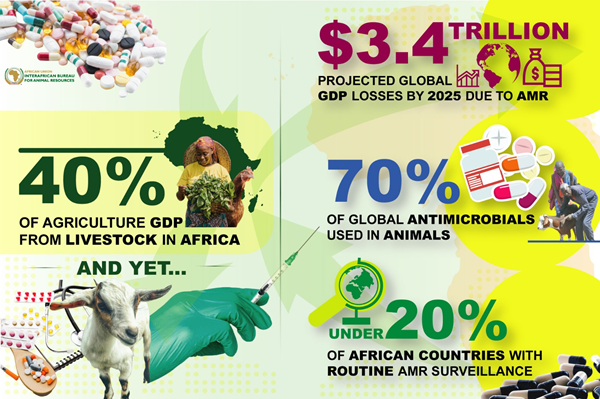
Antimicrobial resistance (AMR) is no longer a distant or emerging threat, but is a present and escalating crisis. In Africa alone, AMR is responsible for an estimated 27.3 deaths per 100,000 people, exceeding fatalities from malaria, HIV/AIDS, and tuberculosis combined. Globally, it could result in up to USD 3.4 trillion in annual GDP losses by 2050, while livestock productivity losses may reach 7.5% annually, threatening food security and livelihoods. These figures underscore the urgency of collective action, as highlighted in the remarks delivered on behalf of the Director of AU-IBAR during the Regional Workshop on Advancing WOAH’s AMR Standards in Veterinary Practice (8–10 April 2026, Nairobi, Kenya)—an event in which AU-IBAR is actively participating alongside continental and global partners.
A Crisis of Unprecedented Scale
The magnitude of AMR’s impact is both alarming and instructive. Beyond human health, AMR poses a systemic risk to Africa’s development trajectory. If left unchecked, the projected economic losses will significantly undermine progress toward sustainable development and economic resilience.
The agricultural sector—central to livelihoods and food systems—is particularly vulnerable. With livestock contributing up to 40% of agricultural GDP in many African countries, the impact of AMR on animal health directly translates into reduced productivity, income losses, and increased vulnerability for rural communities.
The Animal Health Dimension
The urgency of the mission is further reinforced by patterns of antimicrobial use. Approximately 70% of global antimicrobial sales are used in animals, yet in Africa, fewer than 20% of countries conduct routine AMR surveillance in animals. This gap highlights critical weaknesses in governance, monitoring, and stewardship systems.
Misuse of antimicrobials in livestock and aquaculture accelerates the emergence of resistant pathogens, which spread across the food chain, ecosystems, and borders—affecting public health, trade, and environmental sustainability.
As reflected in the workshop discussions, a key challenge remains translating international standards into effective national policies, veterinary education systems, and frontline practices.
AU-IBAR’s Role and Commitment
AU-IBAR’s active participation in this regional workshop reflects its strong commitment to addressing AMR as a continental priority. As the African Union’s specialised technical office for animal health and welfare, AU-IBAR is uniquely positioned to drive coordinated, One Health-based responses.
This commitment is operationalized through:
- Strengthening Veterinary Governance and Surveillance Systems
- Advancing Antimicrobial Stewardship through capacity building and responsible use practices
- Promoting Animal Welfare and Good Husbandry, reducing disease burden and reliance on antimicrobials
- Leading Policy Frameworks, including the AU Framework for AMR Control (2026–2030)
- Coordinating with Africa CDC and partners through joint AMR task forces
- Building Capacity in Veterinary Education and Regulation
Through these efforts, AU-IBAR is positioning animal health systems as a frontline defence against AMR while strengthening Africa’s food systems and economic resilience.
From Dialogue to Action
Participation in this workshop represents a critical step toward translating commitment into action. The convening brings together Member States, RECs, and global partners to address key implementation challenges, including policy translation, education reform, regulatory strengthening, and cross-sector collaboration.
Conclusion
The urgency of the mission lies not only in the scale of the threat but in the narrowing window for effective response. AMR is a direct challenge to Africa’s health security, food sovereignty, and economic transformation.
AU-IBAR’s leadership and active engagement demonstrate a clear commitment to advancing practical, evidence-based solutions. Sustained collaboration and decisive action will be essential to ensure that antimicrobial effectiveness is preserved—safeguarding the health, livelihoods, and prosperity of present and future generations.