

Africa’s fisheries civil society platform elects new leadership and agrees on a reform agenda for small-scale fisheries
Feature Article
Second General Assembly of the Pan-African Platform for Nationally Registered Civil Society Organisations Engaged in Fisheries and Aquaculture (AFRIFISH-NET) | Mombasa, Republic of Kenya | 11–13 August 2026
A newly elected continental Executive Bureau, a mandated consolidation of the platform’s governance instruments, an agreed process to finalise continental and regional strategic action plans, and a common set of civil society priorities for Africa’s next generation of small-scale fisheries' policy: these are the principal outcomes of the Second General Assembly of the Pan-African Platform for Nationally Registered Civil Society Organisations Engaged in Fisheries and Aquaculture (AFRIFISH-NET), held in Mombasa, Republic of Kenya, from 11 to 13 August 2026.
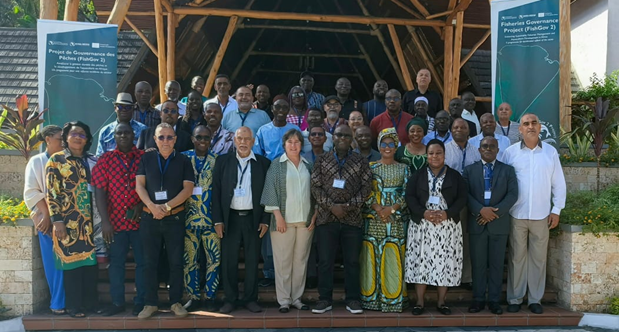
The Assembly brought together 46 participants, including 34 representatives of AFRIFISH-NET’s five regional chapters and their national member organisations across Central, Western, Eastern, Northern and Southern Africa. The Assembly was joined by the Government of Kenya, the African Union Inter-African Bureau for Animal Resources (AU-IBAR), the African Union Development Agency (AUDA-NEPAD), the Food and Agriculture Organisation of the United Nations (FAO), and Blue Ventures, as well as technical experts.
Beyond electing new leadership, the Assembly closed with a clear instruction to itself: move from institutional establishment to measurable results, while remaining member-owned, representative, transparent and accountable. The newly elected Bureau, working with the regional chapters and partners, will coordinate follow-up and report progress periodically to the membership.
Anchored in the African Union Theme of the Year 2026
The Assembly convened under the theme “Assuring Sustainable Water Availability and Safe Sanitation Systems in Fishing and Coastal Communities to Achieve the Goals of Agenda 2063, a deliberate localisation of the African Union Theme of the Year 2026, “Assuring Sustainable Water Availability and Safe Sanitation Systems to Achieve the Goals of Agenda 2063”, adopted by the Assembly of Heads of State and Government at its Thirty-ninth Ordinary Session in Addis Ababa in February 2026.
The framing matters for the sector. Water quality and sanitation are not peripheral to fisheries and aquaculture; they determine fish health and aquatic ecosystem integrity, the safety and shelf life of landed and processed fish, the scale of post-harvest losses, and the working conditions of the women who dominate processing and trade in most African fishing communities. Landing sites, fish markets and aquaculture facilities without reliable water and safe sanitation carry those costs directly into household income, nutrition and public health.
Several strands of the Assembly’s deliberations speak to this agenda: initiatives reported by the Central African chapter to improve fish-processing practices and working conditions for women processors; calls for greater attention to value addition, the use of fish by-products and healthy fish consumption; ecosystem restoration work reported from Southern Africa; and priorities on occupational safety, climate resilience and access to early-warning systems. Taken together, they position organised civil society as a practical delivery partner for the 2026 theme at community level, where water and sanitation commitments are ultimately tested.
The deliberations were guided by Agenda 2063 and its supporting sectoral frameworks, including the Policy Framework and Reform Strategy for Fisheries and Aquaculture in Africa (PFRS) and the African Fisheries Reform Mechanism (AFRM), the Ten-Year Action Plan for Small-Scale Fisheries Development in Africa (2017–2026), the Africa Blue Economy Strategy, the Comprehensive Africa Agriculture Development Programme (CAADP) Kampala Strategy and Action Plan, and the FAO Voluntary Guidelines for Securing Sustainable Small-Scale Fisheries.
An opening call to deliver results
Representatives of FAO, AUDA-NEPAD, AU-IBAR, Blue Ventures and AFRIFISH-NET delivered opening remarks and underscored the importance of organised civil society in advancing sustainable fisheries, resilient aquaculture, food and nutrition security, decent livelihoods, gender equality, youth participation and healthy aquatic ecosystems. Speakers emphasised the need to connect community priorities to national, regional, continental and global decision-making, and to translate policy commitments into practical improvements for fishers, fish farmers, processors and traders.
The formal opening took place on 12 August 2026 and was officiated by Mr Joseph Mahonga, Director of Fisheries and Aquaculture Development, representing the Government of the Republic of Kenya, who reaffirmed Kenya’s commitment to strengthening non-state actors' participation in sustainable fisheries and aquaculture development.
Uneven progress across five regional chapters
The Assembly considered AFRIFISH-NET’s technical and financial reports for 2021–2025 and received presentations from its five regional chapters. Northern Africa reported strengthened cooperation among organisations from six countries and the preparation of a regional strategic action plan for 2025–2030. Western Africa reported establishing national platforms and communication instruments, while highlighting the need to revitalise its regional governance structures. Central Africa reported legal registration in Gabon and identified 145 organisations across the region, 81 of them legally constituted. Eastern Africa reported policy analysis and advocacy on the small-scale fisheries guidelines, climate financing and fisher rights, alongside capacity development for cross-border fish trade. Southern Africa reported work on advocacy, ecosystem restoration, community rights and market access.
The Assembly acknowledged this progress while recognising that institutional development and operational capacity remain uneven across the chapters. It called for stronger governance and member ownership, better communication and visibility, consolidated coordination across national, regional, and continental levels, and more sustainable, diversified financing.
A single, consolidated governance package
Members were direct about the platform’s institutional foundations. Existing governance texts and subsequent working documents contained provisions requiring reconciliation, including differences on the composition and titles of the Executive Bureau, the relationship between the Bureau and a secretariat, membership and voting rights, and the institutional organogram.
The Assembly therefore mandated the incoming Executive Bureau, in consultation with the five regional chapters, to prepare a single consolidated governance package for formal approval by AFRIFISH-NET's competent organ. The package is to comprise the governance instrument, rules of procedure for the General Assembly and the Executive Bureau, election procedures, financial and accountability rules, membership procedures and a final organogram.
On the steps taken to register AFRIFISH-NET in Kenya, members requested full disclosure and clarification — the legal form used, the registered name and office-bearers, the date and certificate of registration, the registered office, reporting and financial obligations, control of assets and bank accounts, and whether the registration relates to the continental platform itself or to an entity hosting its secretariat. The Assembly will circulate registration documents and a legal and institutional note to members before taking any further decision on legal personality, headquarters, or host-country arrangements. The Assembly reaffirmed that registration or hosting in one country should not, by itself, convert the platform into a national chapter or alter the legal autonomy of its regional platforms and national member organisations.
From strategic plans to annual work plans
The Assembly welcomed the development of the continental strategic action plan and the five regional plans, and reviewed the proposed priorities against regional realities. It concluded that the plans require further refinement, harmonisation, and consultation to secure full ownership at continental, regional, and national levels, and asked the outgoing and incoming Bureaux — with technical support from AU-IBAR, AUDA-NEPAD, and partners, to consolidate the inputs received and facilitate finalisation and validation. Once finalised, the plans will be translated into realistic annual work plans with clear priorities, responsibilities, timelines, resource requirements, and measurable results.
Regional working groups were called for the continental plan to be fully aligned with the final governance instruments, to articulate the platform’s mission around coordination of the five regional chapters, and to reflect a wider partnership base spanning Regional Economic Communities, regional fisheries bodies, civil society organisations, research and training institutions, financial institutions and the media.
A civil society voice in continental and global processes
The Assembly was informed of the ongoing process to develop African common positions for the Thirty-seventh Session of the FAO Committee on Fisheries (COFI 37), led by the African Regional Group, with coordination and technical support from AUDA-NEPAD and AU-IBAR. The incoming Bureau and the regional chapters were asked to contribute evidence and priorities from small-scale fishing and aquaculture communities, with particular attention to meaningful participation in fisheries governance, secure tenure and access rights, climate resilience, occupational safety, equitable access to markets and finance, and the involvement of women and youth.
Reviewing implementation of the first Ten-Year Action Plan for Small-Scale Fisheries in Africa, participants identified broad priorities to inform the second plan:
-
stronger recognition and participation of small-scale fisheries organisations in decision-making and co-management;
-
improved implementation of secure tenure, access rights and social protection measures;
-
greater occupational safety, climate resilience and access to early-warning systems;
-
greater environmental and social consideration through appropriate impact assessment processes;
-
more comprehensive and accurate data on small-scale fisheries and aquaculture value chains for national, regional and continental reporting;
-
stronger participation and leadership of women and youth;
-
improved access to markets, finance, infrastructure and appropriate technologies; and
-
strengthened national and regional cooperation in the management of shared fisheries resources and aquatic ecosystems.
A new Executive Bureau
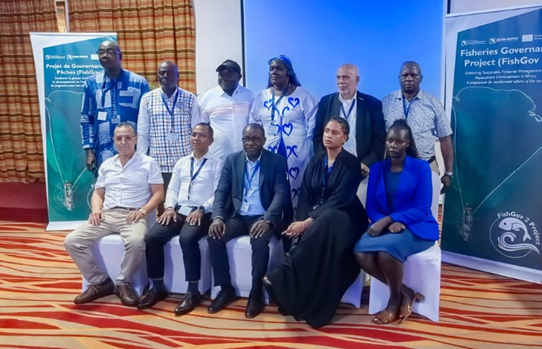
Elections were held in accordance with the platform’s governance arrangements, followed by an official handover from the outgoing Bureau. The Assembly also approved, without objection, a motion proposed by Mr Sid’Ahmed Abeid of Mauritania to create the position of Special Adviser to the Executive Bureau, resolving an impasse over representative candidates within the West African group.
(Photo: Members of the newly elected Executive Bureau and the Special Adviser, Mombasa, 13 August 2026)
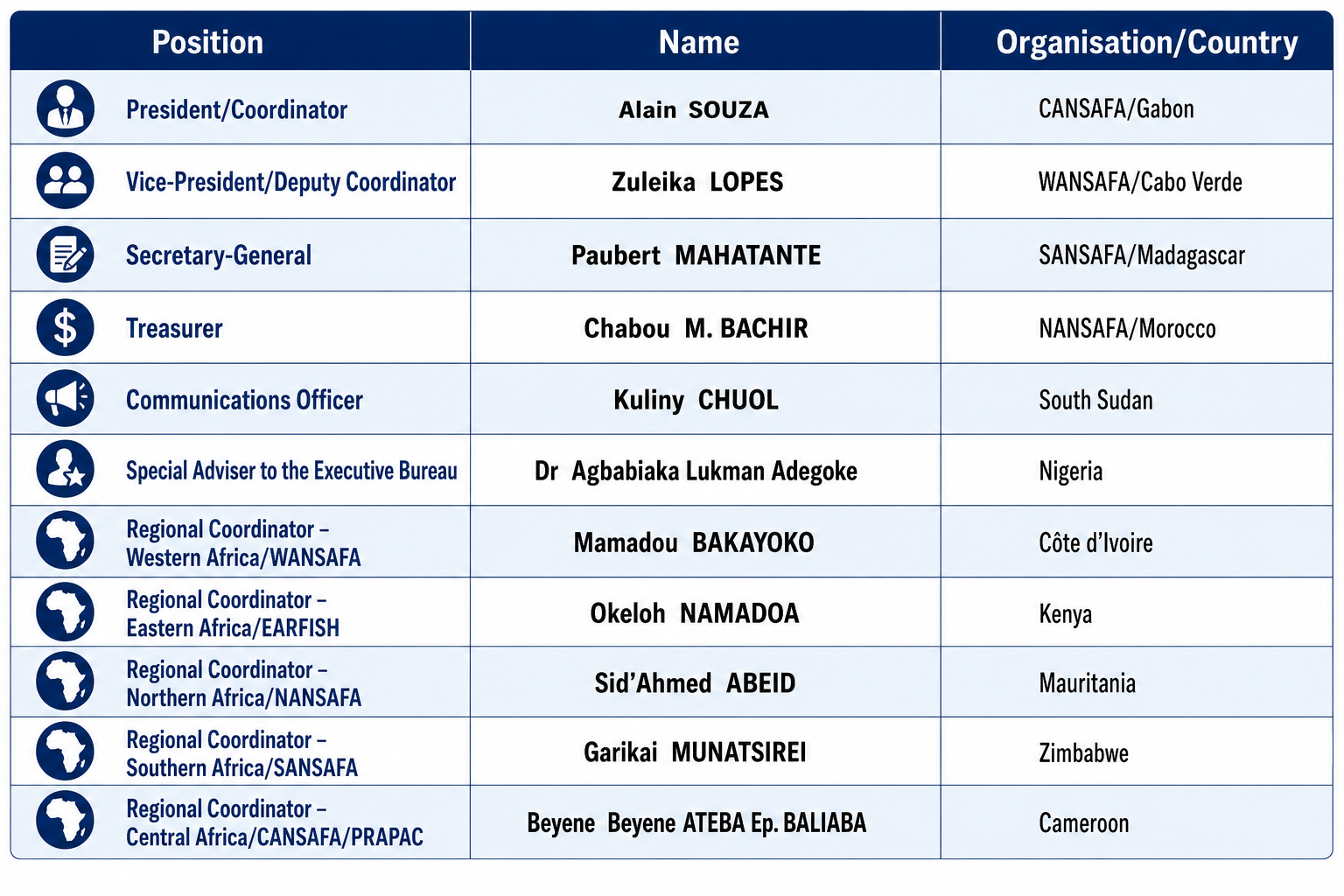
The Assembly expressed its appreciation to the Government and people of the Republic of Kenya for hosting the meeting, and thanked AU-IBAR, AUDA-NEPAD, FAO, the European Union, Blue Ventures and all participating organisations and partners for their support and contributions. It welcomed the newly elected Executive Bureau and encouraged it to promote inclusive governance, stronger coordination and effective implementation of the platform’s priorities.
For AU-IBAR, the Mombasa outcomes reinforce a long-standing position: policy frameworks for Africa’s fisheries and aquaculture deliver only when the organisations closest to the water — fishers, fish farmers, processors and traders, are organised, resourced and present in the rooms where decisions are taken. Under the African Union Theme of the Year 2026, that presence also tests whether continental commitments on water availability and safe sanitation reach the landing sites, markets and coastal communities where they matter most.