

AU-IBAR and ICC Kenya forge strategic partnership to accelerate investments and trade in Africa's animal resources sector
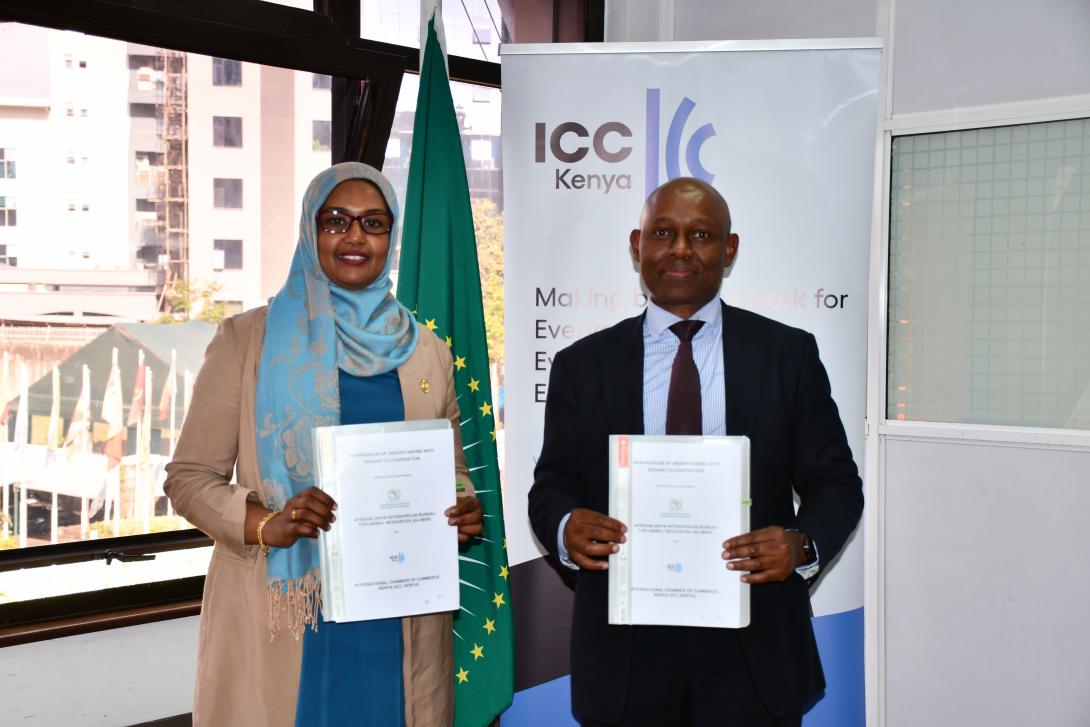
The African Union InterAfrican Bureau for Animal Resources (AU-IBAR) and the International Chamber of Commerce Kenya (ICC Kenya) have signed a Memorandum of Understanding (MoU) aimed at strengthening private sector engagement, investment promotion, and market development across Africa's animal resources sector.
The partnership marks an important step towards unlocking the economic potential of livestock, fisheries, aquaculture, and pastoral value chains through enhanced collaboration between public and private sector actors. The MoU provides a framework for cooperation in mobilizing investments, facilitating business partnerships, promoting policy dialogue, and strengthening market linkages, with an initial focus on Kenya and the wider East African region.
Speaking during the signing ceremony, AU-IBAR Director, Dr. Huyam Salih expressed confidence in the transformative role of the private sector in sustaining and modernizing Africa's animal resources sector. She emphasized that long-term growth and resilience in livestock and other animal resource value chains will require increased private sector participation, innovative financing mechanisms, and the crowding-in of capital and strategic investments.
The Director further noted that the African Continental Free Trade Area (AfCFTA) presents unprecedented opportunities for expanding intra-African trade in livestock and livestock products. She underscored the importance of positioning African producers, processors, and traders to take advantage of emerging regional markets while strengthening competitiveness, market access, and value addition across the continent.
On his part, ICC Kenya chair, Julius Opio, welcomed the partnership and highlighted the growing interest among businesses and investors in Africa's agri-food systems. He noted that agriculture and food systems are increasingly attracting attention from both domestic and international investors due to their potential to drive economic growth, create jobs, improve food security, and generate sustainable returns. "ICC Kenya's extensive business network and expertise in facilitating private sector engagement will significantly contribute to connecting investors, enterprises, financial institutions, and market actors with commercially viable opportunities in animal resources sector," indicated Julius.
Under the MoU, the two institutions will collaborate in key areas including:
-
Mobilizing private sector actors and strengthening market linkages within livestock, fisheries, aquaculture, and pastoral value chains
-
Promoting investment opportunities and facilitating partnerships between businesses, investors, and development partners
-
Supporting business advocacy and policy dialogue to improve the enabling environment for animal resource enterprises
-
Enhancing communication, knowledge sharing, and visibility of investment opportunities across the sector
-
Coordinating joint initiatives that contribute to sustainable animal resource development
Recognizing the importance of accountability and measurable impact, AU-IBAR and ICC Kenya agreed to establish a structured quarterly monitoring mechanism involving technical teams from both organizations. The quarterly reviews will assess progress against agreed activities, identify emerging opportunities and challenges, and ensure that the partnership remains responsive to the evolving needs of the animal resources sector.
The collaboration is expected to strengthen public-private partnerships, increase investment flows into animal resources value chains, and contribute to Africa's broader objectives of economic transformation, food security, job creation, and regional integration under the AfCFTA.
In pursuit of sustainable growth and market integration, the AU-IBAR–ICC Kenya partnership has signaled the growing recognition of how strong private sector participation is essential in unlocking the full potential of the continent's animal resources and agri-food systems.