
AU-IBAR and Uganda Strengthen Commitment to a Unified, Market-Driven Livestock Transformation Agenda
Entebbe, Uganda
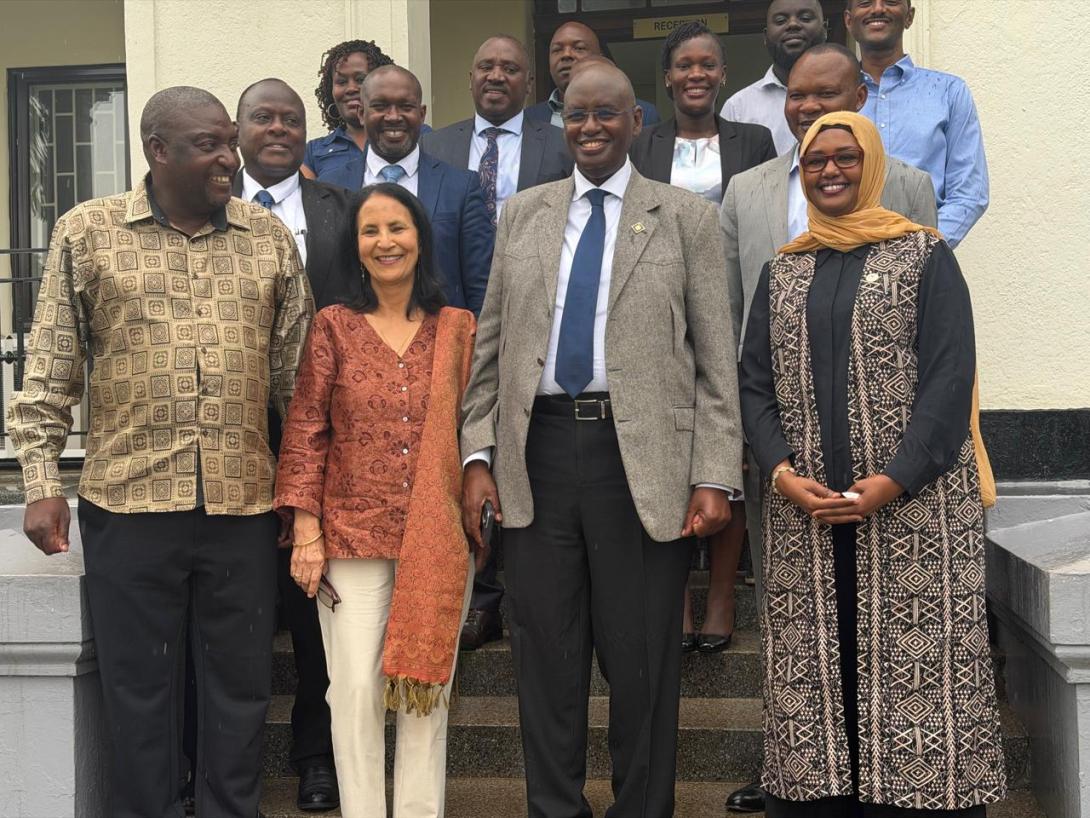
The African Union Inter-African Bureau for Animal Resources (AU-IBAR) has reaffirmed its commitment to advancing Uganda’s livestock sector through integrated, economically grounded and sustainable regional programmes, following a high-level engagement with the Ministry of Agriculture, Animal Industry and Fisheries (MAAIF) in Entebbe.
During the meeting, Uganda’s Minister of State for Animal Industry commended AU-IBAR’s longstanding collaboration and contribution to the country’s livestock development, particularly its support for the Centre of Excellence for the Gene Bank and Seeding. The Minister reaffirmed Uganda’s continued support for AU-IBAR initiatives and welcomed the Bureau’s evolving strategic direction.
The Director of AU-IBAR outlined a strategic shift from fragmented, project-based interventions towards holistic, long-term programmes spanning livestock, fisheries and aquaculture. She emphasized that interventions must be anchored in the economics of entire value chains, assess upstream and downstream opportunities, establish clear profit-and-loss considerations, and strengthen commercial viability and bankability. She further highlighted the importance of de-risking investments and embedding private sector participation at every node of the value chain to unlock livelihoods, rural development and sustainable economic opportunities.
“We must move beyond fragmented, project-based interventions towards integrated, holistic and sustainable programmes. Our investments must be anchored in the economics of the entire value chain, addressing commercial viability, bankability, de-risking and private sector participation to deliver lasting livelihoods and rural development,” noted Dr Huyam Salih.
A key dimension of this approach is the positioning of women and youth as active delivery agents and sustainable economic players within livestock, fisheries and aquaculture value chains. Rather than treating them as beneficiaries of standalone interventions, AU-IBAR emphasizes their integration into the productive and commercial ecosystems through enterprise development, incubation, skills development and access to viable market opportunities. This approach recognizes their potential to drive enterprise growth, deliver interventions at community level and sustain programme outcomes beyond individual project cycles.
The Director also underscored the need for a common African position on livestock and climate change, calling for stronger coordination in advancing the sector’s contribution to climate resilience and sustainable development.
As part of the broader continental agenda, she informed the Minister of AU-IBAR’s intention to seek support for convening the inaugural AU Summit on Sustainable Animal Resources in 2028. The proposed summit would provide a platform to strengthen continental coordination, advance policy dialogue, and mobilize commitment to the sustainable development of Africa’s animal resources. The Minister welcomed the proposal and pledged support for its advancement.
Welcoming the new strategic approach, the Minister observed that a more integrated programme framework would help address institutional and programmatic silos while building on lessons and good practices from previous interventions. Reflecting on discussions at the First African Pastoral Markets Forum in Addis Ababa, he also stressed the urgency of operationalizing the African Continental Free Trade Area (AfCFTA) to unlock the full potential of regional livestock trade.
“The challenge facing regional livestock trade is not necessarily commercial; it is operational. We must address the bottlenecks that constrain trade, including tariff disparities, through stronger coordination among Member States. There is little justification for continuing to subsidize inefficient systems when we should be addressing the underlying constraints.” indicated the State Minister for Animal Industry
The engagement reaffirmed a shared commitment to moving beyond fragmented interventions towards coordinated, economically grounded and private sector-driven programmes. By positioning women and youth as enterprise actors and delivery partners, strengthening regional trade and mobilising private investment, AU-IBAR and Uganda seek to advance a more competitive, inclusive and sustainable animal resources sector.