

AU-IBAR Convenes Continental Training on Global Environmental Instruments in Lomé
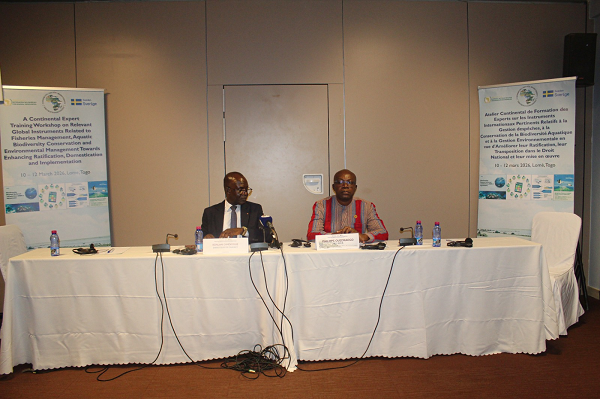
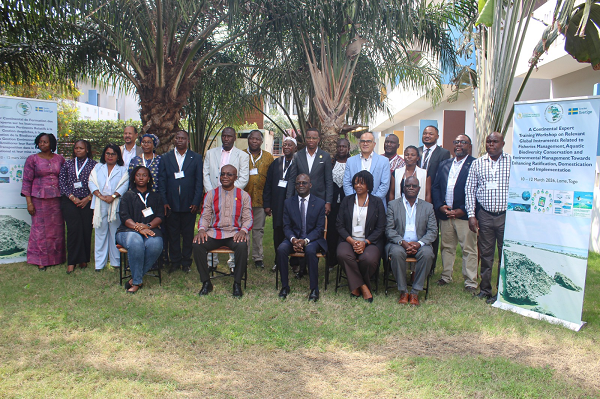
From 10–12 March 2026, experts from across Africa gathered in Lomé, Togo, for a continental training workshop aimed at strengthening the capacity of African Union (AU) Member States to implement key international instruments related to aquatic biodiversity conservation and environmental management.
The three-day training was convened by the African Union Inter-African Bureau for Animal Resources (AU-IBAR) in collaboration with the Government of Togo, under the “Conserving Aquatic Biodiversity in the Africa Blue Economy” project, supported by the Swedish International Development Cooperation Agency (Sida). The event brought together experts, policymakers, and consultants from 15 AU Member States, alongside regional organizations and technical partners.
Addressing the Urgent Need to Protect Africa’s Aquatic Ecosystems
Africa’s marine and inland water ecosystems support millions of livelihoods, provide critical sources of nutrition, and contribute significantly to national economies. Yet these ecosystems face increasing pressures from climate change, habitat degradation, pollution, and unsustainable exploitation of resources.
The training in Lomé responded directly to these challenges by strengthening national capacity to understand, ratify, domesticate, and implement key global agreements governing aquatic biodiversity and fisheries management. These include the Kunming–Montreal Global Biodiversity Framework, the Convention on Biological Diversity, the United Nations Fish Stocks Agreement, and the Port State Measures Agreement aimed at combating illegal, unreported and unregulated (IUU) fishing.
Participants explored how these instruments can guide national legislation, strengthen regional cooperation, and promote responsible use of aquatic resources across Africa.
Strengthening Knowledge for Implementation
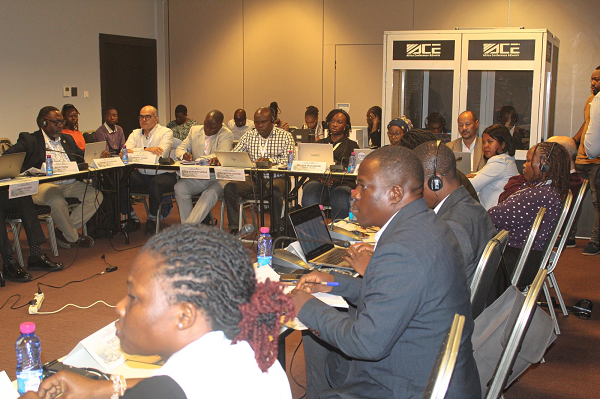
The workshop provided a platform for technical learning, peer exchange, and policy dialogue. Through presentations, case studies, and interactive discussions, participants examined:
• Procedures and mechanisms for ratification and domestication of global environmental agreements
• Policy and legal frameworks required to support sustainable fisheries and aquaculture
• The role of regional organizations in coordinating implementation across AU Member States
• Strategies for addressing illegal, unreported, and unregulated (IUU) fishing
• Opportunities to leverage international instruments for technology transfer, institutional strengthening, and improved governance
Participants also shared experiences from their countries on integrating international commitments into national legal frameworks and fisheries governance systems.
Supporting the African Blue Economy Vision
The workshop contributes to the implementation of the African Blue Economy Strategy (ABES) and the Policy Framework and Reform Strategy for Fisheries and Aquaculture in Africa (PFRS). These continental frameworks aim to promote sustainable use of aquatic resources while advancing food security, livelihoods, and economic growth across the continent.
AU-IBAR’s engagement under the project focuses on strengthening policy environments, regulatory frameworks, and institutional capacity to ensure that biodiversity conservation is fully integrated into Africa’s growing blue economy.
Previous assessments conducted under the project identified 54 global and continental instruments relevant to aquatic biodiversity conservation and environmental management. However, many AU Member States face gaps in awareness, technical capacity, and institutional readiness to effectively domesticate and implement these agreements. The Lomé training therefore represents a critical step in addressing these capacity gaps.
A Shared Commitment to Sustainable Fisheries
Speaking at the opening session on behalf of the Togolese Minister of Agriculture, Fisheries, Animal Resources and Food Sovereignty, Mr. Konlani Dindiogue, Director of Cabinet, emphasized that African aquatic ecosystems remain under significant pressure despite ongoing efforts by governments and development partners.
He highlighted the importance of joint management of transboundary waters and stronger collaboration among countries to safeguard fisheries resources and ensure long-term food and economic security.
Representing the AU-IBAR Director, Mr. Philippe Ouédraogo underscored the urgency of addressing IUU fishing, particularly in the Gulf of Guinea, where illegal activities continue to threaten fish stocks and the livelihoods of coastal communities. He noted that strengthening monitoring, control, and surveillance systems remains essential for protecting fisheries resources and promoting sustainable exploitation.
Expected Outcomes and Next Steps
By the end of the training, participants were expected to:
• Strengthen their understanding of global legal instruments governing aquatic biodiversity
• Enhance national capacity to ratify and implement international agreements
• Identify practical steps for aligning national legislation with global commitments
• Share lessons and best practices for improving regional cooperation and fisheries governance
The workshop also contributes to building a continental network of experts capable of supporting the domestication and implementation of these instruments in their respective countries.
Advancing Sustainable Blue Growth in Africa
As Africa continues to harness the potential of its oceans, lakes, and rivers, strengthening governance frameworks and aligning national policies with global environmental commitments will be essential.
Through initiatives such as the Conserving Aquatic Biodiversity in the Africa Blue Economy project, AU-IBAR is helping AU Member States build the knowledge, partnerships, and institutional capacity needed to protect aquatic ecosystems while supporting sustainable fisheries and blue economy development.
The Lomé training contributes to ensuring that Africa’s aquatic resources are managed responsibly, conserved effectively, and utilized sustainably for current and future generations.