
AU-IBAR Hosts Uganda's Parliamentary Agricultural Committee
Nairobi, Kenya
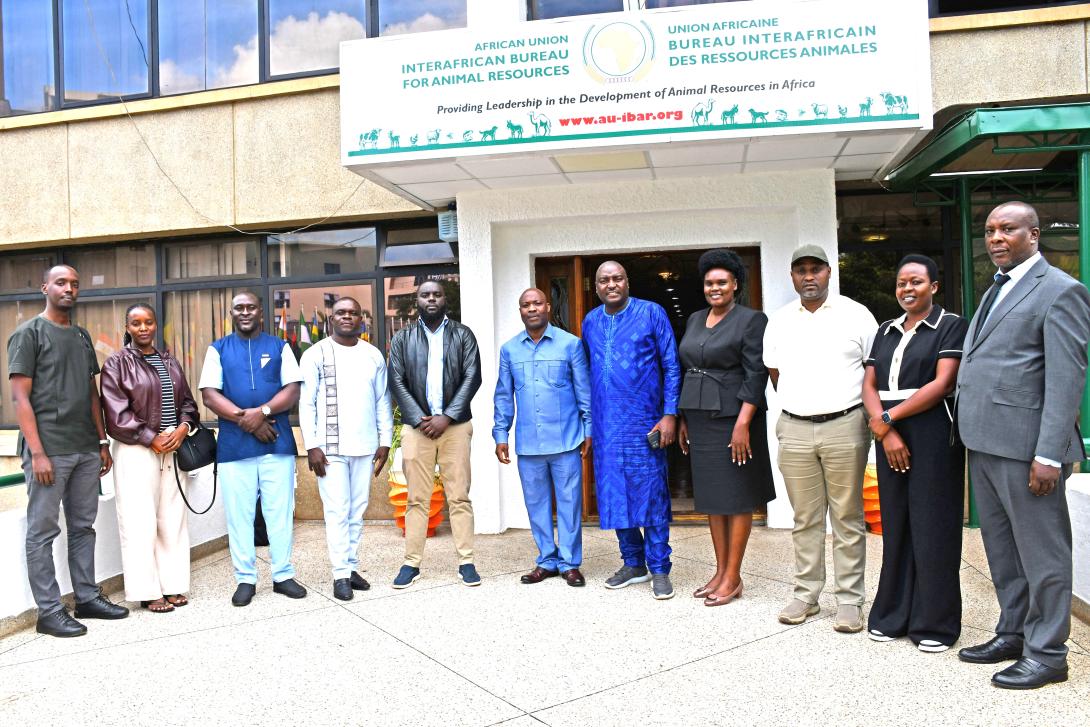
The African Union Inter-African Bureau for Animal Resources (AU-IBAR) hosted members of Uganda's Parliamentary Agricultural Committee during a benchmarking visit to Kenya focused on the proposed Food and Agriculture Regulatory Authority Bill. The visit provided an opportunity for peer learning on legislative frameworks, institutional coordination, and the governance of food and agricultural systems. The engagement provided a platform to examine how effective regulatory and policy frameworks can strengthen agricultural development, improve market access, facilitate trade and stimulate private sector investment across the region.
During the meeting, the Director of AU-IBAR briefed the Ugandan delegation on the progress of the Bureau's interventions in Uganda, highlighting initiatives to strengthen livestock value chains and unlock their contribution to economic development. Particular attention was given to the readiness for adoption of the Export-Grade Meat Value Chain Model, which seeks to strengthen the commercial orientation of the livestock sector by connecting livestock production systems with quality assurance, structured markets and export opportunities. The model will improve market competitiveness, expand investment opportunities, and increase livestock producers' participation in higher-value markets.
Further, the Director highlighted progress under the Integrated Regional Livestock Value Chains (IRLVC) Programme, which has positioned Uganda as a best-practice case in advancing the dairy value chain. The programme's work will demonstrate the importance of coordinated value chain development, institutional collaboration and market-oriented approaches in improving the performance and competitiveness of the livestock sector.
The Committee members, led by Hon. Musinguzi Patrick, expressed strong interest in AU-IBAR's work in Uganda, particularly the interventions being implemented across their respective constituencies. They acknowledged the importance of translating ongoing technical and programme investments into tangible economic opportunities for communities and livestock sector actors. The delegation further expressed interest in strengthening engagement with AU-IBAR to advance the policy and institutional frameworks necessary to support food and agricultural development.
A key outcome of the engagement was the recognition of the need for greater harmonization of livestock and trade policies across the region. The Committee underscored that fragmented regulatory approaches and differing national requirements can constrain cross-border livestock trade and limit the realization of regional market opportunities. Harmonized policies, aligned standards, and coordinated regulatory systems were identified as key enablers of regional trade, investment, and the development of integrated livestock markets.
The discussions reinforced the importance of legislative institutions in creating an enabling environment for transforming Africa's animal resources sector. In particular, parliamentary leadership and oversight were recognized as critical to advancing coherent policies that support livestock commercialization, strengthen food safety and quality assurance systems, and facilitate predictable cross-border trade.
The engagement reflected AU-IBAR's commitment to supporting Member States in translating continental priorities into practical national and regional interventions. Through initiatives such as APMD and IRLVC, the Bureau continues to promote evidence-informed policy development, stronger institutional coordination and commercially viable livestock value chains that contribute to employment, food and nutrition security, livelihoods and broader economic development.