

Building Sustainable and Competitive Leather Value Chains in Africa: The Strategic Role of Public–Private Partnerships

Africa's leather market is providing a clear policy signal that value-added production, rather than raw-material dependence, is the way forward.
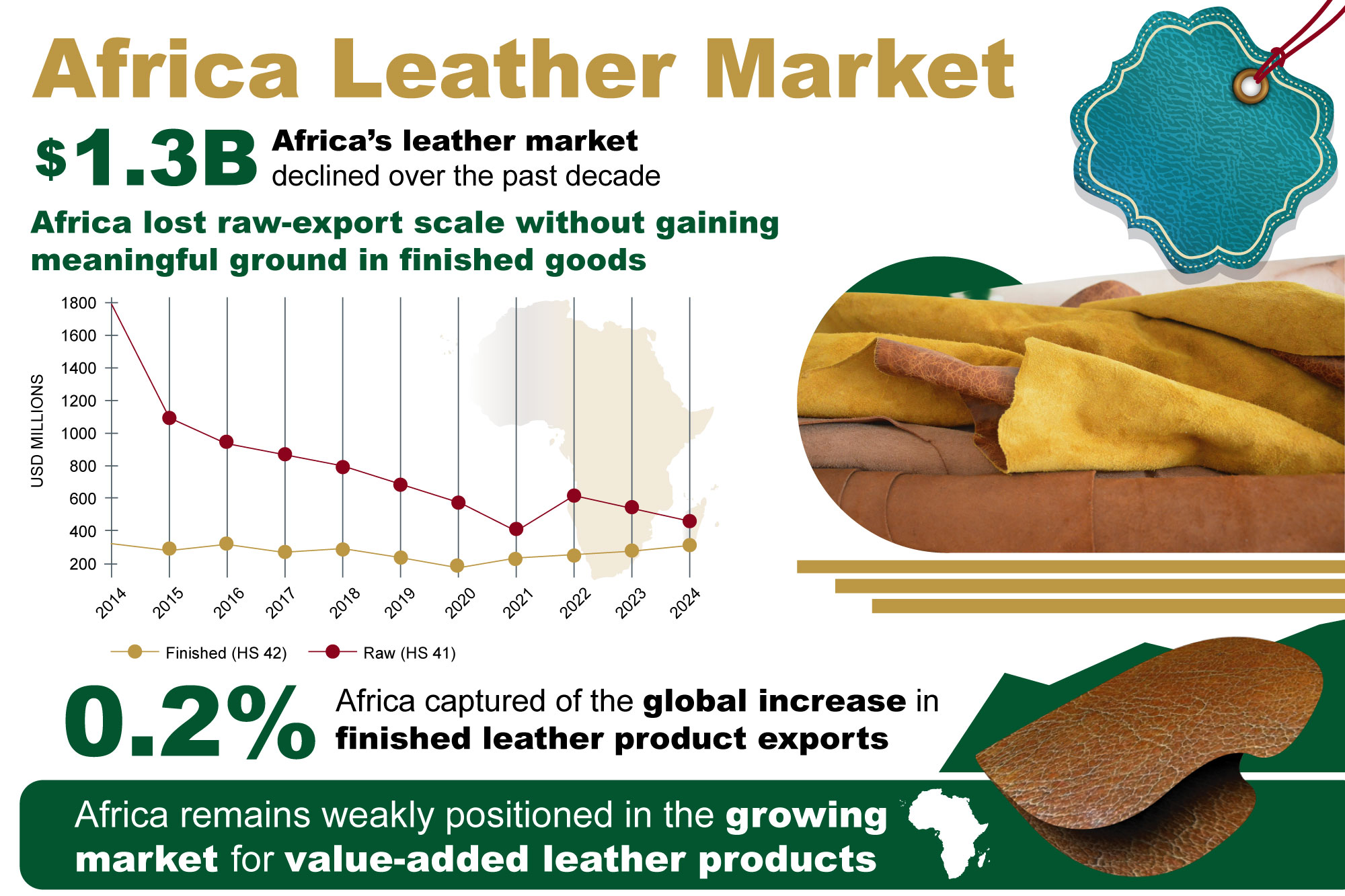
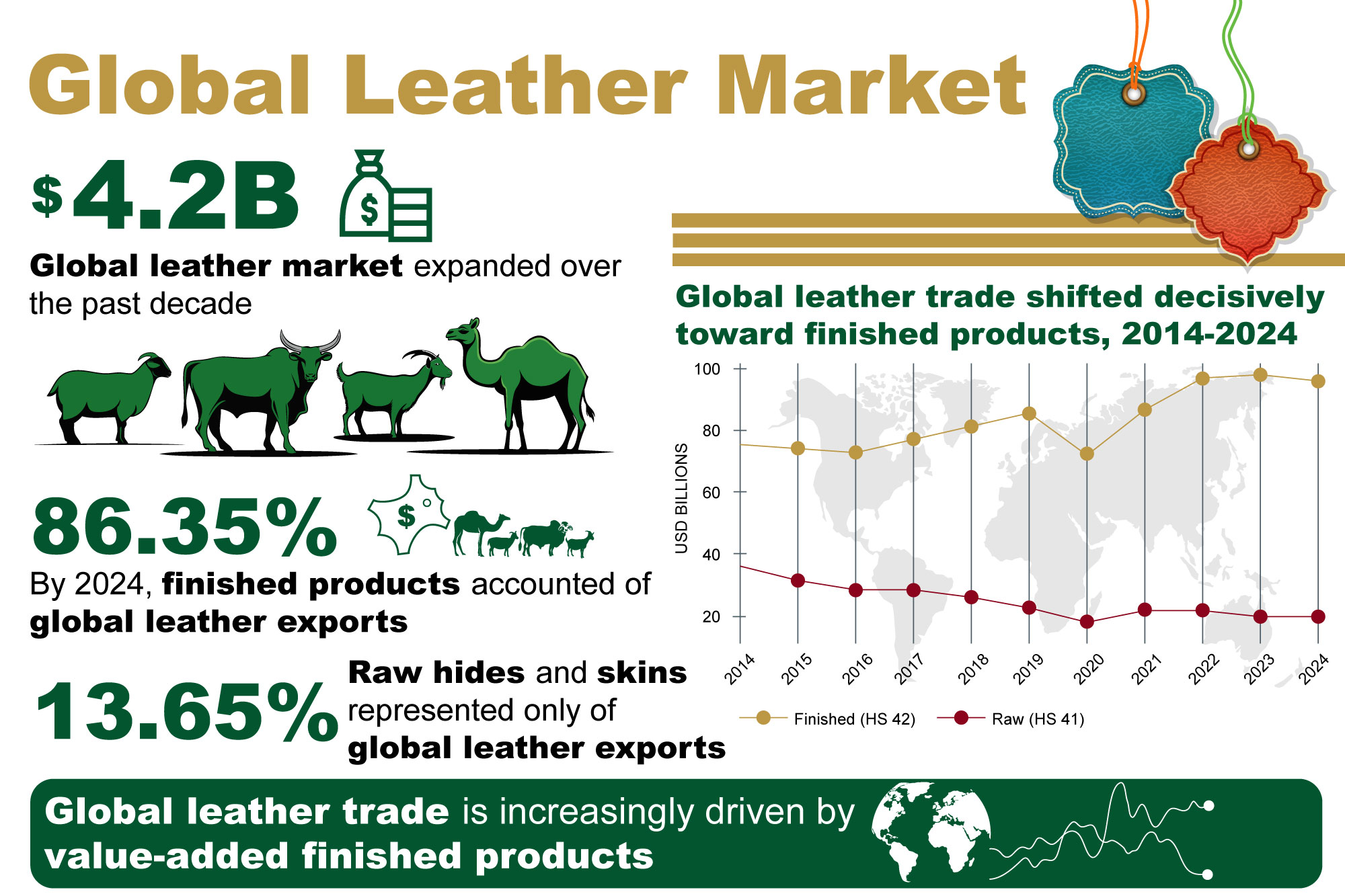
Over the last decade, the global leather trade has grown by more than $4.2 billion, with finished leather products accounting for 86.35% of global exports by 2024. However, Africa's leather exports fell by US$1.3 billion during the same time, with the continent accounting for only 0.2% of the global rise in completed leather product exports.
The issue is no longer a matter of resource availability. Africa boasts a livestock base, business possibilities, and a developing regional market. The fundamental problem is structural: fragmented value chains, ineffective industrial coordination, insufficient processing infrastructure, gaps in standards, and underinvestment in manufacturing ecosystems.
 |
 |
The findings show an urgent need to reposition leather as a vital industry for industrialisation, trade, and investment under AfCFTA, rather than solely as a livestock byproduct.
This is why Public-Private Partnerships (PPPs) are important.
Not only as funding tools, but as instruments for:
• Developing shared industrial infrastructure.
• Providing support for standards and certification systems.
• Expanding regional production corridors.
• De-risking MSME upgrade
• Improving skills, innovation, and manufacturing competitiveness.
• Improving green compliance and circular production systems.
Research indicates that global markets favour countries that advance up the value chain. Africa cannot continue to concentrate on reducing raw hide areas as the global market shifts dramatically towards finished products.
The opportunity now is to transform Africa's leather industry into a driver of industrial growth, job creation, regional trade, and long-term value capture.
The policy brief, Building Sustainable and Competitive Leather Value Chains in Africa: The Strategic Role of Public–Private Partnerships, provides evidence-based analysis and strategic directions for AU institutions, RECs, Member States, and partners.