
A Call for Stronger Sanitary and Phytosanitary Systems as the Backbone of Africa’s Agrifood Trade
Africa will not transform its agrifood systems through production gains alone. The real test is whether food, livestock, fish, plants and animal products can cross borders safely, reliably and on competitive terms. That was the core argument running through a recent webinar convened by AKADEMIYA2063, with support from the United States Department of Agriculture, which brought together the African Union Commission, AU-IBAR, the AfCFTA Secretariat, the Standards and Trade Development Facility, and a wide range of experts and stakeholders to examine the role of sanitary and phytosanitary systems in Africa's agrifood agenda.
The starting point for the discussion was simple: sanitary and phytosanitary systems extend far beyond compliance checklists. Behind every standard, inspection protocol and certification requirement are farmers, traders, pastoralists, fishers and consumers whose livelihoods depend on whether products reach markets safely, whether borders remain open and whether diseases are kept in check. Getting these systems right is what makes agrifood value chains attractive to investors and viable for the people working within them.
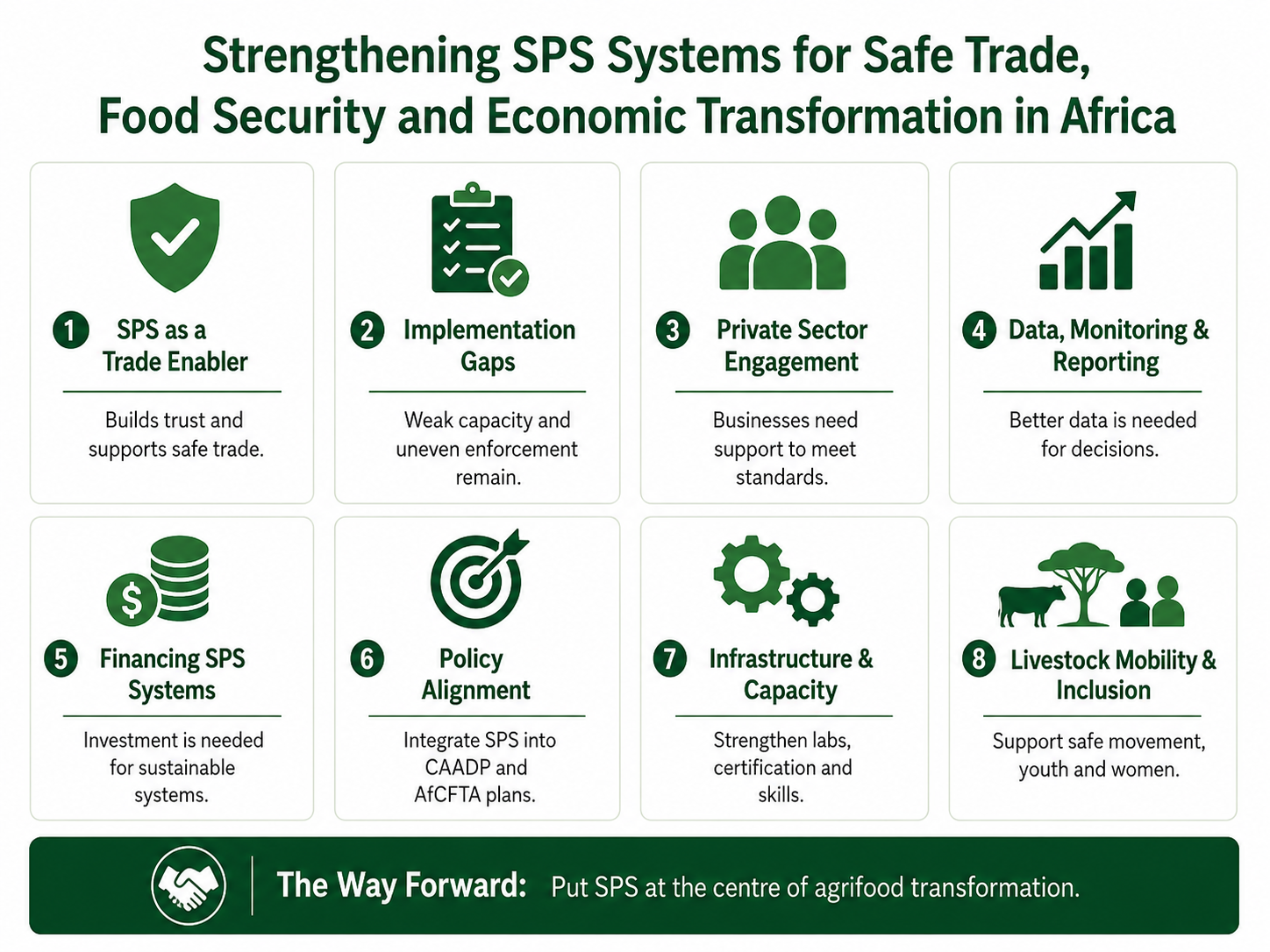
John Oppong-Otoo of AU-IBAR, representing the African Union Commission, made the case that sanitary and phytosanitary capacity belongs in the same conversation as roads, ports and energy; it is infrastructure, and it deserves to be treated as such. Producing more food means little if the systems to certify its safety, control disease risks and sustain market confidence are absent or unreliable. His message was direct: these are not technical or regulatory sideshows. They sit at the centre of trade, investment and economic opportunity.
He was equally direct about what needs to change in practice. Sanitary and phytosanitary priorities must be reflected in national investment plans, value chain strategies, budgets, and results frameworks, not just in technical documents. They need to be costed, financed, and tracked, and explicitly connected to export competitiveness, agro-industrialisation, and the implementation of the African Continental Free Trade Area.
One concern that surfaced repeatedly was the disconnect between production capacity and the ability to move goods. John put it plainly: if sanitary and phytosanitary systems are not integrated into the continent's broader agrifood agenda, countries risk investing in output they cannot trade. He described these systems as the "currency for trade", the means by which confidence is built and risk is reduced across animal health, food safety, plant health and market access.
AU-IBAR's own programmes demonstrated what this looks like on the ground. Work spanning animal health, disease surveillance, vaccine production, PPR eradication, One Health, and pastoral livestock mobility was presented not as separate technical interventions but as interconnected pieces of a trade facilitation agenda, reducing losses, strengthening veterinary systems, and enabling more reliable cross-border movement of animals and products.
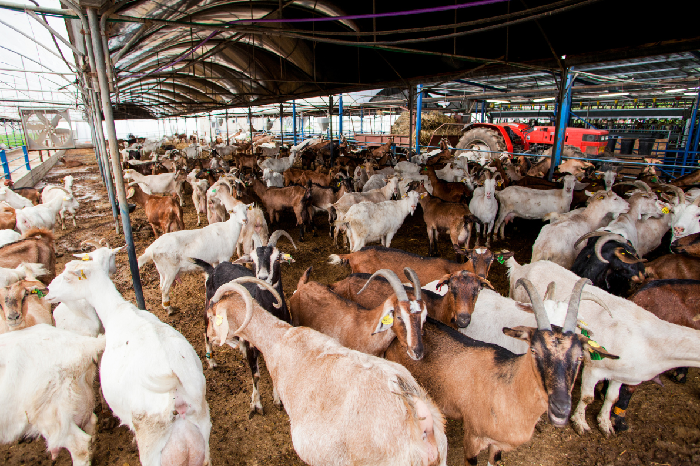
Pastoralism illustrated the point well. Livestock kept by pastoralists account for a significant share of Africa's meat supply, yet the cross-border movement that pastoral systems depend on remains poorly governed across many corridors. AU-IBAR's engagement with the AfCFTA, Regional Economic Communities and Member States is aimed at changing that, coordinating movement, ensuring sanitary conditions, and bringing pastoral trade into a more functional regulatory framework.
Dr Diana Akullo of the AfCFTA Secretariat pointed to the gaps that continue to slow progress. Harmonised standards for animal and plant disease control and food safety exist in many cases, but consistent implementation does not. Institutional capacity is uneven, enforcement is often weak, border inspection infrastructure falls short of needs, and businesses operating across multiple markets face significant difficulties obtaining certifications. These are not isolated problems, taken together, they chip away at the credibility of the continental market.
The conversation around the private sector exposed a recurring tension. Businesses move most of the food and agricultural products that cross Africa's borders, yet they are frequently left out of the policy conversations that shape the rules they must follow. Participants argued for a different approach: involving private actors earlier, giving them clearer information on compliance requirements and creating practical pathways to help them meet standards without losing their competitive edge.
Peter Donovan of the Standards and Trade Development Facility reframed the financing question in a way that sharpened the discussion. The problem, he said, is not simply a shortage of money; it is that too few sanitary and phytosanitary priorities are structured in ways that make them fundable. Countries often lack the institutional capacity to translate a technical need into an investment proposal that development banks or private financiers can act on. The shift required is to treat these systems as trade-enabling infrastructure and make the case in language that investors understand: fewer rejected shipments, more dependable supply chains, stronger export revenues.
A distinction was drawn between different types of sanitary and phytosanitary functions. Surveillance, inspection, enforcement and official certification are public goods; they require government budgets and, where capacity is still being built, external support. But laboratory accreditation, digital traceability and export certification infrastructure occupy a different space, one where blended finance and private participation are genuinely viable. Countries that can make that distinction and structure financing accordingly are better placed to move from ambition to delivery.
Scaling was raised as a recurring weakness. Too many well-designed pilots have remained just that- pilots. Expanding what works requires planning for it from the outset: securing future financing, establishing institutional ownership, designing for regional replication and building monitoring systems that enable learning and adaptation.
Data also came up as an area needing attention. John recommended that countries build sanitary and phytosanitary data clusters around the indicators that matter most, food safety trends, disease outbreaks, vaccination coverage, laboratory accreditation status, professional capacity and the uptake of electronic sanitary and phytosanitary systems. The aim is not more reporting for its own sake, but better information to support decisions and track what is actually changing.
The discussion took a grounded turn when participants raised questions about youth and women. John described AU-IBAR's position clearly: young people and women should not be positioned as passive recipients of agricultural programmes. They should be active participants in designing and delivering them across livestock, fisheries, agribusiness, and agriculture, particularly in areas such as technology, value addition, and enterprise development.
The webinar closed with a challenge to the sector: sanitary and phytosanitary systems have for too long been treated as a technical annex to Africa's development agenda. They need to be woven into national plans, regional trade corridors, investment strategies, private-sector support mechanisms and the practical implementation of the AfCFTA.