
Gazi Bay’s mangroves take root with community care
Gazi Bay, Kwale County, Kenya, 4–5 November 2026
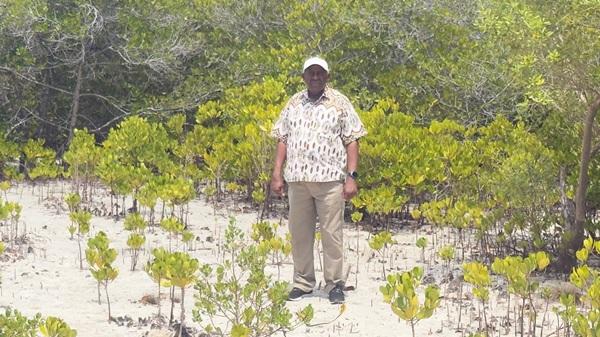
Earlier in the life of its aquatic biodiversity project, AU-IBAR paid for 7,500 mangrove seedlings and 70 fruit trees to be planted along the shores of Gazi Bay on Kenya’s south coast. On 4 and 5 November 2026, an AU-IBAR team went back to see how they were doing.
The visit was organised with the Kenya Marine and Fisheries Research Institute (KMFRI), AU-IBAR’s partner on the ground, and brought the team face to face with the people of Gazi and Makongeni, the two villages that agreed to look after the young trees once they were in the mud.
Mangroves do a great deal of quiet work for coastal communities. Their roots shelter young fish and crabs, hold the shoreline together against erosion and storm surges, and lock away large amounts of carbon in the trees and the sediment beneath them. When mangroves are cut or degraded, fishers, farmers and the coastline itself all feel the loss.
Gazi Bay was a natural choice. Its communities have a long record of protecting and replanting their mangroves, and the bay is home to Mikoko Pamoja, the community-led mangrove conservation project supported by KMFRI. AU-IBAR’s support was designed to build on that experience rather than start from scratch. Working with KMFRI and the villagers, the project identified several degraded areas for restoration, including the land around the fish ponds, the mouth of the Mkurumudzi River, Chale Island and the fish landing site.
The work falls under the Conserving Aquatic Biodiversity in the African Blue Economy project, which AU-IBAR implements with funding from the Swedish International Development Cooperation Agency (Sida). The project helps African Union Member States put the African Blue Economy Strategy into practice, with a focus on conserving aquatic biodiversity, restoring damaged ecosystems, addressing climate change and giving communities a real stake in the results. Gazi Bay is one of the places where that commitment has moved from paper to practice.
|
Image
|
Image
|
Image
|
Two days on the ground
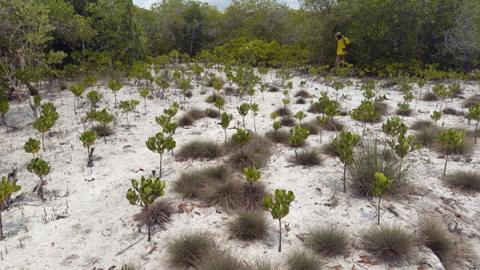
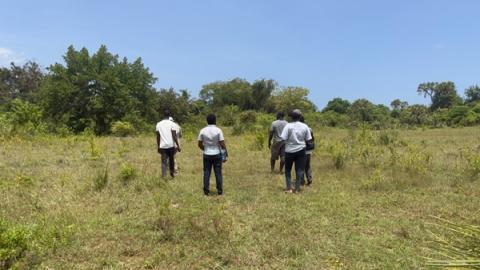
The first morning opened with a briefing from KMFRI on what had been achieved since planting and the difficulties encountered along the way. In the afternoon the team headed out to the restoration sites with KMFRI staff to look at the seedlings themselves: how many had taken root, how well they were growing, and whether new trees were beginning to establish naturally around them. Observations and photographs were recorded at each site.
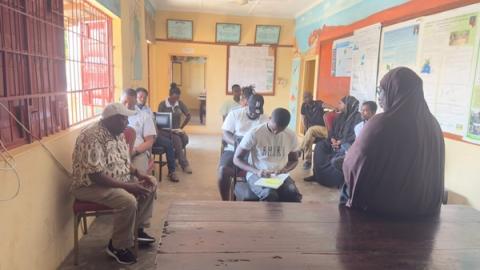
The second day belonged to the communities. Representatives from Gazi and Makongeni spoke about how they had taken part in the restoration, what it would take to keep the work going, and how women and young people have been involved. The conversation also turned to livelihoods, and to the ways in which healthy mangroves and the fruit trees planted alongside them can support household incomes. The team then visited the fruit tree sites.
The visit closed with a joint session between AU-IBAR and KMFRI to take stock of the achievements, challenges, good practices and lessons from Gazi Bay, and to agree on what still needs to be done, and by whom, before the project is evaluated in January 2027.
Part of a wider effort
Gazi Bay is one of several places where AU-IBAR is helping communities restore the aquatic ecosystems they depend on. In July 2026, the same project ran a community training workshop in the Lower Zambezi, Zambia, with the Ministry of Fisheries and Livestock, on riverbank rehabilitation, tree nurseries and community-based monitoring. These activities support the African Union’s Continental Strategy on Nature-based Solutions for Conserving, Restoring and Sustainably Using Aquatic Ecosystems and Fish Stocks, and they share a simple idea: restoration lasts when the people living alongside an ecosystem own it.
AU-IBAR will now prepare a short report on the state of the restoration sites, the role of the communities and the lessons learned. The findings will feed into the January 2027 evaluation and into AU-IBAR’s growing body of knowledge on nature-based solutions, so that what has worked in Gazi Bay can be shared and, where it fits, repeated elsewhere on the continent.
For the communities of Gazi and Makongeni, the measure of success will be simpler. It will be seen in the trees that are still standing, and growing, in the years to come