

LiveSys training equips African policymakers to put livestock at the centre of climate action
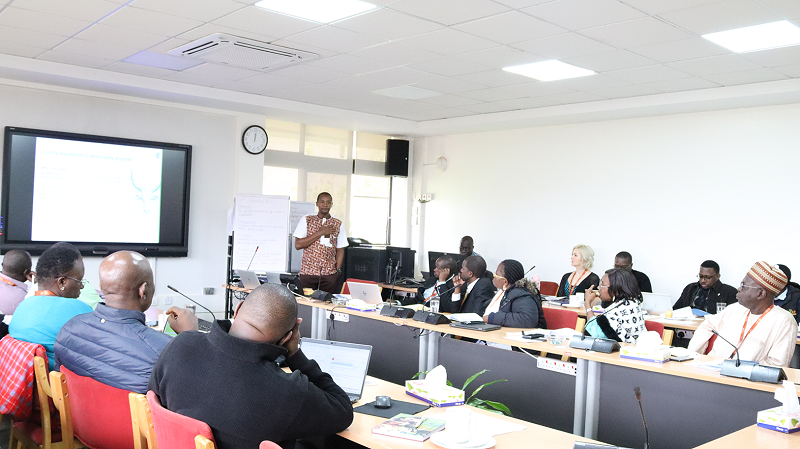
Africa's livestock systems are under mounting pressure from climate change, land degradation and rising food demand — yet their potential as a climate solution remains under-recognised in policy and finance circles. A new capacity development programme under LiveSys aims to close that gap, and its first module was delivered in February 2026 at ILRI's Nairobi campus with a field day at Kapiti Research Station.
More than 38 policymakers, government officials, farmer organisation representatives and civil society actors from Kenya, Zambia and Nigeria attended sessions on climate change, gender and livestock systems, run jointly by GIZ, ILRI, AU-IBAR, Kenya's State Department for Livestock Development and AGNES.
The programme responds to gaps identified in a 2025 continental stocktake, which found African institutions ill-equipped to fold climate-smart practice, biodiversity, GHG monitoring and climate finance into livestock planning. Five further modules will run through 2026–2027, covering rangeland conservation, the Rio Conventions, evidence-based policy, advocacy and climate finance. Graduates join a LiveSys alumni network, with remote coaching offered to their home institutions.
LiveSys is a five-year BMZ-funded initiative (2024–2028) implemented by GIZ with ILRI, AU-IBAR, CIAT and AGNES.
Photo: Benard Kimoro, head of the Climate Change and Livestock Sustainability section, at the State Department for Livestock Development-Kenya, delivering a session on Measurement, Reporting and Verification (MRV) in the Livestock Sector. Photo credit: GIZ