Mariama Doumbia: The Goats That Keep Hope Alive
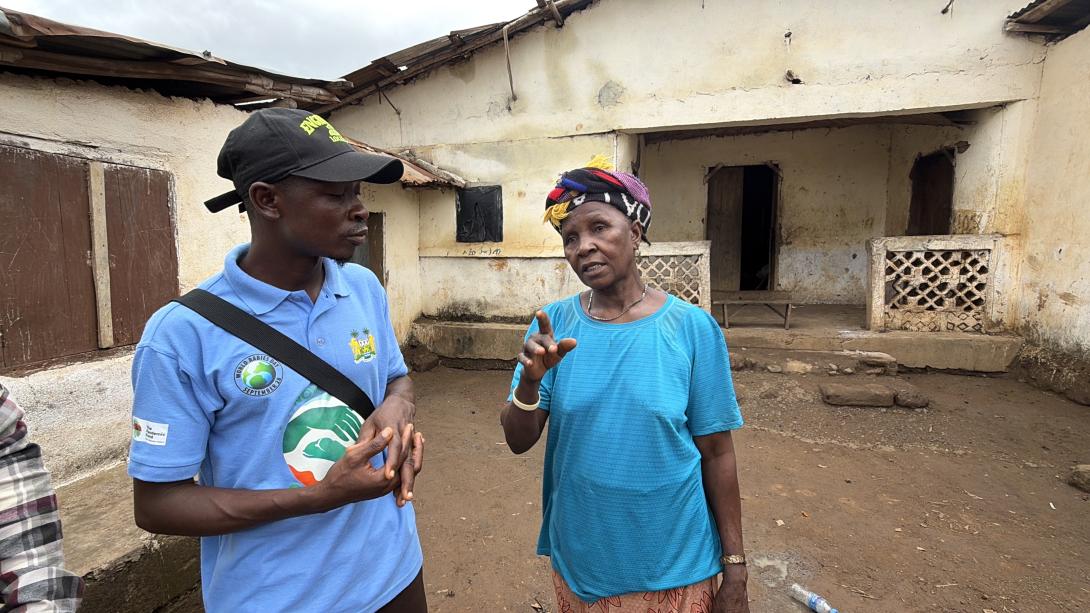
As the sun begins to rise over Kambia, a small village located just a few kilometres from the Sierra Leone-Guinea border, Mariama Doumbia is already at work.
Like many women livings in rural communities across West Africa, her day begins long before dawn. Between caring for her children, managing household responsibilities, and attending to daily chores, she also dedicates much of her time to her goats and valuable assets that play a critical role in her family’s well-being.
For Mariama, goats are much more than livestock. They are a source of income, a form of savings, source of nutrition, and a safety net during difficult times. “When we face challenges, it is often the goat that help us get through them,” she explains.
Selling an animal can provide money to buy food, pay school fees, cover medical expenses, or meet other essential household needs. In this border region, where economic opportunities are limited, small ruminants are often among the most valuable assets families possess. But this fragile balance can easily be disrupted.
Over the years, Mariama has seen some of her animals fall ill. Diarrhoea, nasal discharge, loss of appetite, and weight loss are symptoms that worry livestock keepers and threaten their livelihoods. When disease strikes a herd, the consequences are immediate. A sick animal means less income.
A dead animal means one less opportunity to feed a family, educate a child, or cope with an emergency. “I have seen animals become weak and die without us always knowing what was making them sick. I did not know they needed to be vaccinated. When I saw them falling ill, I thought there was very little that could be done,” she recalls.
Like many livestock keepers living in border communities, Mariama has had limited access to veterinary services and animal health information. In an area where herds regularly cross borders in search of water, pasture, and markets, animal diseases can spread rapidly from one community to another. Frequent livestock movements between neighbouring countries increase the risk of disease transmission and make effective surveillance even more critical.
“Today, following the visit of the AU-IBAR PAPS Monitoring team, I will take into account your advice and recommendations to seek early help when I see signs of nasal discharge, loss of appetite, and/or weight loss to better protect my animals,” she says.
Today, her awareness on the importance of vaccination and disease prevention in protecting her animals and safeguarding her family’s livelihood has increase.
Her story reflects the reality faced by thousands of women and men who depend on livestock for their survival and that of their families. It is precisely to address this reality that vaccination programmes, disease surveillance systems, and strengthened veterinary services are so important.
Protecting animals from diseases such as Peste des Petits Ruminants (PPR) means protecting household incomes, strengthening resilience to shocks, and creating better opportunities for future generations.
For women like Mariama, animal health is directly linked to food security, economic empowerment, and family well-being. Every protected animal represents a preserved source of income. Every healthy herd contributes to building a more resilient community.
Through her story, Mariama reminds us that behind every statistic on PPR are families whose income, food security, and future depend on the health of their animals.
As Africa advances towards the goal of a PPR-free continent by 2030, the voices of livestock keepers on the frontlines of animal disease prevention must continue to be heard.
Because behind every vaccinated animal is a more resilient family. Behind every protected herd is a stronger community. Behind the ambition of PPR2030 are millions of women, men, and children whose futures depend on healthy livestock.
Mariama’s Message
“Every healthy animal brings hope to my family. When our animals are protected, our future is protected too.”