

Nature-Based Solutions in the Namoomba Fisheries Management Area
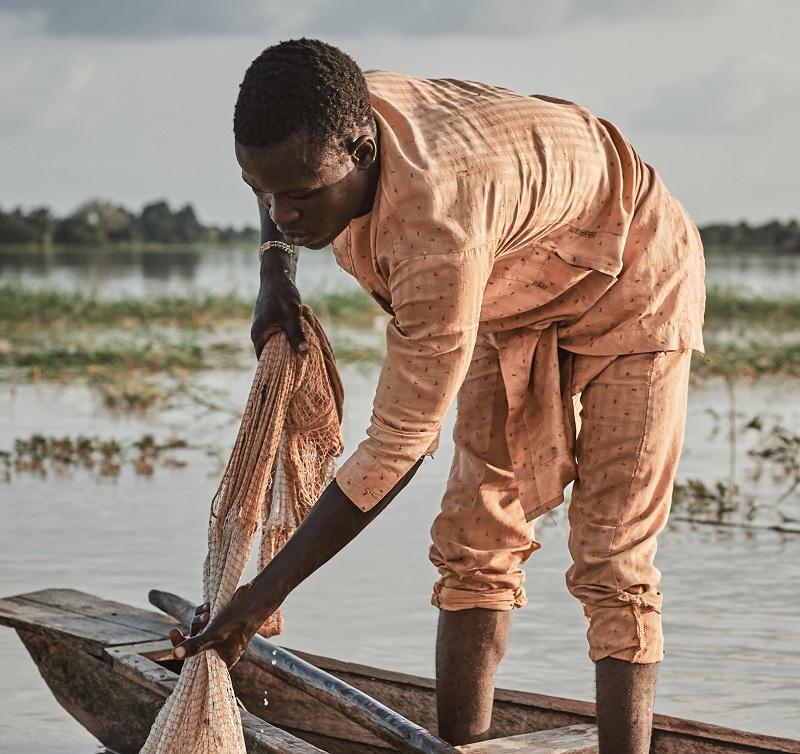
On the Lower Zambezi, as other rivers, the river's health is measured in fish. When trees disappear from the banks, rain washes soil into the water. Channels silt up. Spawning grounds vanish. Nets come back lighter.
From 19 to 21 November 2026, fishing communities of the Namoomba Fisheries Management Area will gather in Siavonga to push back. The African Union Inter-African Bureau for Animal Resources (AU-IBAR) and Zambia’s Ministry of Fisheries and Livestock will join them. This is not a meeting about restoration. It is three days of doing it: raising seedlings, replanting riverbanks and building small businesses that give communities a reason to protect what they plant.
A river under pressure
Zambia’s inland fisheries in the Zambezi, Kafue and Luangwa systems feed families and sustain livelihoods. They also hold some of the country’s richest freshwater biodiversity. Yet the pressures keep stacking up: overfishing, deforestation, land degradation, riverbank erosion, siltation and a changing climate.
In the Lower Zambezi, some 1,200 fishers depend directly on the fishery. The newly gazetted Namoomba Fisheries Management Area in Siavonga District already gives communities a formal role in managing their waters alongside government. What it needs now is a living riverbank to match. Rules protect fish. Trees, grasses and healthy riparian land protect the places where fish breed.
From the classroom to the riverbank
The November activity builds on a community training held in the Lower Zambezi from 28 to 30 July 2026. That first round raised awareness. An ecological and socio-economic assessment informed it, mapping degraded sites and priority zones for afforestation. Siavonga is where those maps turn into action.
Day one opens with a look back. Facilitators will review July's achievements and which commitments remain open. Community representatives will then speak for themselves about what has changed since.
The afternoon turns to money. In a series called Get to Know Your Numbers, technical facilitator Susan Chembe will guide participants through nature-based enterprise development. Groups will map local resources, products and services, then test each idea against market demand, skills and start-up needs.
Day two moves outdoors. Communities will shortlist the enterprises worth pursuing and agree how to run them: who owns them, who decides, how benefits are shared and how assets are protected. Forestry experts will then lead hands-on sessions on community nurseries, from seed collection and potting to watering, shading, and record-keeping. The day closes with practical demonstrations of afforestation and riparian restoration, alongside fisheries expert Dr Phiri. Participants leave with action plans and agreed responsibilities.
Why restoration needs a business case
Trees take years to repay the effort of planting them. A fishing household needs income this season. That gap is where many restoration projects quietly fail.
Siavonga tackles it head-on. A nursery that sells seedlings, a product drawn from restored land, a service linked to a healthier river: each gives people a stake in the result. When a riverbank earns its keep, people guard it.
Women and youth sit at the centre of this. They will be engaged in nurseries, restoration work, monitoring and local decisions, not as beneficiaries on the margins but as owners of the outcome. Traditional leaders and fisheries cooperatives complete the circle, linking community action with the authorities responsible for enforcement.
AU-IBAR’s role: from continental strategy to village nursery
The activity is delivered under the Conserving Aquatic Biodiversity in the African Blue Economy project, funded by the Swedish International Development Cooperation Agency (Sida). Through it, AU-IBAR is implementing the AU-endorsed Continental Strategy on Nature-Based Solutions for Conserving, Restoring and Sustainable Use of Aquatic Ecosystems and Fish Stocks. The work also advances the Africa Blue Economy Strategy.
AU-IBAR provides overall technical coordination, working closely with the Ministry of Fisheries and Livestock and its Department of Fisheries. It brings in the forestry, fisheries and enterprise expertise. It also does what a single pilot cannot do alone: capture what works and carry it to other African Union Member States.
That is Siavonga's real value. A continental strategy gains credibility only when it can be seen working on a riverbank. The Lower Zambezi pilot is designed to show exactly that, and to document the lessons, challenges and good practices that make replication possible.
Closing on World Fisheries Day
The timing is deliberate. The activity ends on Saturday 21 November, World Fisheries Day, with a high-level session hosted by the Government of the Republic of Zambia. Before the speeches, a tree and grass planting ceremony will take place on the riverbank. AU-IBAR and Sida will each deliver remarks.
The expected results are concrete: community nurseries established or strengthened, degraded riparian areas replanted, fish breeding habitats better protected, and community monitoring strengthened. Above all, Siavonga aims to produce a practical, community-based model for restoring aquatic ecosystems that other fishing areas in Zambia and across Africa can adopt.
The river will not recover in three days. But the people who live beside it will leave with seedlings in the ground, a plan in hand and a business idea worth protecting. That is how restoration lasts.
AU-IBAR and the Ministry of Fisheries and Livestock of Zambia are organising the initiative, funded by Sweden through Sida.